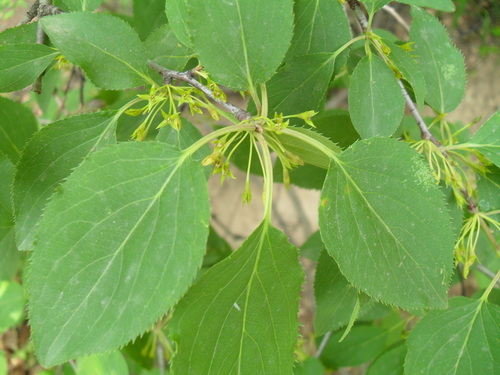
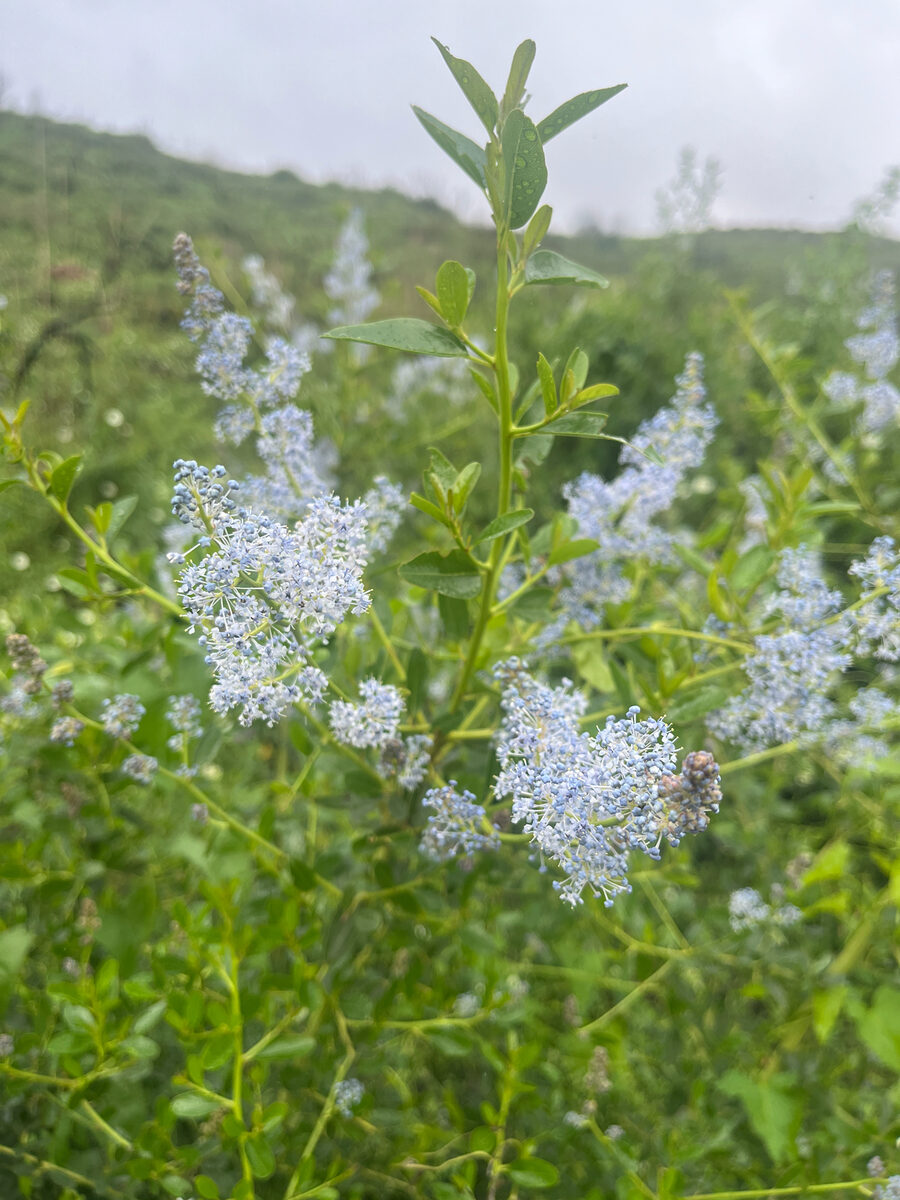
Colubrina elliptica
(Sw.) Brizicky & W. L. Stern
Smooth snakebark
iNaturalist· cc-by-nc
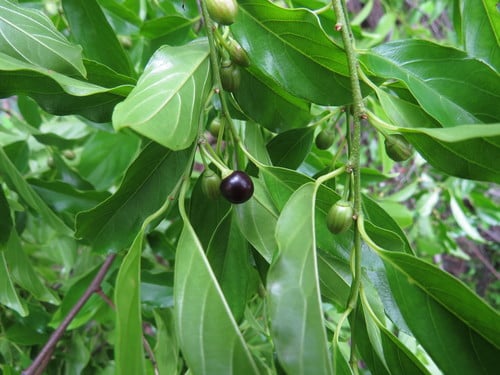
(c) Wayne Fidler, some rights reserved (CC BY-NC), uploaded by Wayne Fidler
iNaturalist· cc-by
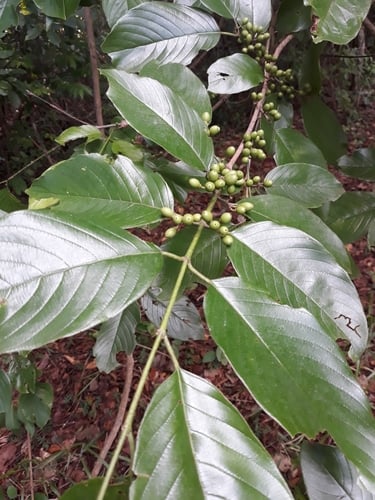
(c) Carrie Seltzer, some rights reserved (CC BY)
Summary
Source: WikipediaColubrina elliptica, also known as mabi or soldierwood, is a species of flowering tree in the family Rhamnaceae that is native to the Florida Keys, the Caribbean, Central America, Mexico, and Venezuela.
Description
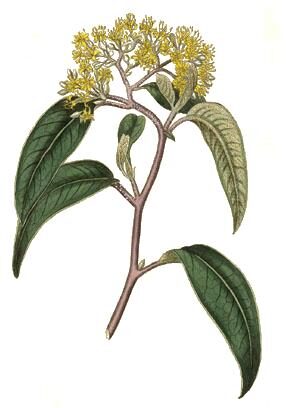
A shrub. It grows 4-6 m tall but can be 20 m tall. The trunk can be 1.5 m across. The bark is orange brown and peels off in thin layers. The flowers are green to yellow. The fruit are red to orange.
Edible Uses
The bark is steeped in water to make a fermented drink, and the leaves are also used to prepare drinks.
Traditional Uses
The bark is steeped in water to make a fermented drink. The leaves are also used.
This uses section is brief — help expand it
Medicinal Uses
Colubrina elliptica is a saponin-containing plant widely distributed in the Caribbean region, where its bark is used for the preparation of bitter beverages and in folk medicine for the treatment of skin diseases. The bark and leaves of mabi are used to create mauby, a drink popular in the Caribbean.
Distribution
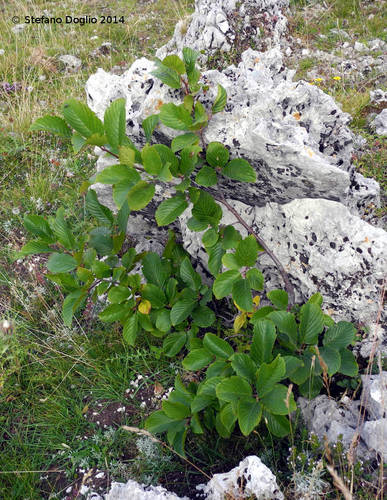
A tropical plant. It grows in thickets in dry coastal regions and on limestone. It grows below 1,000 m above sea level. It has some salt tolerance.
Where It Grows
Bahamas, Caribbean, Central America, Colombia, Cuba*, Dominican Republic, Ecuador, Guadeloupe, Guatemala, Haiti*, Honduras, Jamaica, Lesser Antilles* Martinique, Mexico, Nicaragua, North America, Puerto Rico, St. Lucia, St. Vincent and Grenadines, South America, USA, Venezuela, Virgin Islands, West Indies*,
Cultivation
Plants can be grown from seed.
Other Uses
Its leaves and wood are said to impart a yellow colour to water. The heartwood is a dark brown; the sapwood a light to yellowish brown. The wood is, heavy, hard, strong, fine-textured, and durable. Little use, apparently, is made of it. It is used for posts.
Other Information
It is sold in local markets. The drink is sold in local markets.
Notes
There are 16 Colubrina species. It is an endangered species.
Synonyms
Also Known As
Amole, Bijaguara, Bois mabi, Bwa mabi, Caoba de Manabi, Catire, Ebano, Guayacan, Mabi, Manzanita, Mauby, Nakedwood, Pichipan, Soldierwood
References (8)
- Burkill, I.H., 1966, A Dictionary of the Economic Products of the Malay Peninsula. Ministry of Agriculture and Cooperatives, Kuala Lumpur, Malaysia. Vol 1 (A-H) p 651 (As Colubrina reclinata)
- Grandtner, M. M. & Chevrette, J., 2013, Dictionary of Trees, Volume 2: South America: Nomenclature, Taxonomy and Ecology. Academic Press p 151
- Facciola, S., 1998, Cornucopia 2: a Source Book of Edible Plants. Kampong Publications, p 190
- Piedra-Malagón, E. M., et al, 2022, Edible native plants of the Gulf of Mexico Province. Biodiversity Data Journal 10: e80565 p 28
- Plants of Haiti Smithsonian Institute http://botany.si.edu/antilles/West Indies
Show all 8 references Hide references
- Trop. Woods 109:95. 1958
- Wiersema, J. H. & Leon, B., 2013, World Economic Plants. A Standard Reference CRC Press. 2nd Ed. p 192
- World Checklist of Useful Plant Species 2020. Royal Botanic Gardens, Kew