Baccaurea courtallensis
(White) Muell.-Arg.
Mootapalam
iNaturalist· cc-by-nc
(c) anilamanalil, some rights reserved (CC BY-NC), uploaded by anilamanalil
iNaturalist· cc-by-nc
(c) anilamanalil, some rights reserved (CC BY-NC), uploaded by anilamanalil
iNaturalist· cc-by-nc
(c) anilamanalil, some rights reserved (CC BY-NC), uploaded by anilamanalil
Summary
Source: WikipediaBaccaurea courtallensis is a species of flowering plant belonging to the family Phyllanthaceae. It is endemic to the Western Ghats mountains in India. It is a medium size evergreen understory tree frequent in tropical wet evergreen forests of the low and mid-elevations (40-1000m). It is a Near Threatened species according to the IUCN Red List of Threatened Species.
Description
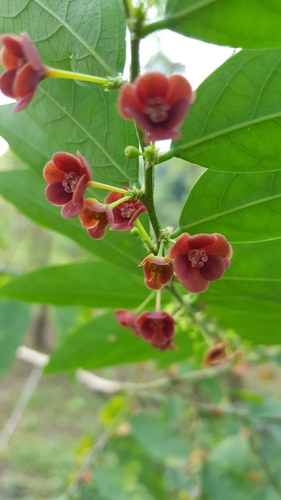
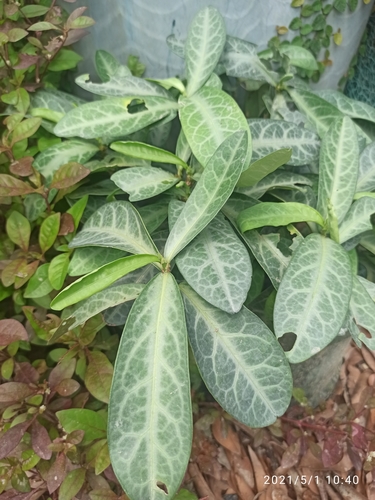
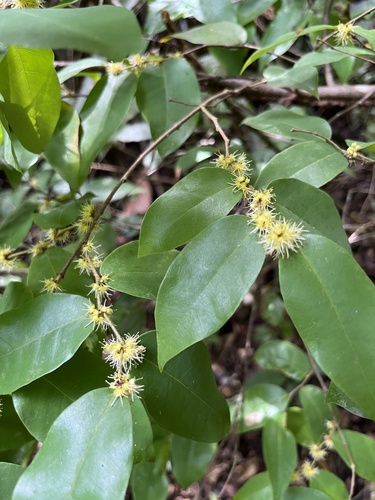
A medium sized tree. The leaves are narrowly oval and taper to a short point. Plants are separately male and female. The flowers are hairy. The fruit are bright red. They are 2.5 cm across. They are produced along the trunk.
Edible Uses
The fruit is edible and eaten by people
Traditional Uses
The fruit are eaten. It is the fleshy layer around the seeds (aril) that is eaten. They are acid. They are used as an alternative to tamarind. They are also used for pickles.
Distribution
A tropical plant. It occurs between 300-900 m above sea level. It is in areas with a temperature between 16°-30°C and a rainfall of 150-200 cm. It grows in tropical wet evergreen forest.
Where It Grows
Asia, India, Northeastern India,
Production
In southern India plants flower and fruit January to June.
Notes
There are about 80 Baccaurea species.
Nutrition
| Part | Moisture | kJ | kcal | Protein | Vit A | Vit C | Iron | Zinc |
|---|---|---|---|---|---|---|---|---|
| Fruit | 87.3 | — | 52.2 | 1 | — | — | 1.5 | — |
Synonyms
Also Known As
Kalikuki, Moottilpuli, Muttathuri, Muttilpazham, Muttithuri, Ponvetti, Vetti
References (12)
- Ajesh, T. P., et al, 2012, Ethnobotanical Documentation of Wild Edible Fruits used by Muthuvan Tribes of Idukki, Kerala-India. International Journal of Pharma and Bio Sciences 3(3): 479-487
- Ambasta S.P. (Ed.), 2000, The Useful Plants of India. CSIR India. p 65
- Binu, S., 2010, Wild edible plants by the tribals in Pathanamthitta district, Kerala. Indian Journal of Traditional Knowledge. 9(2): 309-312
- Bircher, A. G. & Bircher, W. H., 2000, Encyclopedia of Fruit Trees and Edible Flowering Plants in Egypt and the Subtropics. AUC Press. p 51
- Chandrashekara, U. M., 2009, Tree species yielding edible fruit in the coffee-based homegardens of Kerala, India: their diversity, uses and management. Food Sec. 1:361-370
Show all 12 references Hide references
- Davis, S.D., Heywood, V.H., & Hamilton, A.C. (eds), 1994, Centres of plant Diversity. WWF. Vol 1 or 2. p 112
- Dobriyal, M. J. R. & Dobriyal, R., 2014, Non Wood Forest Produce an Option for Ethnic Food and Nutritional Security in India. Int. J. of Usuf. Mngt. 15(1):17-37
- Jose, D. T. & Sasidharan, N., 2016, Checklist of wild edible plants of Aralam Wildlife sanctuary, Kerala, India. South Indian Journal Of Biological Sciences 2016; 2(1); 141‐144
- Nazarudeen, A., 2010, Nutritional composition of some lesser-known fruits used by the ethnic communities and local folks of Kerala. Indian Journal or Traditional Knowledge. Vol. 9(2): 398-402
- Recovery plan for selected ETMP's and Conservation Models. Chapter 5 p 177 (Off internet)
- Singh, H.B., Arora R.K.,1978, Wild edible Plants of India. Indian Council of Agricultural Research, New Delhi. p 50
- Singh, V. B., et al, (Ed.) Horticulture for Sustainable Income and Environmental Protection. Vol. 1 p 214