Trachyphrynium braunianum
(K. Schum.) Baker
Dane
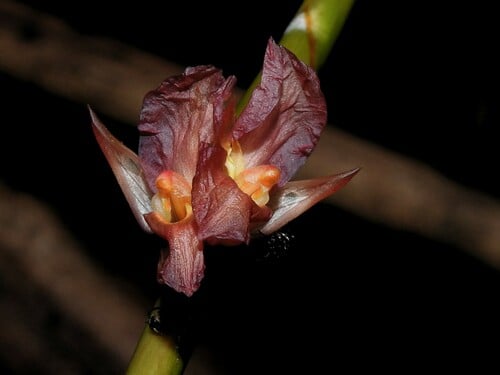
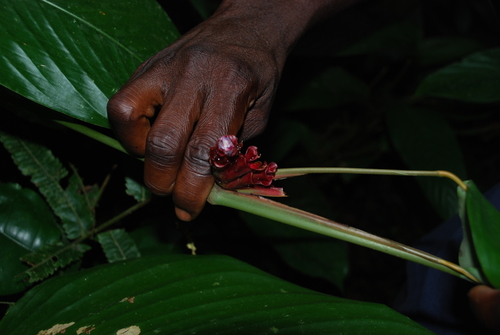
iNaturalist· cc-by-nc
(c) congonaturalist, some rights reserved (CC BY-NC), uploaded by congonaturalist
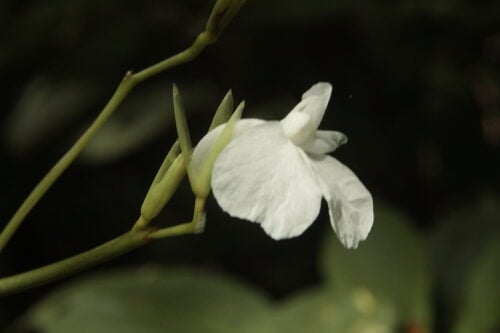
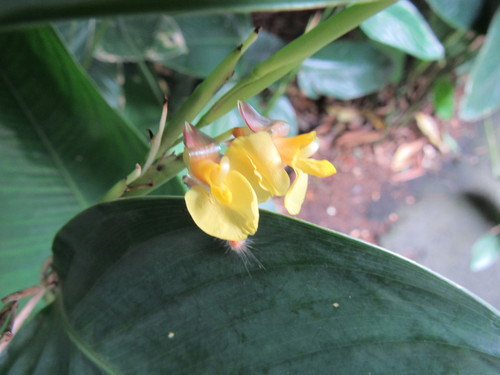
iNaturalist· cc-by-nc
(c) César María Aguilar Gómez, some rights reserved (CC BY-NC)
Description
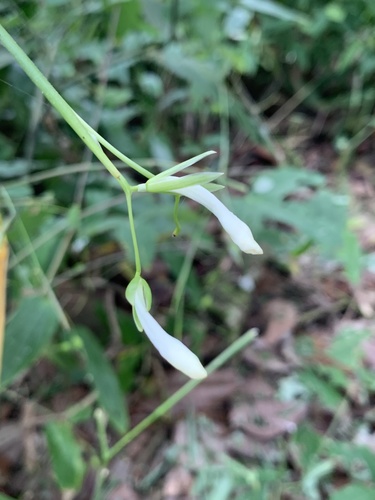
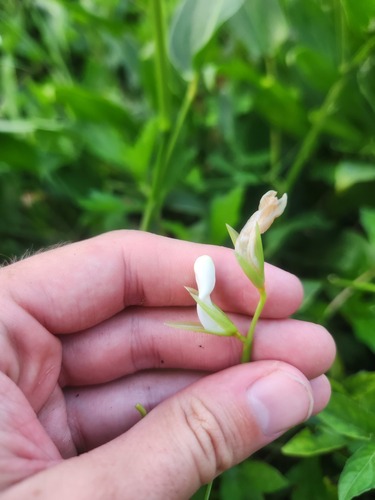
A herb. It has underground stems or rhizomes. It keeps growing from year to year. The stems are like a thick stemmed grass and are somewhat woody. It grows 2-3 m tall. It forms a tangled clump. The leaves vary between 6-20 cm long by 2-10 cm wide. The flowering shoots are spike like and 20 cm long. The flowers are white or pink and 2 cm long. The fruit are orange-yellow.
Edible Uses
The seeds are eaten raw as a sweet. The fruit aril is also edible.
Traditional Uses
The seeds are eaten raw as a sweet.
This uses section is brief — help expand it
Distribution
A tropical plant. It grows as an under-shrub in forests in West Africa, often near water.
Where It Grows
Africa, Central Africa, Central African Republic, CAR, Congo DR, Equatorial Guinea, Gabon, Ghana, Guinea, Guinée, SE Asia, Singapore, Sierra Leone, Sudan, West Africa,
Synonyms
Also Known As
Bolikabwalima, Ikokombeibaye, Ikokombeshalia, Ndika isende
References (8)
- Abbiw, D.K., 1990, Useful Plants of Ghana. West African uses of wild and cultivated plants. Intermediate Technology Publications and the Royal Botanic Gardens, Kew. p 49
- Burkill, H. M., 1985, The useful plants of west tropical Africa, Vol. 4. Kew.
- Dalziel, J. M., 1937, The Useful plants of west tropical Africa. Crown Agents for the Colonies London.(As Hybophrynium braunianum)
- Latham, P & Mbuta, A., 2017, Useful Plants of Central Province, Democratic Republic of Congo. Volume 2. Salvation Army p 221
- Liengola, I. B., 2001, A contribution to the study of native edible plants by the Turumbu and Lokele of the Tshopo District, Province Orientale, D. R. Congo. Syst. Geogr. Pl. 71:687-698
Show all 8 references Hide references
- Peters, C. R., O'Brien, E. M., and Drummond, R.B., 1992, Edible Wild plants of Sub-saharan Africa. Kew. p 35
- Termote, C., et al, 2011, Eating from the wild: Turumbu, Mbole and Bali traditional knowledge of non-cultivated edible plants, District Tshopo, DRCongo, Gen Resourc Crop Evol. 58:585-618
- World Checklist of Useful Plant Species 2020. Royal Botanic Gardens, Kew