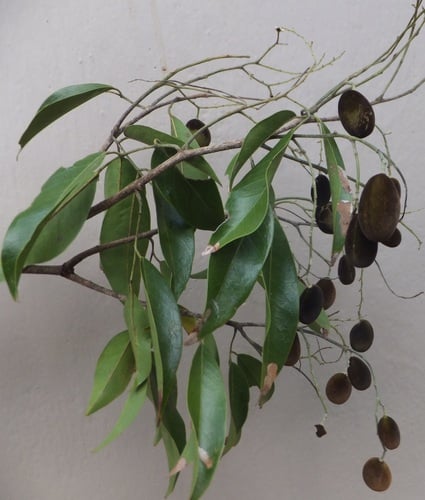
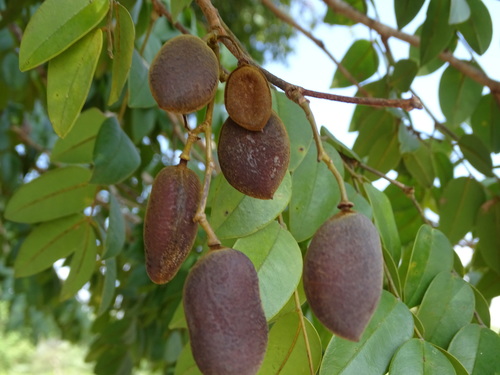
Machaerium lunatum
(L. f.) Ducke
Lunate machaerium
iNaturalist· cc-by-nc
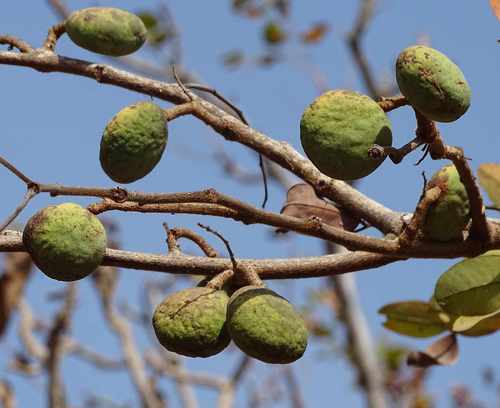
(c) accidentalshrike, some rights reserved (CC BY-NC), uploaded by accidentalshrike
iNaturalist· cc-by-nc
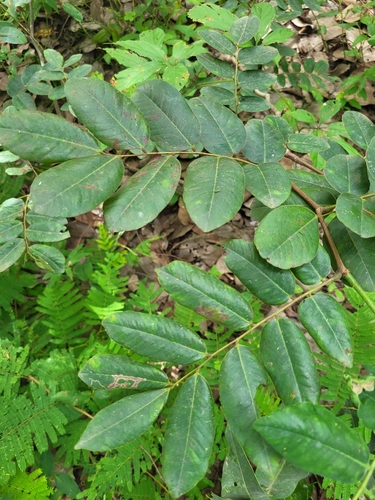
(c) Olivier Fortune - Isabelle Delafosse, some rights reserved (CC BY-NC), uploaded by Olivier Fortune - Isabelle Delafosse
iNaturalist· cc-by
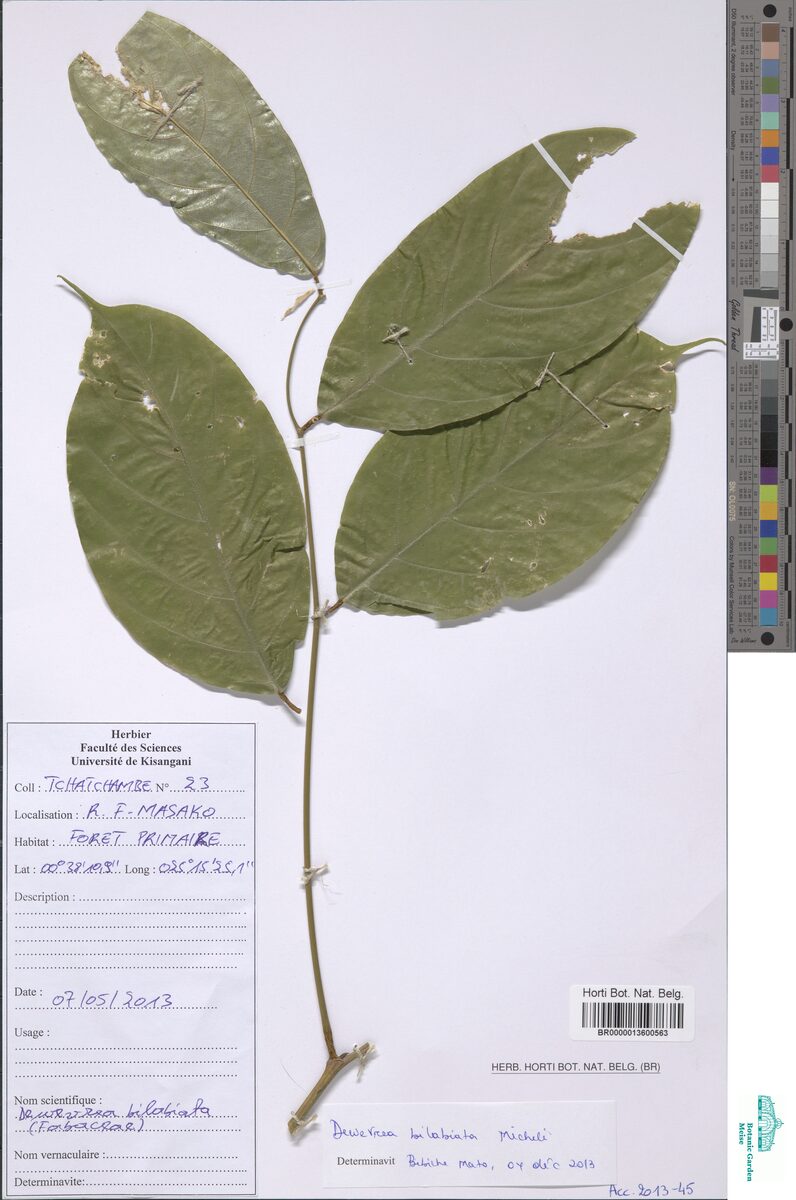
(c) Matthew Sirotkin, some rights reserved (CC BY)
Description
A shrub or small tree. It can be climbing. It keeps growing from year to year. It grows 15 m long. The stems are cylinder shaped and 12 cm across. There are curved spines. The leaves are compound with 5-7 leaflets along the stalk. They are alternate. The leaflets are 2-7 cm long by 1-3 cm wide. The flowering shoots are in the axils of leaves or at the ends of the branches. The flowering shoots are 5-15 cm long. The pod is 2-4 cm wide. It is curved and has one kidney shaped seed.
Edible Uses
The fruit is edible.
Medicinal Uses
The stem is cut and the liquid used as a wash for sick children. The leaves are styptic. They are used in a compress to stop bleeding. The unripe fruits are used in the treatment of abdominal troubles. The root is astringent. It is used in the treatment of diarrhoea, dysentery, dropsy, swellings, oedema, gout, leprosy, stomach troubles, venereal diseases.
Distribution
A tropical plant. It grows along river banks and on the edges of mangroves.
Where It Grows
Africa, Angola, Belize, Benin, Bolivia, Brazil, Cameroon, Caribbean, Central Africa, Central America, Colombia, Congo DR, Costa Rica, Côte d'Ivoire, Dominican Republic, French Guiana, Gabon, Gambia, Ghana, Guatemala, Guianas, Guinea, Guinée, Guinea-Bissau, Guyana, Haiti, Hispaniola, Ivory Coast, Lesser Antilles, Liberia, Mexico, Nicaragua, Nigeria, North America, Panama, Peru, Puerto Rico, Sao Tome and Principe, Senegal, Sierra Leone, South America*, Suriname, Togo, Trinidad and Tobago, Venezuela, West Africa, West Indies*,
Cultivation
This species has a symbiotic relationship with certain soil bacteria, these bacteria form nodules on the roots and fix atmospheric nitrogen. Some of this nitrogen is utilized by the growing plant but some can also be used by other plants growing nearby.
Synonyms
Also Known As
Amga, Amourett, Arepillo, Aripillo, Atoelia, Aturia, Bampele, Bodorie, Boransao, Borassam-o, Brahaca, Brantimaka, Bucachina, Bucacina, Buchachina, Cortica, Ecote, Escambron, Fuindi, Palo de hoz, Mancanta, N'antanto, N'fene, Tangani, Turia, Um-hanta-no
References (6)
- Abbiw, D.K., 1990, Useful Plants of Ghana. West African uses of wild and cultivated plants. Intermediate Technology Publications and the Royal Botanic Gardens, Kew. p 47
- Grandtner, M. M. & Chevrette, J., 2013, Dictionary of Trees, Volume 2: South America: Nomenclature, Taxonomy and Ecology. Academic Press p 367
- ILDIS Legumes of the World http:www:ildis.org/Legume/Web
- Jardin, C., 1970, List of Foods Used In Africa, FAO Nutrition Information Document Series No 2.p 133 (As Drepanocarpus lunatus)
- Plants of Haiti Smithsonian Institute http://botany.si.edu/antilles/West Indies
Show all 6 references Hide references
- Rudd, V. E., 1987, Studies Machaerium (Leg.) VII Sec 11. Phytologia 64(1):1-12