Ascophyllum nodosum
(L.) Le Jolis
Bladder wrack, Knotted wrack
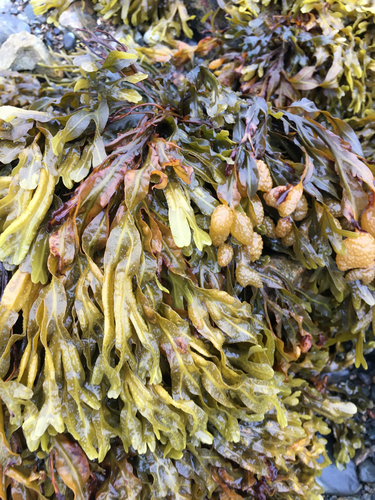
iNaturalist· cc-by-nc
(c) Elise Nyborg, some rights reserved (CC BY-NC), uploaded by Elise Nyborg
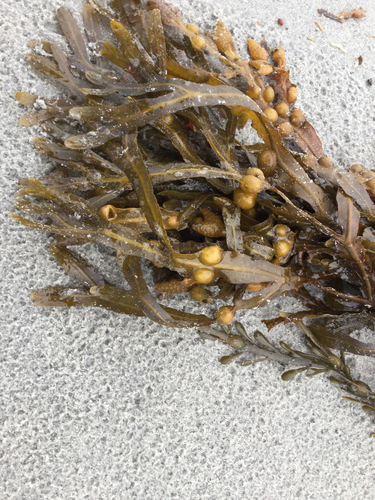
iNaturalist· cc-by-nc
(c) elmaddi, some rights reserved (CC BY-NC)
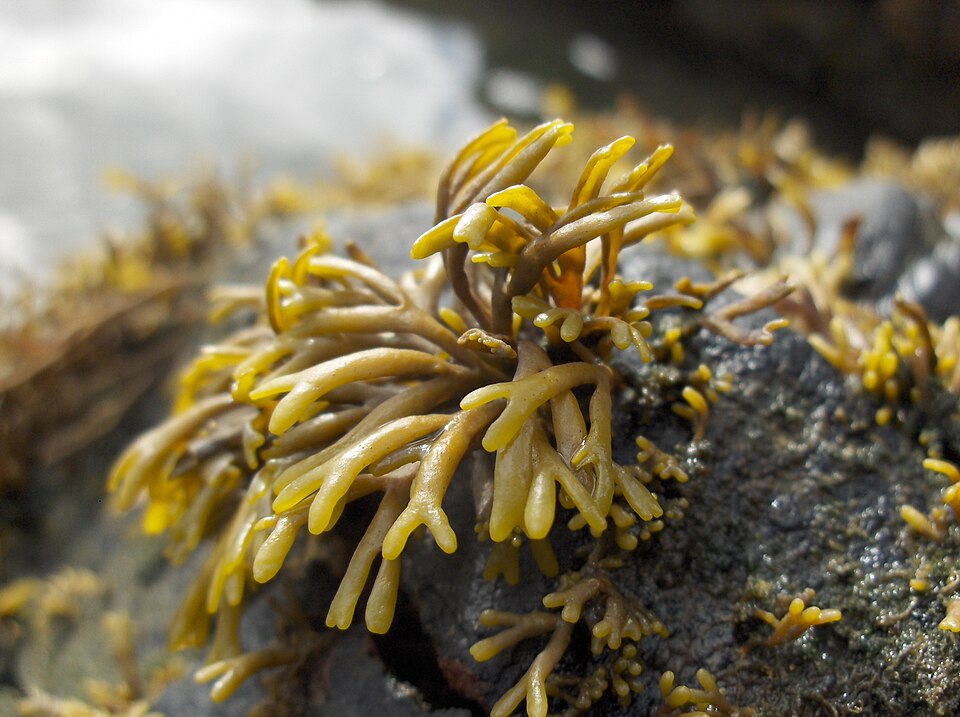
iNaturalist· cc-by-nc
(c) LALEMAN Romain, some rights reserved (CC BY-NC), uploaded by LALEMAN Romain
Description
A perennial brown algae that grows attached to rocks in sheltered temperate ocean waters in cold climates. About 31,000 tons are harvested annually.
This description is brief — help expand it
Edible Uses
The fronds are ground into meal and eaten. Commercially, it is a major source of algin used to thicken soups, emulsify ice cream and salad dressings, and as a gelling agent for puddings and jellies. It is also made into thin films for sausage casings.
Traditional Uses
It is ground into meal and eaten. It is a major source of algin used commercially for thickening soups, emulsifying ice cream and salad dressings and as a gelling agent for puddings, jellies and other foods. It is also made into thin films for sausage casings.
Medicinal Uses
The consumption of Ascophyllum nodosum has been proven to have dental benefits in humans, dogs and cats. In addition to dental benefits, A. nodosum can reduce inflammation and speed up healing, especially after a serious injury. Brown algae contains fucoidans, which are sulfated, fucose-rich polymers. Fucoidans block selectins, which are receptors on white blood cells that allow those cells to enter a tissue, causing inflammation. Since the fucoidans block inflammation, A. nodosum can be considered an anti-inflammatory. Ascophyllum nodosum extracts can be used to control body weight in obese mice. There is potential for these extracts to be efficient in humans, but most studies focus on the effects in small rodents, so more testing needs to be done. Ascophyllum nodosum is harvested for use in alginates, fertilisers, and the manufacture of seaweed meal for animal and human consumption. Due to the high level of vitamins and minerals that bioaccumulate in A. nodosum, it has been used in Greenland as a dietary supplement. It was also been used for certain herbal teas, particularly kelp teas. It has long been used as an organic and mainstream fertilizer for many varieties of crops due to its combination of both macronutrients, (N, P, and K) and micronutrients (Ca, Mg, S, Mn, Cu, Fe, Zn, etc.). It also contains cytokinins, auxin-like gibberellins, betaines, mannitol, organic acids, polysaccharides, amino acids, and proteins which are all very beneficial and widely used in agriculture. Ireland, Scotland and Norway have provided the world's principal alginate supply. Ascophyllum nodosum is frequently used as packaging material for baitworm and lobster shipments from New England to various domestic and international locations. Ascophyllum itself has occasionally been introduced to California, and several species frequently found in baitworm shipments, including Carcinus maenas and Littorina saxatilis, may have been introduced to the San Francisco Bay region this way.
Known Hazards
Because the age of the different parts of A. nodosum can be identified by its shoots, it has also been used to monitor concentrations of heavy metals in seawater. A concentration factor for zinc has been reported to be of the order 104. It has been used in this way for over fifty years, and studies have shown that A. nodosum absorbs cobalt, cadmium, lead, and indium metal ions out of the water. It has also been used to track environmental radioactivity.
Distribution
A cold climate plant. It grows attached to rocks in sheltered areas and temperate oceans.
Where It Grows
Africa, Arctic, Atlantic, Bermuda, Brazil, Britain, Canada, Canary Islands, Europe, France, Germany, Ghana, Greenland, Iceland, Ireland, Mediterranean, Middle East, Netherlands, North America, North Sea, Norway, Portugal, Qatar, Scandinavia, Spain, Sweden, USA, West Africa,
Other Information
About 31,000 tons are harvested each year.
Synonyms
Also Known As
Grisetang, Mussel wrack, Miserarnat, Rockweed, Yellow wrack
References (11)
- Brouk, B., 1975, Plants Consumed by Man. Academic Press, London. p 254
- Facciola, S., 1998, Cornucopia 2: a Source Book of Edible Plants. Kampong Publications, p 258
- Girard, N. J., 2020, Sustainable Foraging of Wild Edible Plants in Norway. A Biocultural Approach. M. Sc. thesis Norwegian University. p 131
- Heiba, H. I. et al, 1997 Fatty acid composition of twelve algae from the coastal zones of Qatar. Plant Foods for Human Nutrition 51:27-34 (As Cystoseria) (As Cystoseira nodosa)
- Hoygaard, A., 1937, Skrofter om Svalbaard og Ishavet. Oslo.
Show all 11 references Hide references
- http://www.seavegetables.com
- Kiple, K.F. & Ornelas, K.C., (eds), 2000, The Cambridge World History of Food. CUP p 235, 1797
- Masefield,
- Surey-Gent, S. & Morris G., 1987, Seaweed. A User's Guide. Whirret Books. London. p 32, 125
- Van Ginneken, V. JT., et al, 2011, Polyunsaturated fatty acids in various macroalgal species from north Atlantic and tropical seas. Lipids in Health and Disease 10:104
- Whitney, C. W., et al, 2012, A Survey of Wild Collection and Cultivation of Indigenous Species in Iceland. Human Ecology 40:781-787