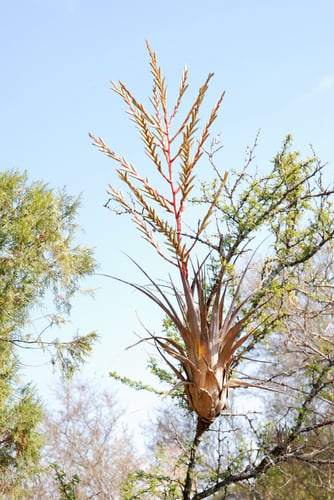
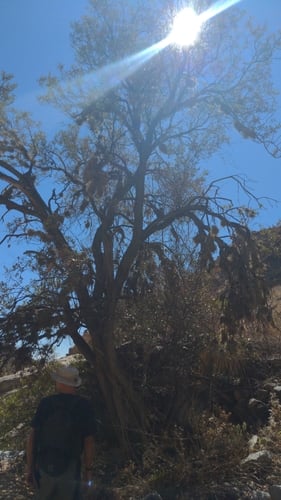
Aechmea magdalenae
(Andre) Andre ex Baker
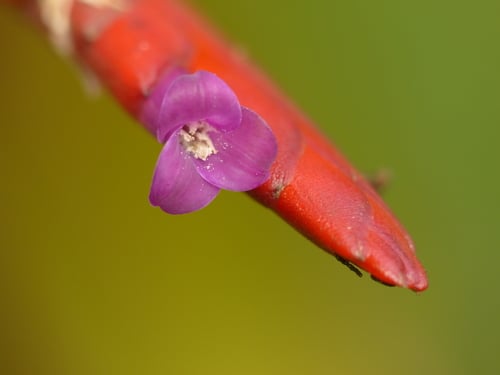
Pingwing
iNaturalist· cc-by-nc-sa
(c) Reinaldo Aguilar, some rights reserved (CC BY-NC-SA)
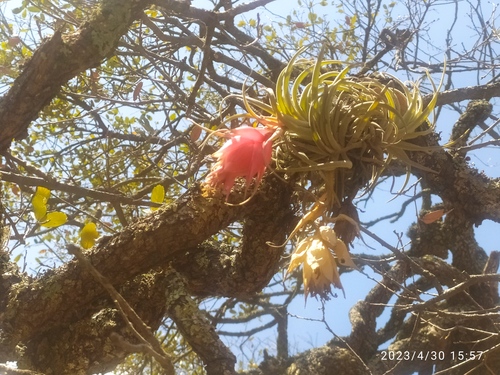
iNaturalist· cc-by-nc-sa
(c) Andreas Kay, some rights reserved (CC BY-NC-SA)
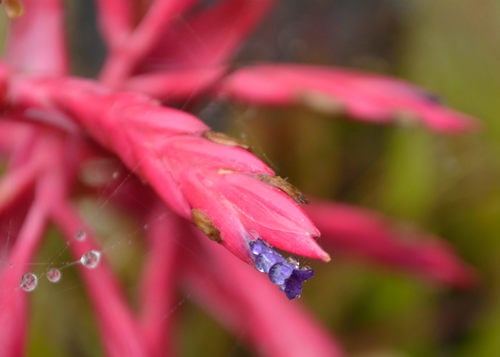
iNaturalist· cc-by-nc-sa
(c) Andreas Kay, some rights reserved (CC BY-NC-SA)
Summary
Source: WikipediaAechmea magdalenae is a flowering plant in the Bromeliaceae family. It is also known as ixtle. This species is native to Central America, southern Mexico, Colombia and Ecuador. The specific epithet magdalenae comes from the place it was discovered, the Rio Magdalenae Valley in Colombia. The long green leaves feature fierce spines and may reach about 2.5 meters tall. In nature, it is found in moist and swampy woods. The flowers are red and give way to edible fruits. A. magdalenae uses crassulacean acid metabolism, meaning that it takes in carbon dioxide during the night, stores it, and uses it during the day to produce carbohydrates (allowing its stomata to stay closed during the day, which limits water loss). Aechmea magdalenae is grown in southern Mexico for its silky fibers. It is also harvested from the wild for these fibers and for its edible fruit. Many in Central and northern South America use the sap from the leaves to prevent infection in wounds, a practice that is effective because the plant has been found to contain acetic acid, which is strongly antibacterial.
Description
A pineapple like plant. It is a herb that keeps growing from year to year. It grows 1.2 m high and spreads 1.5 m wide. The leaves are spiny. They are 1.5-3 m long. A mature plant has 20-40 leaves.
Edible Uses
The fleshy fruit can be eaten raw or cooked. It is sweet and very tasty, though with an acid flavour that is said to be even better when the fruit is made into beverages. The elliptic to ovate fruits are 5–6 cm long and around 2 cm in diameter. Fruit is yellow, becoming orange and soft at maturity.
Traditional Uses
The fruit are acid and can be eaten raw or cooked. They can also be made into drinks.
This uses section is brief — help expand it
Medicinal Uses
None known.
Distribution
It is a tropical plant. It grows along streams and in swampy areas. It grows as an understorey plant in tropical lowland rainforest. It can tolerate salt water.
Where It Grows
Amazon, Australia, Belize, Brazil, Central America, Colombia, Costa Rica, Ecuador, El Salvador, Guatemala, Honduras, Mexico, Nicaragua, North America, Panama, South America, Trinidad-Tobago, Venezuela,
Cultivation
It is grown from suckers.
Propagation
Seed.
Other Uses
An excellent-quality fibre is extracted from the leaves by retting them in water, then pounding on stones in running water. The resulting fibre is very fine and tough, and is widely used for making hammocks, bags, rope, and string.
Production
It takes 5 to 20 years to flower.
Notes
There are 80-231 Aechmea species and many cultivated varieties. It is used for fibres for mats, ropes and nets.
Synonyms
Also Known As
Gangabo, Ixtle, Pasa, Pina del campo, Pinuela, Pinuela silvestre, Pita, Sanu tape
References (19)
- Aleciafes, M. N., 1999, Ethnobotany of the Ese Eja: Plants, Health and Change in an Amazonian Society. Ph. D. thesis The City University of New York. p (As Chevaliera magdalenae)
- Duke,
- Ecocrop.fao.org/ecocrop Code 2742
- Espejo-Serna, A. et al. 2004. Checklist of Mexican Bromeliaceae with notes on species distribution and levels of endemism. Selbyana 25:37.
- Facciola, S., 1998, Cornucopia 2: a Source Book of Edible Plants. Kampong Publications, p 61
Show all 19 references Hide references
- Fouqué, A. 1972. Espèces fruitières d'Amérique tropicale. Institut français de recherches fruitierès outre-mer (ifac)
- Kew Plants of the World Online
- Lopez-Diago, D. & Garcia, N., 2021, Wild edible fruits of Colombia. Biota ColomBiana 22 (2) p 33
- Martin, F. W., et al, 1987, Perennial Edible Fruits of the Tropics. USDA Handbook 642 p 84
- Piedra-Malagón, E. M. et al, 2022, Edible native plants of the Gulf of Mexico Province. Biodiversity Data Journal 10: e80565 p 14
- Recher, P, 2001, Fruit Spirit Botanical Gardens Plant Index p 1
- Roa, J. A. G. & Boada, D. S. G., 2018, Fundación para el Fortalecimiento de la Fruticultura y Plantas Alimenticias no Convencionales en Colombia.
- Segura, S. et al, 2018, The edible fruit species in Mexico. Genet Resour Crop Evol (2018) 65:1767–1793
- Standley, P. C. & Record, S. J., 1936, The Forests and Flora of British Honduras. (Belize). p 90
- Standley, P. & Steyermark, J., 1958, Flora of Guatemala. Fieldiana: Botany, Volume 24 part 1 p 384
- Ticktin, T., and Johns, T., 2002, Chinanteco Management of Aechmea magdalenae: Implications for the Use of TEK and TRM in Management Plans. Economic Botany 56(2) pp 177-191
- Torre, de la, L., et al, 2008, Enciclopedia de las Plantas Útiles del Ecuador. Herbario QCA. Pontificia Universidad Católica del Ecuador. p 258
- Van den Eynden, V., et al, 2003, Wild Foods from South Ecuador. Economic Botany 57(4): 576-603
- Williams, L.,