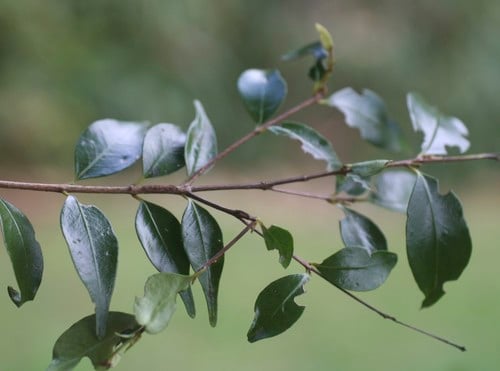
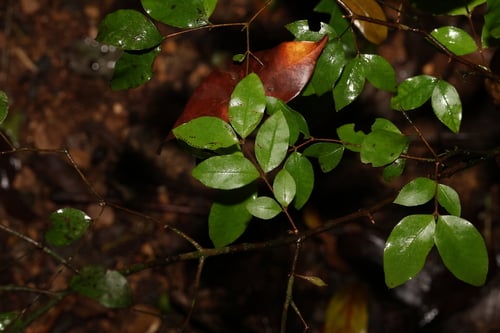
Myrciaria floribunda
(West ex Willd.) O. Berg
Guava berry
iNaturalist· cc-by-nc
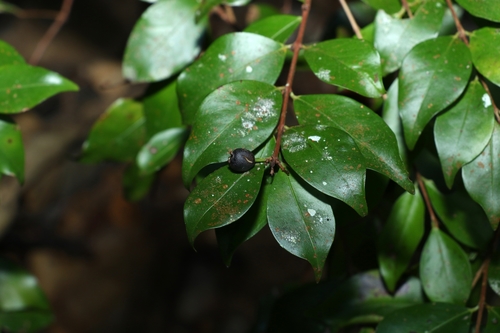
(c) Geovane Siqueira, some rights reserved (CC BY-NC), uploaded by Geovane Siqueira
iNaturalist· cc-by-nc
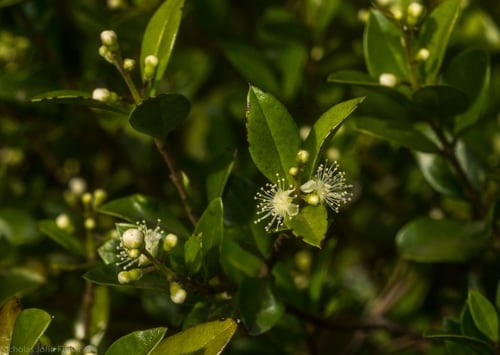
(c) Dan M Haddad, some rights reserved (CC BY-NC)
Summary
Source: WikipediaMyrciaria floribunda, commonly known as cambuizeiro, guavaberry or rumberry, is a species of plant in the family Myrtaceae. It can be found across South and Central America and the West Indies in dry or moist coastal woodlands, up to 300 metres above sea level. The guavaberry, which should not be confused with the guava, is a close relative of camu camu.
Description
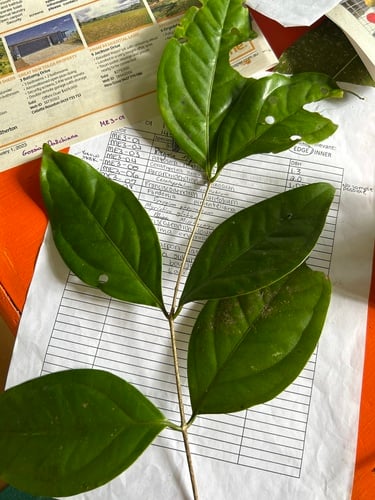
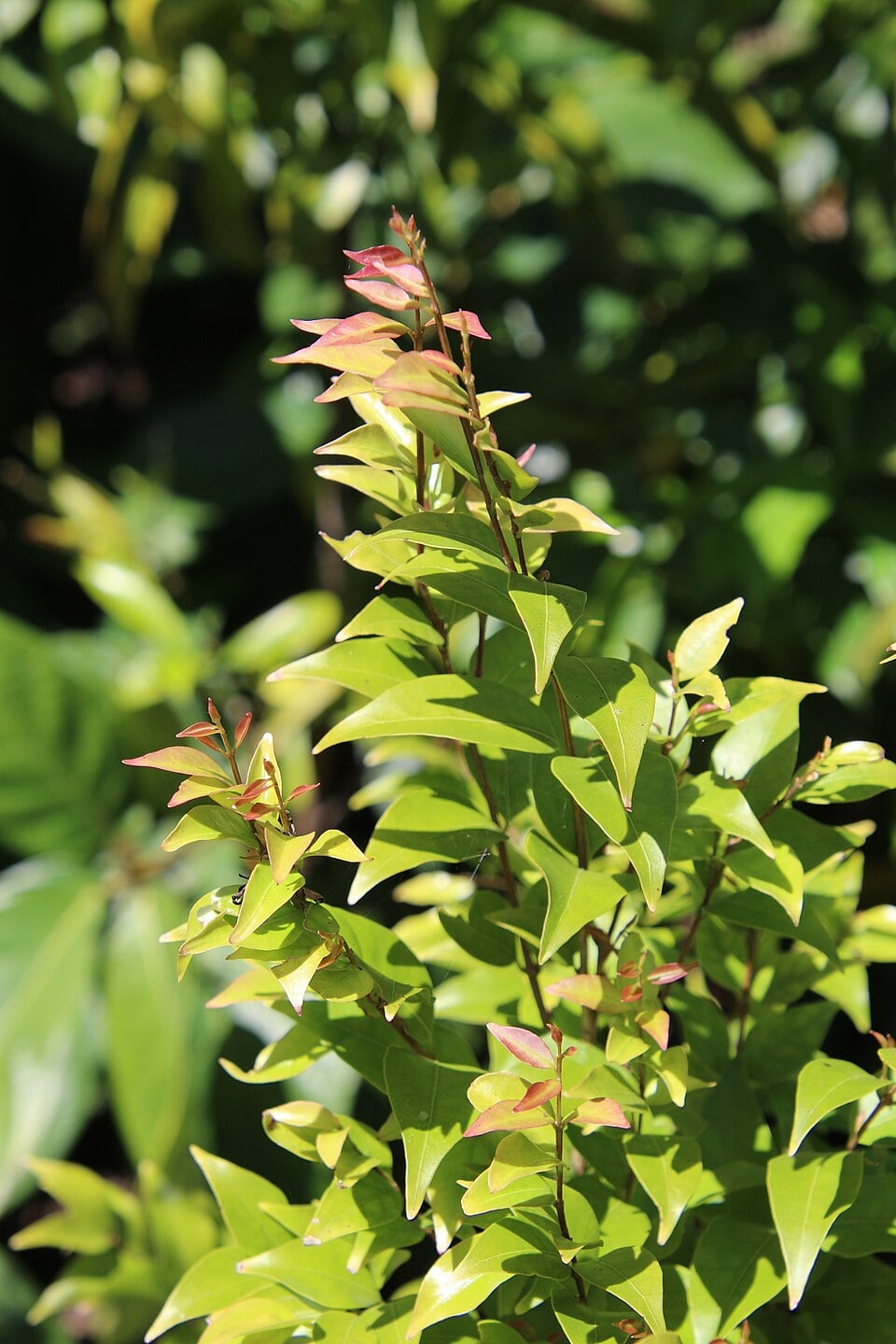
A small evergreen tree. It grows 15 m high. The bark is pale and smooth. The leaves are simple and deep green. They are 9 cm long. They are sword shaped and with a long point. The flowers are white and showy. They are almost without stalks. There are 4 fringed petals and a clump of golden stamens. The fruit are small and yellow with a sweet aromatic pulp. They can be red. They are 10 mm across. They have one or two seeds.
Edible Uses
The fruit is edible. A succulent, sweet pulp. The sweet, orange flesh is strongly, aromatically, fragrant and makes a delicious, pungently-flavoured jam or juice. The dark red to black globose fruit is about 13mm in diameter.
Traditional Uses
The fruit is eaten fresh or used for flavouring. It is used for jam or juice. The fruit are used to make a liqueur.
This uses section is brief — help expand it
Medicinal Uses
Guavaberry is used to make jams and drinks. Guavaberry liqueur, which is made from rum, is a common Christmas drink on many of the islands, particularly in Sint Maarten and the Virgin Islands. The colonists from Denmark and Holland found it could flavor rum by infusion similar to infused schnapps. In the Dominican Republic it is associated with the eastern town of San Pedro de Macorís which has a large population of Eastern Caribbean descent. Guavaberry coquito is one of many coquito flavored drinks from Puerto Rico associated with Christmas. The drink is made with spices, guavaberry, milk, sugar, coconut milk, eggs, and rum.
Distribution
A tropical plant. It suits the warm tropical lowlands. It is native to tropical America. It grows in dry or humid coastal woodland. It grows up to 300 m altitude. It can tolerate drought. It has some salt tolerance. It needs full sun. It does best is a rich loam.
Where It Grows
Belize, Bolivia, Brazil*, Central America, Colombia, Costa Rica, Cuba, Dominican Republic, Ecuador, El Salvador, Guadeloupe, Guatemala, Guiana, Guianas, Guyana, Haiti, Honduras, Lesser Antilles, Martinique, Mexico, Nicaragua, North America, Panama, Peru, Puerto Rico, South America, Suriname, Trinidad and Tobago, Venezuela, West Indies,
Cultivation
Plants are grown from seed. The seeds are collected from ripe fruit that are allowed to decompose for a few days before the seeds are washed out under running water. Seeds need to be planted while fresh. They should be in light shade. The seedlings emerge in 40-50 days.
Propagation
Seed - it has a short viability and so is best sown as soon as it is ripe. Sow in a semi-shaded position in a nursery seedbed. Germination rates are quite low, with the seed sprouting within 40 - 50 days. The seedlings grow away quite slowly. Cuttings Side-veneer grafting
Other Uses
The wood is straight-grained, average texture, moderately heavy, hard, with a low susceptibility to wood eating organisms. It is used for general lumber. The wood is used for fuel and to make charcoal. Myrciaria floribunda is a natural pioneer species. It is a common shrub that invades open ground throughout Amazonia, often being found in abandoned pasture where it grows quickly and provides suitable conditions for the establishment of other rainforest trees and shrubs.
Production
It is very slow growing. It takes 6-8 years to bear fruit from seed. Fruit matures in 60 days.
Synonyms
Also Known As
Arrayan, Boesigoejaba, Bois mulatre, Cabo de Chivo, Camboim, Camboim-vermelho, Cambuiva, Chepucuy, Coro-carette, Escobillo, Guaveberry, Guayabillo, Guayabito, Meriso-cerise, Mije, Mirto, Murta, Rumberry, Rumberry eugenia, Saitjaberan
References (26)
- Barwick, M., 2004, Tropical and Subtropical Trees. A Worldwide Encyclopedic Guide. Thames and Hudson p 288
- Brack, P., et al, 2020, Frutas nativas do Rio Grande do Sul, Brasil: riqueza e potencial alimentício. Native fruits of Rio Grande do Sul, Brazil: richness and potential as food. Rodriguésia 71: e03102018.
- Ekman Herbarium records Haiti (As Eugenia floribunda)
- Facciola, S., 1998, Cornucopia 2: a Source Book of Edible Plants. Kampong Publications, p 158
- Grandtner, M. M. & Chevrette, J., 2013, Dictionary of Trees, Volume 2: South America: Nomenclature, Taxonomy and Ecology. Academic Press p 436
Show all 26 references Hide references
- Hedrick, U.P., 1919, (Ed.), Sturtevant's edible plants of the world. p 297 (As Eugenia floribunda)
- Hermandez Bermejo, J.E., and Leon, J. (Eds.), 1994, Neglected Crops. 1492 from a different perspective. FAO Plant Production and Protection Series No 26. FAO, Rome. p16 (As Eugenia floribunda)
- Hunter, D., et al, 2019, The potential of neglected and underutilized species for improving diets and nutrition. Planta (2019) 250:709-729
- Kermath, B. M., et al, 2014, Food Plants in the Americas: A survey of the domesticated, cultivated and wild plants used for Human food in North, Central and South America and the Caribbean. On line draft. p 561
- Linnaea 27:330. 1856
- Lorenzi, H., 2009, Brazilian Trees. A Guide to the Identification and Cultivation of Brazilian Native Trees. Instituto Plantarum de Estuados da Flora Ltda. Vol. 3 p 265
- Lyle, S., 2006, Discovering fruit and nuts. Land Links. p 296
- Martin, F. W., et al, 1987, Perennial Edible Fruits of the Tropics. USDA Handbook 642 p 41
- McLaughlin, J., Woody and Herbaceus Plants Native to Haiti. University of Florida. p 14
- Miguel, E., et al, 1989, A checklist of the cultivated plants of Cuba. Kulturpflanze 37. 1989, 211-357
- Morton, Julia F., 1987, Fruits of Warm Climates. Creative Resources Systems, Inc. . p. 388
- Piedra-Malagón, E. M., et al, 2022, Edible native plants of the Gulf of Mexico Province. Biodiversity Data Journal 10: e80565 p 26
- Plants of Haiti Smithsonian Institute http://botany.si.edu/antilles/West Indies
- Roa, J. A. G. & Boada, D. S. G., 2018, Fundación para el Fortalecimiento de la Fruticultura y Plantas Alimenticias no Convencionales en Colombia.
- Segura, S., et al, 2018, The edible fruit species in Mexico. Genet Resour Crop Evol (2018) 65:1767–1793
- Sp. pl. 2(2):960. 1799 (As Eugenia floribunda)
- Torre, de la, L., et al, 2008, Enciclopedia de las Plantas Útiles del Ecuador. Herbario QCA. Pontificia Universidad Católica del Ecuador. p 468
- Uphof,
- van Roosmalen, M.G.M., 1985, Fruits of the Guianan Flora. Utrecht Univ. & Wageningen Univ. p 330
- Vasquez, R. and Gentry, A. H., 1989, Use and Misuse of Forest-harvested Fruits in the Iquitos Area. Conservation Biology 3(4): 350f
- www.colecionandofrutas.org