Zanthoxylum planispinum
Siebold & Zucc.
Winged prickly ash, Chinese wingleaf pricklyash
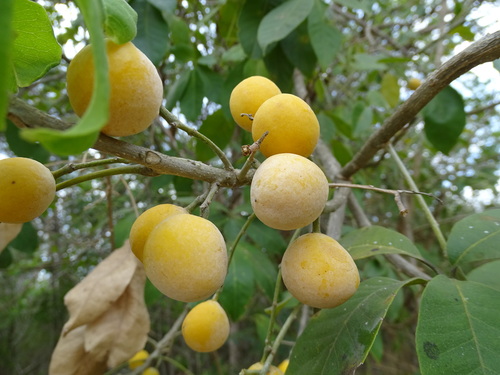
iNaturalist· cc-by-nc
(c) kjs3146, some rights reserved (CC BY-NC)
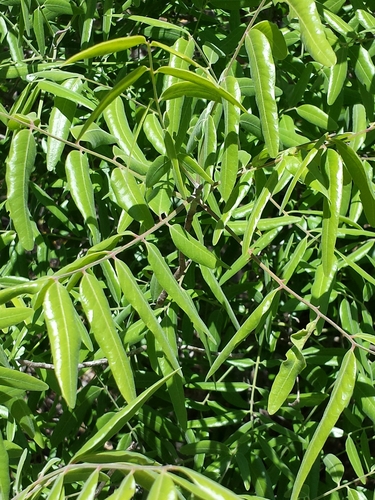
iNaturalist· cc-by-nc
(c) 红梅, some rights reserved (CC BY-NC)
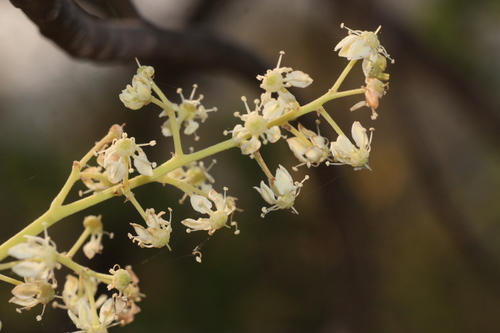
iNaturalist· cc-by-nc
(c) 红梅, some rights reserved (CC BY-NC)
Summary
Source: WikipediaDeciduous shrub reaching 3.5 m tall. Hardy to UK zone 6. Flowers in May with seeds ripening in October. Dioecious, requiring both male and female plants for seed production. Tolerates light sandy, medium loamy, and heavy clay soils with good drainage. Grows in mildly acidic to basic soils. Adapts to semi-shade or full sun and prefers consistently moist conditions.
Description
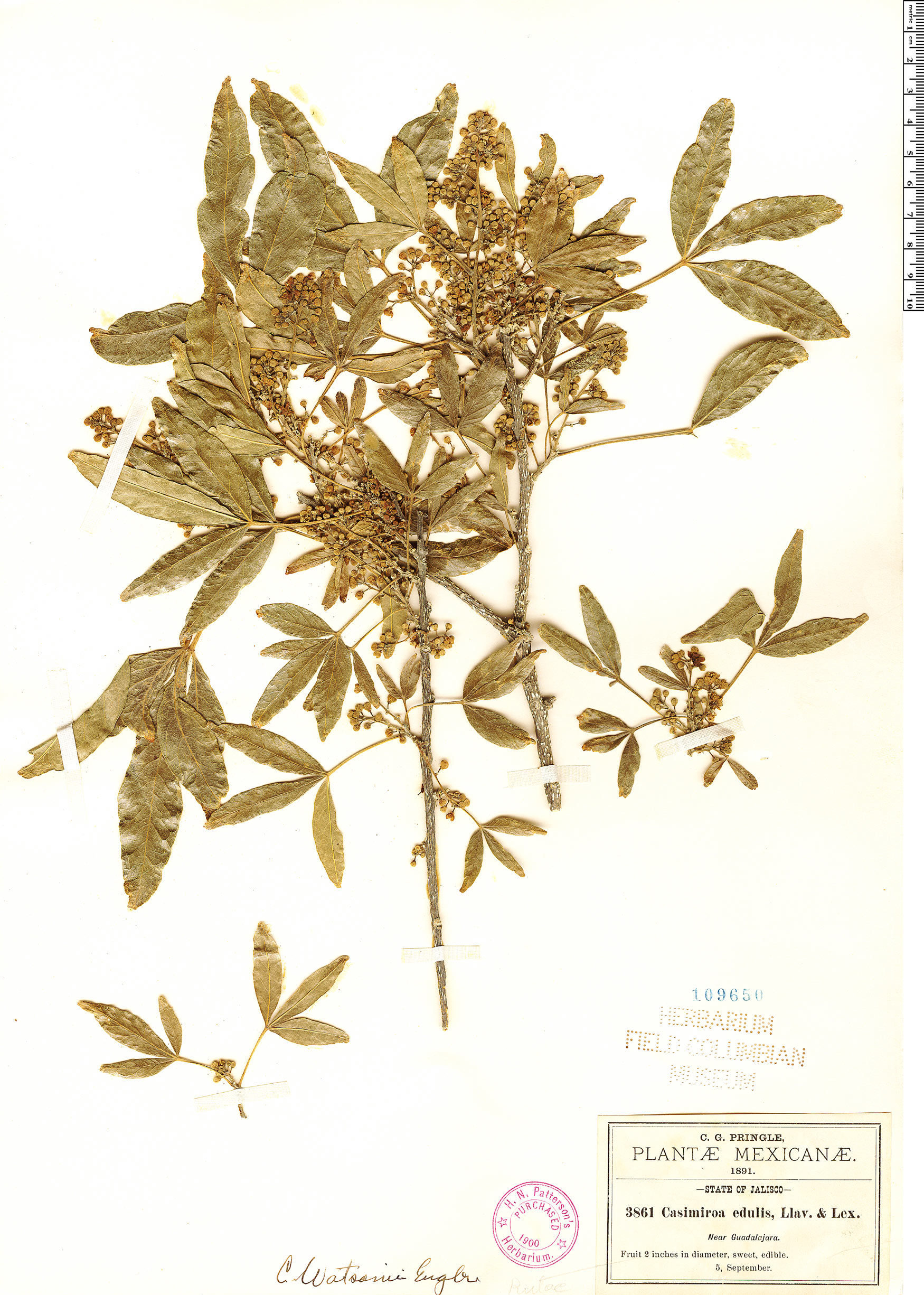
A shrub 1-1.5 m high. It has a smell. The roots are rough and yellow. They are woody. The leaves are small. They are 5-12 cm long by 1-1.5 cm wide. They grow in groups of 3. The flowers are yellowish-green. The fruit are round and red when ripe. The look oily and have spots on the outside. The seeds are oval, shiny and black.
Edible Uses
The seed is cooked and can be ground into a powder for use as a condiment and pepper substitute; light roasting enhances the flavour. It is one of the ingredients in the famous Chinese five spice mixture. The peel is also used. Young leaves are eaten, though no further details are given.
Traditional Uses
The fruit peel is used as a flavouring.
This uses section is brief — help expand it
Medicinal Uses
The seeds and roots are stomachic and vermifuge. A decoction of 7–14 seeds is used in the treatment of abscesses, arthritis, bruises, gastritis, and swellings. The resin in the bark — especially that of the roots — is powerfully stimulant and tonic.
Distribution
They grow in forests. It suits hardiness zones 7-10. In Yunnan.
Where It Grows
Asia, Australia, China, Himalayas, India, Indochina, Japan, Korea, Myanmar, Nepal, Pakistan, SE Asia,
Cultivation
Prefers a good deep well-drained moisture retentive soil in full sun or semi-shade. A very ornamental plant, it is usually hardy in most parts of Britain but can be damaged in severe winters. Fruits are freely produced after a hot summer. The flowers are formed on the old wood. Dioecious. Male and female plants must be grown if seed is required. In garden design, as well as the above-ground architecture of a plant, root structure considerations help in choosing plants that work together for their optimal soil requirements including nutrients and water.
Propagation
Seed is best sown in a greenhouse as soon as it ripens in autumn. Stored seed may need up to 3 months of cold stratification, though scarification can also help. Sow stored seed in a cold frame as early in the year as possible; germination should occur in late spring, though it may take a further 12 months. Prick seedlings into individual pots when large enough to handle, grow on in a cold frame through their first winter, then plant out in early summer. Cuttings of half-ripe wood can be taken in July or August and rooted in a frame. Root cuttings 3cm long, planted horizontally in pots in a greenhouse, give a good success rate. Suckers can be removed in late winter and planted directly into their permanent positions.
Other Uses
None known.
Notes
There are about 200 Zanthoxylum species.
Synonyms
Also Known As
Fuyu-sansho
References (7)
- Abh. Math.-Phys. Cl. Koenigl. Bayer. Akad. Wiss. 4(2):138. 1846
- Cundall, P., (ed.), 2004, Gardening Australia: flora: the gardener's bible. ABC Books. p 1495
- Hani Medicine of Xishuangbanna, 1999, p 519
- Hui, Y. H., 2006. Handbook of Food Science, Technology, and Engineering. Volume 2. CRC Table 98:2
- Hwang, H., et al, 2013, A Study on the Flora of 15 Islands in the Western Sea of Jeollanamdo Province, Korea. Journal of Asia-Pacific Biodiversity Vol. 6, No. 2 281-310
Show all 7 references Hide references
- Martin, F. W., et al, 1987, Perennial Edible Fruits of the Tropics. USDA Handbook 642 p 78
- Plants for a Future database, The Field, Penpol, Lostwithiel, Cornwall, PL22 0NG, UK. http://www.scs.leeds.ac.uk/pfaf/