Zanha golungensis
Hiern
Smooth-fruited zanha
iNaturalist· cc-by-nc
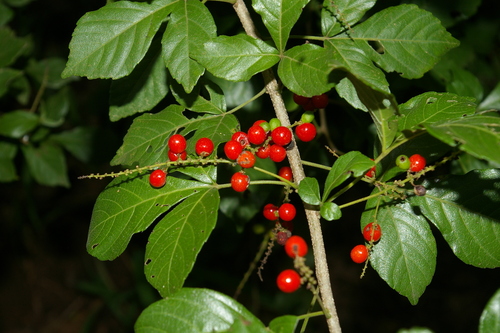
(c) Bart Wursten, some rights reserved (CC BY-NC), uploaded by Bart Wursten
iNaturalist· cc-by-nc
(c) Bart Wursten, some rights reserved (CC BY-NC)
Summary
Source: WikipediaZanha golungensis, commonly known as the smooth-fruited zanha, is a species of plant in the family Sapindaceae that is native to Africa. It is used locally for timber and herbal medicine.
Description
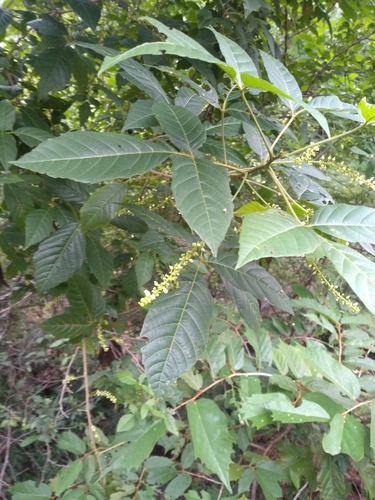
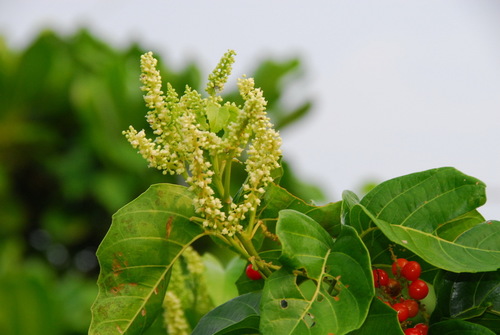
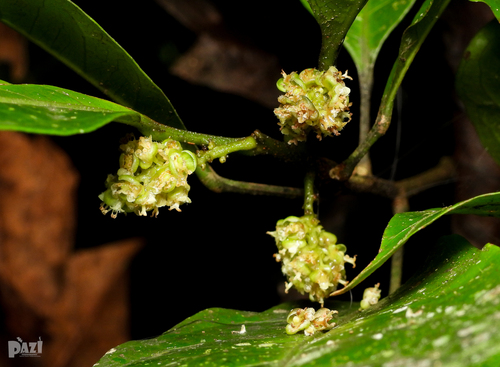
A medium to large tree. It grows 10-20 m high. It is spreading. The bark is grey, smooth and flaking. The leaves have 3-7 pairs of leaflets. The leaflets are 4-10 cm long by 2.5-4 cm wide. They are glossy light green. They leaf stalk can be 7 cm long. The flowers are small and in short dense heads. These are 2 cm long. The fruit is oval and fleshy. It is 2 cm long by 1.5 cm wide. It is bright orange when mature. Fruit are edible.
Edible Uses
Fruit - raw. The fruit is peeled, the seed discarded, and the sweet fleshy yellow pulp eaten in small quantities. The fruits are mostly eaten by children and herdsmen and are believed to cause severe diarrhoea if eaten in large quantities. The yellow-orange, cylindrical fruit is up to 20mm long.
Traditional Uses
The fruit is eaten raw.
This uses section is brief — help expand it
Medicinal Uses
The bark is dried, pounded to a powder and then used as a snuff to treat colds, fevers, headaches and convulsions. A decoction of the roots is used as a remedy for colds, convulsions, impotence, intestinal worms, stomach-ache, constipation, hernia, mental illness, dysentery, fungal infection and for facilitating childbirth.
Known Hazards
The wood of Zanha golungensis is not considered commercially valuable as timber, but is used locally for construction, firewood, and furniture building. Several parts of the plant contain saponins and the bark is sometimes used as a substitute for soap. Some sources claim that the fruits are not eaten by humans, but other accounts from the Democratic Republic of Congo, Malawi, Togo, and Uganda dispute this. The bark, leaves, roots, and twigs of Z. golungensis are widely used as herbal medicine for a variety of ailments, including aches and pains, fevers, headaches, gastrointestinal problems, nausea, respiratory problems, toothaches. Herbal preparations of Z. golungensis are also reported to be used to facilitate childbirth, treat disorders of pregnancy, and as a galactagogue.
Distribution
A tropical plant. It grows at medium altitudes in open woodland. It can also occur in closed canopy and in evergreen forest. It is often on termite mounds. It can grow in lowland forests.
Where It Grows
Africa, Angola, Burkina Faso, Cameroon, Central Africa, Central African Republic, CAR, Congo DR, East Africa, Ethiopia, Gabon, Ghana, Guinea, Guinée, Malawi, Mali, Mozambique, Nigeria, Senegal, Southern Africa, Sudan, Tanzania, Togo, Uganda, West Africa, Zambia, Zimbabwe,
Cultivation
A dioecious species, both male and female forms need to be grown if fruit and seed are required.
Propagation
Seed - best sown as soon as it is ripe.
Other Uses
The stem and root bark contain saponin and are used as a substitute for soap. The fruits contain about 10.5% saponins. They are boiled then used as a soap. The woody stems are used for cleaning the teeth. The bark is used for chew sticks. The wood is hard and heavy[, 398. It carves easily into small articles. It is used for furniture, construction, building poles, pestles, grain mortars, tool handles, bedsteads and spoons. The wood is used for fuel and for making charcoal.
Production
In Central African Republic flowers have been recorded in March.
Other Information
The fruit are sometimes eaten.
Nutrition
| Part | Moisture | kJ | kcal | Protein | Vit A | Vit C | Iron | Zinc |
|---|---|---|---|---|---|---|---|---|
| Fruit | 77.2 | 347 | 83 | 2.1 | — | — | — | — |
Also Known As
Kambo, Kuro, Metengame, Mkalia, Mkwidio, Mkwilyo, Murijorjo
References (16)
- Abbiw, D.K., 1990, Useful Plants of Ghana. West African uses of wild and cultivated plants. Intermediate Technology Publications and the Royal Botanic Gardens, Kew. p 49
- Atato, A., et al, 2010, Diversity of Edible Wild Fruit Tree Species of Togo. Global Science Books.
- Burkill, H. M., 1985, The useful plants of west tropical Africa, Vol. 1. Kew.
- Dalziel, J. M., 1937, The Useful plants of west tropical Africa. Crown Agents for the Colonies London.
- Fowler, D. G., 2007, Zambian Plants: Their Vernacular Names and Uses. Kew. p 60
Show all 16 references Hide references
- Fox, F. W. & Young, M. E. N., 1982, Food from the Veld. Delta Books. p 334
- Jardin, C., 1970, List of Foods Used In Africa, FAO Nutrition Information Document Series No 2.p 49, 169
- JSTOR Global Plants edible
- Lovett, J. C. et al, Field Guide to the Moist Forest Trees of Tanzania. p 159
- Malaisse, F., 1997, Se nourrir en floret claire africaine. Approche ecologique et nutritionnelle. CTA., p 69
- Palgrave, K.C., 1996, Trees of Southern Africa. Struik Publishers. p 540
- Peters, C. R., O'Brien, E. M., and Drummond, R.B., 1992, Edible Wild plants of Sub-saharan Africa. Kew. p 181
- Schatz, G.E., 2001, Generic Tree Flora of Madagascar. Royal Botanical Gardens, Kew and Missouri Botanical Garden. p 375 (Genus)
- Vivien, J., & Faure, J.J., 1996, Fruitiers Sauvages d'Afrique. Especes du Cameroun. CTA p 311
- Williamson, J., 2005, Useful Plants of Malawi. 3rd. Edition. Mdadzi Book Trust. p 269
- World Checklist of Useful Plant Species 2020. Royal Botanic Gardens, Kew