Willughbeia angustifolia
(Miq.) Mgf.
Giant sherbet, Orange sherbet
iNaturalist· cc-by-nc-nd
(c) Stanislav Španiel, some rights reserved (CC BY-NC-ND), uploaded by Stanislav Španiel
wikimedia· cc-by-sa
Vinayaraj (via Wikimedia Commons)
Summary
Source: WikipediaWillughbeia angustifolia is a species of flowering plant, a woody monoecious vine in the dogbane family, that is native to Southeast Asia.
Description
A woody climber. The leaves are oblong and 6-8.5 cm long by 2-4 cm wide. They taper to the tip. The flowers are in the axils of the leaves. The fruit are round and bright orange. They are 2-10 cm across. The seeds are large and flat.
Edible Uses
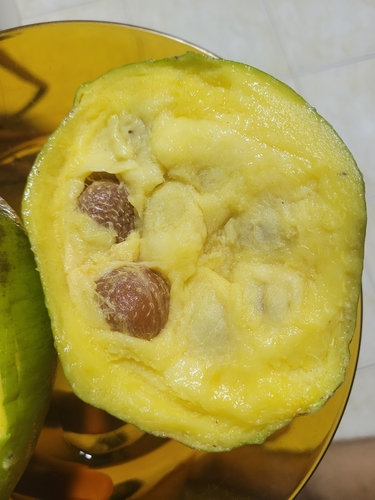
Fruit - raw. The bright orange, soft and juicy pulp has an excellent flavour, supposedly similar to orange sherbet. The baseball-sized fruit looks a bit like an orange-yellow passion fruit.
Traditional Uses
The fruit are sweet and eaten raw.
This uses section is brief — help expand it
Distribution
A tropical plant.
Where It Grows
Asia, India, Indonesia, Malaysia, Nicobar, Sarawak, SE Asia, Singapore, Thailand,
Synonyms
Also Known As
Akar kubal, Arkurbal, Gerit-gerit, Kubal madu, Surapit
References (7)
- Facciola, S., 1998, Cornucopia 2: a Source Book of Edible Plants. Kampong Publications, p 23
- Middleton, D. J. & Rodda, M., 2019, Apocynaceae. Flora of Singapore (Vol. 13:421-630, 2019) p 481
- Milow, P., et al, 2013, Malaysian species of plants with edible fruits or seeds and their evaluation. International Journal of Fruit Science. 14:1, 1-2
- Shaffiq, A. M., A., et al, 2013, Marketable wild fruits of Sarawak, Borneo: Their mode of consumption, uses and sugar profiles. Indian Journal of Traditional Knowledge. Vol 12(2): 195-201
- Siong, K. H., 2003, Indigenous Fruits of Sarawak. ITTO & Sarawak Forest Department. p 17
Show all 7 references Hide references
- Tankard, G., 1990, Tropical fruit. An Australian Guide to Growing and using exotic fruit. Viking p 129
- World Checklist of Useful Plant Species 2020. Royal Botanic Gardens, Kew