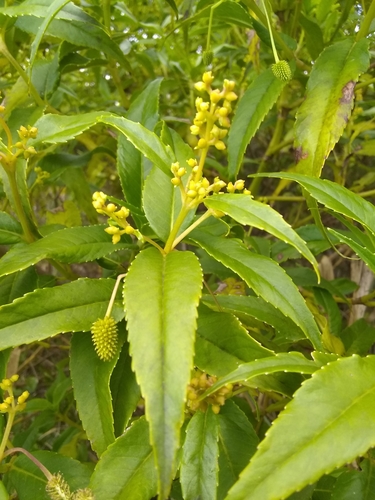
Ascarina philippinensis
C. B. Rob
iNaturalist· cc-by-nc
(c) EDGAR BITOON SOLIS, some rights reserved (CC BY-NC), uploaded by EDGAR BITOON SOLIS
gbif· cc0
President and Fellows of Harvard College
Summary
Source: WikipediaAscarina philippinensis is a species of small tree in the family Chloranthaceae. It is found in the Philippines, Sulawesi, Borneo, and New Guinea. Ascarina philippinensis is most commonly found in the months of July, August, and April. Over 50% of the time, it was found in Papua New Guinea.
Description
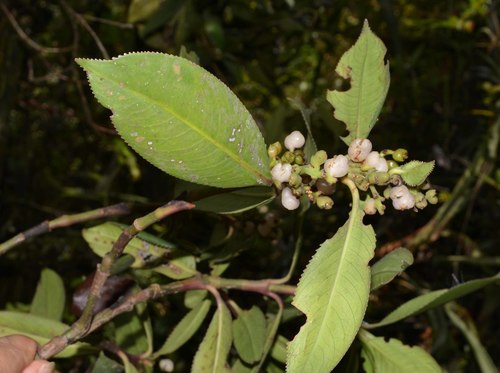
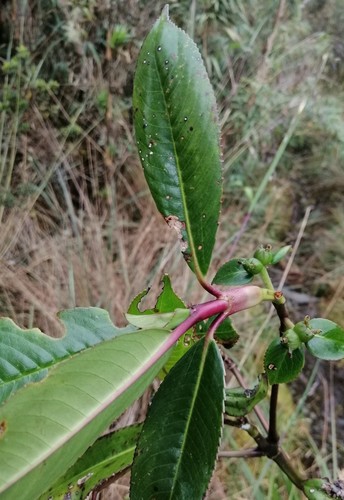
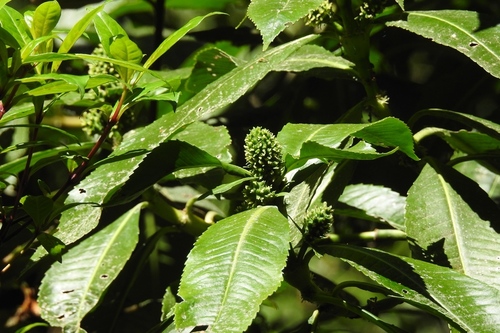
A forest tree with sweet smelling leaves. It grows 7-24 m high. The trunk is cylinder shape and about 40 cm across. The bark is rough and cracked. The leaves are spaced along the branches in opposite pairs. They have a short leaf stalk. The leaves are broadest near the middle. The leaves are 4-8 cm long by 3-4 cm wide. They are entire and without lobes. The leaves are green but darker above. The flowers are near the ends of the branches. Male and female flowers are separate on separate plants. The flowers are small and female flowers are smaller than male flowers. The fruit are 5-8 mm long.
Edible Uses
The leaves are eaten cooked.
Traditional Uses
The leaves have been recorded as being eaten cooked.
This uses section is brief — help expand it
Distribution
A tropical plant. It occurs in the forest between 400 and 2800 m altitude. The plant occurs in the Philippines, Borneo and Papua New Guinea.
Where It Grows
Asia, Indonesia, Pacific, Papua New Guinea, PNG, Philippines, SE Asia,
Cultivation
It grows wild.
Notes
There are 10-13 Ascarina species. They are from Malaysia to Polynesia and New Zealand. They are tropical or subtropical.
Synonyms
References (2)
- Powell, J.M., Ethnobotany. In Paijmans, K., 1976, New Guinea Vegetation. Australian National University Press. p 108
- World Checklist of Useful Plant Species 2020. Royal Botanic Gardens, Kew