Wahlenbergia gracilis
(G. Forst.) A. DC.
Australian Bluebell, Sprawling bluebell
iNaturalist· cc-by-nc
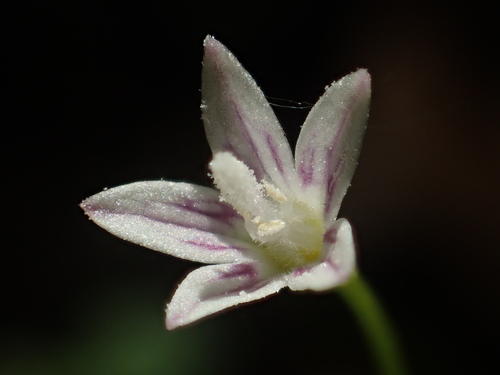
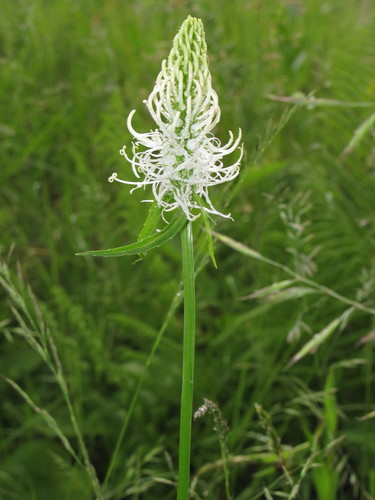
(c) Lucy T, some rights reserved (CC BY-NC), uploaded by Lucy T
iNaturalist· cc-by-nc
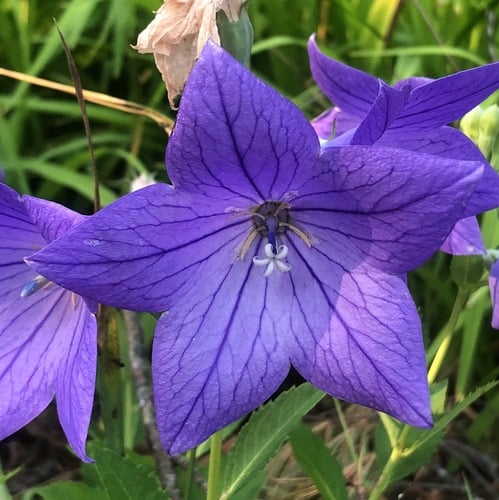
(c) Asimakis Patitsas, some rights reserved (CC BY-NC)
Summary
Source: WikipediaWahlenbergia gracilis, commonly known as Australian bluebell or sprawling bluebell is a perennial tufted herb from the family Campanulaceae. The species is widespread throughout Australia. The species is not considered at risk.
Description
An annual plant. It grows to 30 cm high and spreads to 25 cm wide. The stems are erect and slender. The leaves are narrow and green. They have saw-like teeth along the edge. The leaves near the base are opposite and sword shaped. The leaves up the stems are smaller and alternate. The flower stems are branching. These are 40 cm long. The flowers are white, blue or purple. They are star shaped or funnel shaped and have 5 petals. The flowers are about 10 mm across. Flowers occur singly at the end of the stalk.
Edible Uses
The roots are edible.
Distribution
It is a temperate plant. It does best in light to medium, well-drained soils. It needs an open, sunny position. It can tolerate frost but is damaged by drought. Tasmania Herbarium.
Where It Grows
Asia, Australia, China, Hawaii, Myanmar, New Caledonia, New Zealand, Pacific, Papua New Guinea, PNG, SE Asia, Tasmania,
Cultivation
Plants are grown from seed.
Synonyms
References (12)
- Bodkin, F., 1991, Encyclopedia Botanica. Cornstalk publishing, p 1024
- Curtis, W.M., 1963, The Students Flora of Tasmania Vol 2 p 406
- Flora of Australia Volume 49, Oceanic Islands 1, Australian Government Publishing Service, Canberra. (1994) p 345
- Gilfedder, L et al, 2003, The Nature of the Midlands. Midlands Bushweb. PO Box 156 Longford, Tasmania. p 77
- Harris, S., Buchanan, A., Connolly, A., 2001, One Hundred Islands: The Flora of the Outer Furneaux. Tas Govt. p 248
Show all 12 references Hide references
- Hunter, J.T., 2017, Is there a relationship between contemporary high Aboriginal plant resource locations and mapped vegetation communities? Cunninghamia 17:27-34. The Royal Botanic Garden Sydney. ISSN 2200 - 405X
- Lazarides, M. & Hince, B., 1993, Handbook of Economic Plants of Australia, CSIRO. p 248
- Lim, T. K., 2015, Edible Medicinal and Non Medicinal Plants. Volume 9, Modified Stems, Roots, Bulbs. Springer p 85
- Monogr. Campan. 142. 1830 - apparently not based upon Campanula gracilis Forster
- READ,
- Smith, P.J., 1992, A revision of the genus Wahlenbergia (Campanulaceae) in Australia, Telopea 5:91-175.
- Tasmanian Herbarium Vascular Plants list p 18