Vitis aestivalis
Michx.
Summer grape
wikimedia· cc0
Wikimedia Commons (via Wikimedia Commons)
wikimedia· cc-by
James H. Miller & Ted Bodner, Southern Weed Science Society, Bugwood.org (via Wikimedia Commons)
wikimedia· cc-by
James H. Miller & Ted Bodner, Southern Weed Science Society, Bugwood.org (via Wikimedia Commons)
iNaturalist· cc0
no rights reserved, uploaded by Reuven Martin
iNaturalist· cc-by
(c) Laura Clark, some rights reserved (CC BY), uploaded by Laura Clark
iNaturalist· cc-by-sa
(c) Douglas Goldman, some rights reserved (CC BY-SA), uploaded by Douglas Goldman
Summary
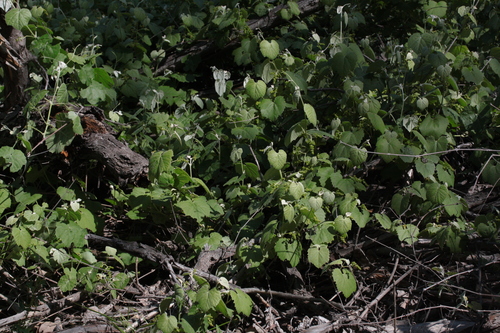
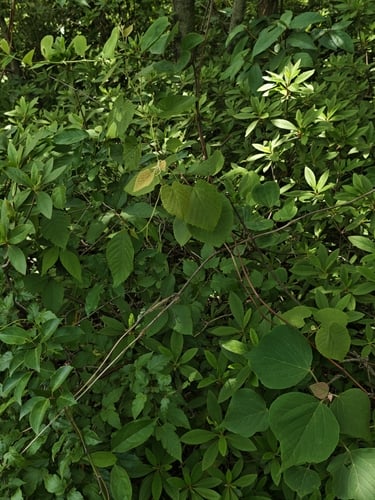
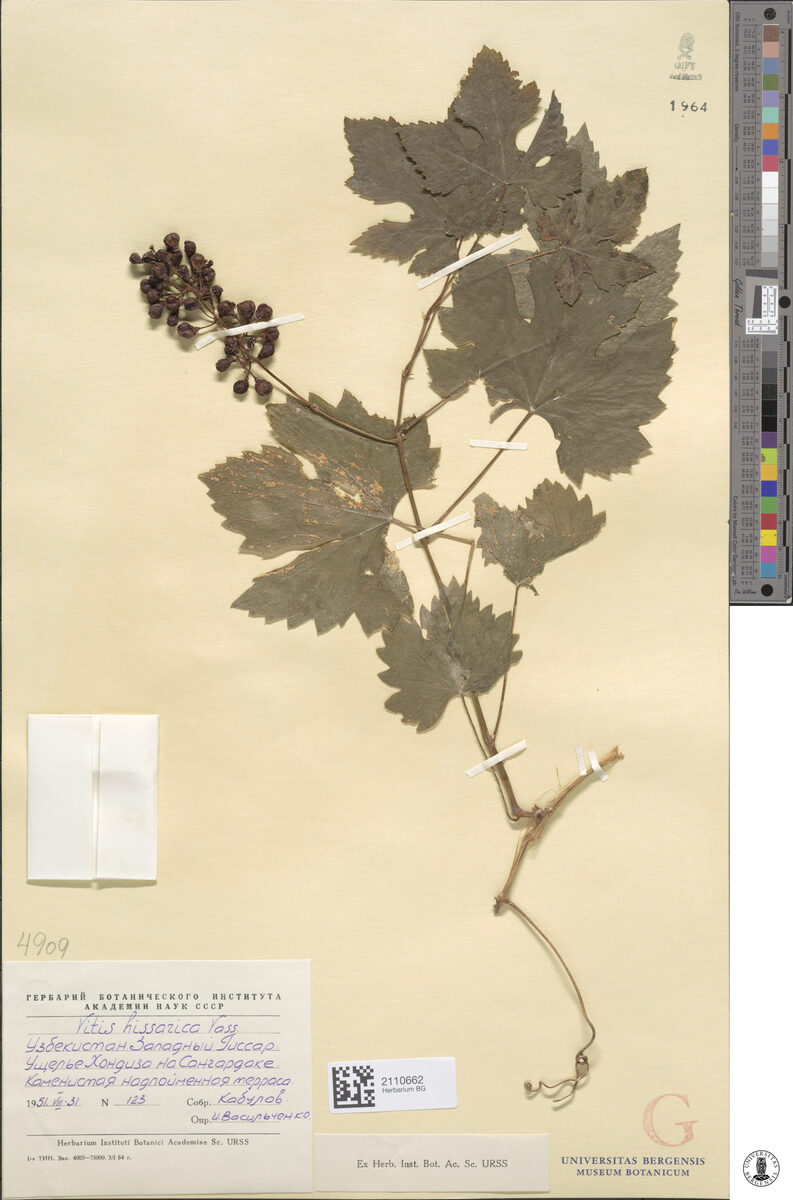
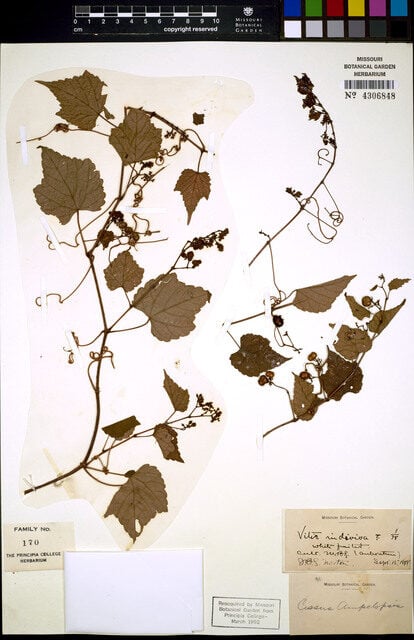
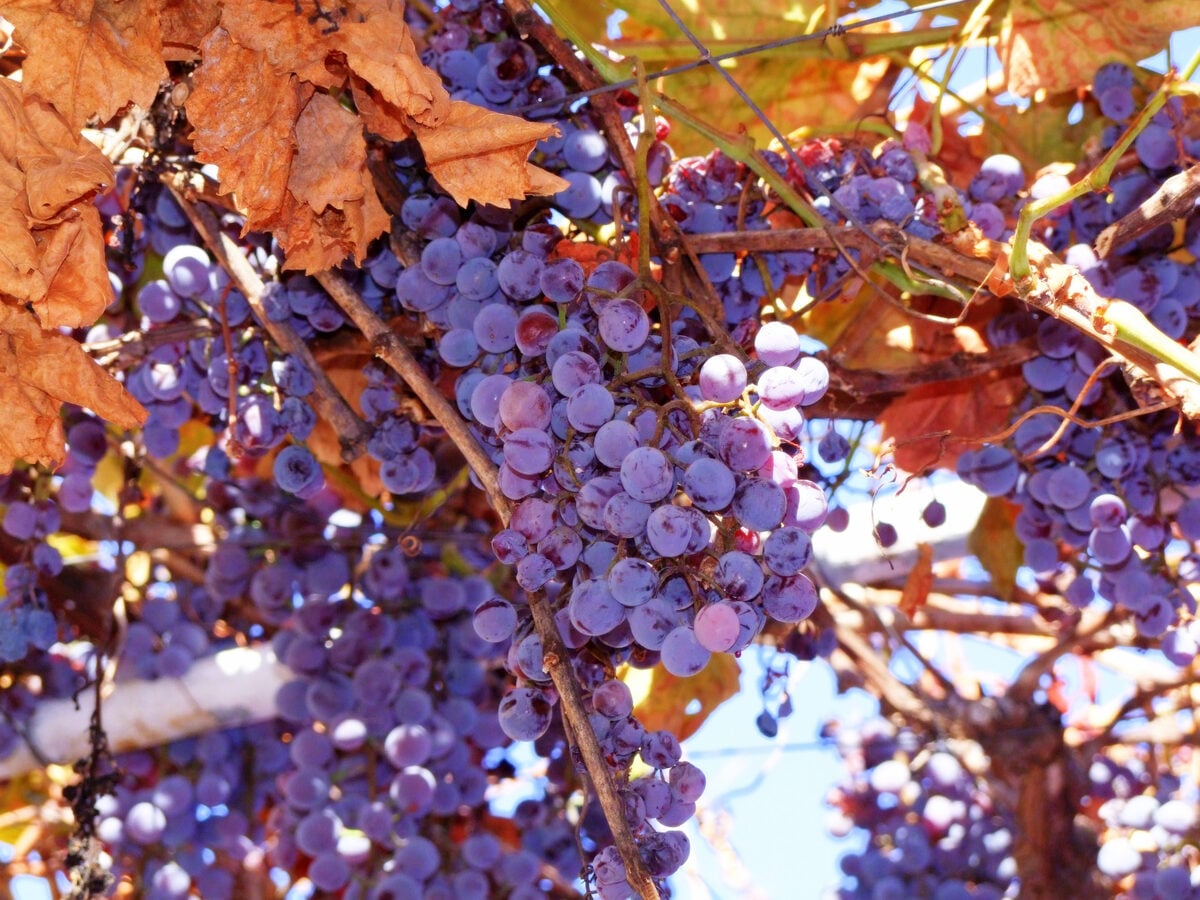
Source: WikipediaVitis aestivalis, the summer grape, or pigeon grape is a species of grape native to eastern North America from southern Ontario east to Maine, west to Oklahoma, and south to Florida and Texas. It is a vigorous vine, growing to 10 m or more high on trees. The leaves are 7–20 cm long, suborbicular, and usually a little broader than long; they are variable in shape, from unlobed to deeply three- or five-lobed, green above, and densely hairy below. The flowers are produced at every third node in a dense panicle 5–15 cm long. The fruit is a small grape 5–14 mm diameter, dark purple or black in colour. It is the official state grape of Missouri. Summer grape prefers a drier upland habitat. The four varieties are: V. a. var. aestivalis V. a. var. bicolor Deam (syn. var. argentifolia Fernald; Silverleaf Grape), formerly called Vitis bicolor, but now considered a northern variation of Vitis aestivalis, native range is in the Northeastern United States and parts of Southern Ontario V. a. var. lincecumii (Buckley) Munson V. a. var. bourquiniana L.H. Bailey, native to the south, sometimes called Vitis bourquiniana, has tomentose undersides to the leaves
Description
A grape vine. The leaves may not have lobes or can have 3-5 lobes. They are green above and hairy underneath. They have shallow teeth. The flowers are in a dense panicle. The are 5-15 cm across.
Edible Uses
The fruit, about 8mm in diameter and borne in fairly large bunches, can be eaten raw, cooked into jellies, jams, and pies, or dried for later use. It has an agreeable flavour that improves after a frost. Dried fruits make a good snack or addition to baked goods. Young leaves are best used cooked — wrap them around other foods and bake to impart a pleasant flavour. The stem yields a sweet, watery sap that makes a refreshing drink. Young tendrils can be eaten raw or cooked.
Traditional Uses
The fruit are eaten raw. They are also made into juice, jellies, jams, conserves, pies and wine. The dried fruit are eaten as snacks or used in baked goods. The stems yield a sweet watery sap.
Medicinal Uses
The leaves are hepatic and have been used in the treatment of the liver. Wilted leaves have been applied as a poultice to the breasts to relieve soreness following childbirth. A decoction of the leaves and stems has been taken internally to treat stomach aches, fevers, and headaches. An infusion of the bark has been used to address urinary complaints.
Distribution
It is a temperate plant. In Canada it grows in dry woods.
Where It Grows
Britain, Canada, Central America, Costa Rica, Europe, Mexico, North America, USA,
Cultivation
Prefers a deep rich moist well-drained moderately fertile loam. Grows best in a calcareous soil. Succeeds in sun or partial shade though a warm sunny position is required for the fruit to ripen. Plants climb by means of tendrils. They grow particularly well up elm trees. The flowers are sweetly scented with the aroma of mignonette. Any pruning should be carried out in winter when the plants are dormant otherwise they bleed profusely. This species is a parent of some cultivars that are grown for their edible fruits in N. America. Resistant to Phylloxera disease, a disease that almost destroyed the European grape crops. This species can be used as a rootstock in areas where the disease is prevalent and can also be used in breeding programmes with V. vinifera in order to impart resistance to that species. Plants in this genus are notably susceptible to honey fungus.
Propagation
Seed is best sown in a cold frame as soon as it is ripe. Six weeks of cold stratification improves germination, so stored seed should also be sown in a cold frame as soon as it is obtained. Germination usually occurs in the first spring but can take another 12 months. Prick out seedlings into individual pots when large enough to handle and grow on in a cold frame through their first winter, then plant out in early summer. Cuttings of mature wood from the current season's growth can be taken in December or January and rooted in a frame. These can be 15–30cm long, or short sections about 5cm long with a single bud at the top. For the shorter sections, remove a thin, narrow strip of bark about 3cm long from the lower portion of one side to encourage callusing and root formation; these shorter cuttings require a more sheltered environment than longer ones. Layering is also an option.
Other Uses
A yellow dye can be obtained from the fresh or dried leaves.
Other Information
It is a cultivated food plant.
Notes
There are 60 to 70 species of Vitis.
Dangerous Lookalikes
This plant can be confused with the following toxic species. Always verify identification carefully before consuming any wild plant.
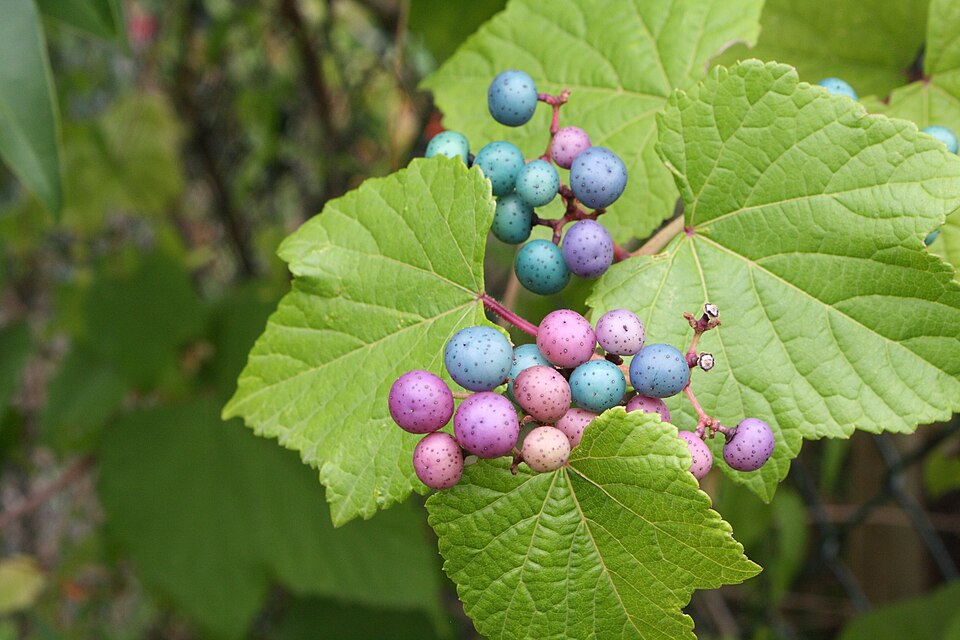
Canadian Moonseed
Menispermum canadense
Cbaile19
Summer grape
Vitis aestivalis
Wikimedia Commons (via Wikimedia Commons)
Canadian Moonseed: No tendrils, single crescent/moon-shaped seed, leaf stem attaches to underside of leaf.
Summer grape: Vine with tendrils, round seeds, leaf stem at edge of leaf, bark that peels.
Synonyms
Also Known As
Arkansas grape, Bunch grape, Chicken grape, Cynthiana grape, Norton grape, Pigeon grape, Rusty grape, Summer grape, Swamp grape, Uva silvestre
References (15)
- Duke, J.A., 1992, Handbook of Edible Weeds. CRC Press. p 212
- Facciola, S., 1998, Cornucopia 2: a Source Book of Edible Plants. Kampong Publications, p 245
- Fisk, J. R. & Hoover, E., 2015, Wild Fruits of Minnesota. A Field Guide. University of Minnesota p 21
- Fl. bor.-amer. 2:230. 1803
- Flowerdew, B., 2000, Complete Fruit Book. Kyle Cathie Ltd., London. p 92
Show all 15 references Hide references
- Hedrick, U.P., 1919, (Ed.), Sturtevant's edible plants of the world. p 681
- John, L., & Stevenson, V., 1979, The Complete Book of Fruit. Angus & Robertson p 142
- Kermath, B. M., et al, 2014, Food Plants in the Americas: A survey of the domesticated, cultivated and wild plants used for Human food in North, Central and South America and the Caribbean. On line draft. p 919
- MacKinnon, A., et al, 2009, Edible & Medicinal Plants of Canada. Lone Pine. p 155
- Moerman, D. F., 2010, Native American Ethnobotany. Timber Press. p 598
- Plants for a Future database, The Field, Penpol, Lostwithiel, Cornwall, PL22 0NG, UK. http://www.scs.leeds.ac.uk/pfaf/
- Segura, S., et al, 2018, The edible fruit species in Mexico. Genet Resour Crop Evol (2018) 65:1767–1793
- Toupal, R. S. & Hollenback, K., 2009, An Ethnobotany of Indiana Dunes National Lakeshore: Plant Uses of the Ojibwa People. Bureau of Applied Research in Anthropology. University of Arizona
- Wiersema, J. H. & Leon, B., 2013, World Economic Plants. A Standard Reference CRC Press. 2nd Ed. p 724
- World Checklist of Useful Plant Species 2020. Royal Botanic Gardens, Kew