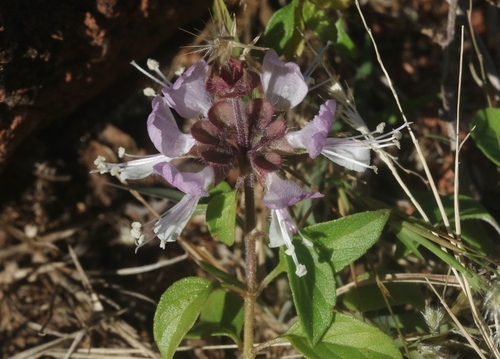
Vitex mombassae
Vatke
Smelly-berry vitex, Smelly-berry finger-leaf
iNaturalist· cc-by-nc-sa
(c) Rob Palmer, some rights reserved (CC BY-NC-SA), uploaded by Rob Palmer
iNaturalist· cc-by-nc
(c) franceschase, some rights reserved (CC BY-NC)
iNaturalist· cc-by-nc
(c) franceschase, some rights reserved (CC BY-NC)
Description
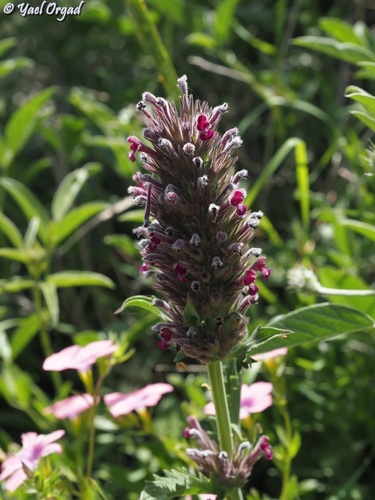
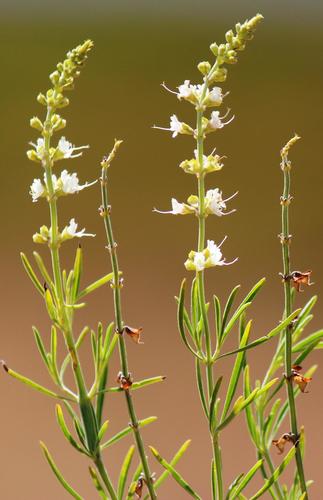
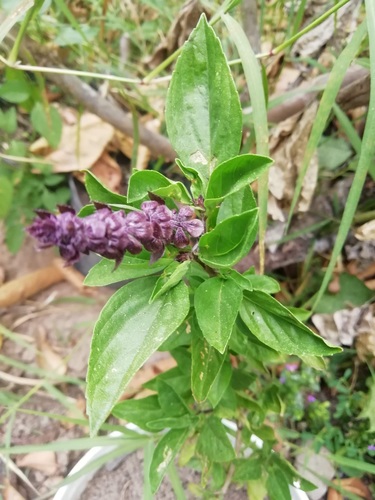
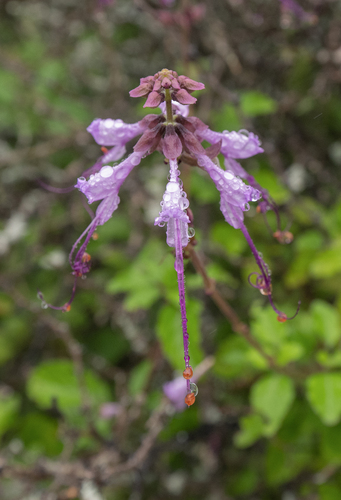
A shrub or tree. It grows up to 6 m tall. It often has many branches from the base. The leaves have 3-5 leaflets. The leaves have long stalks but the leaflets are stalkless. The leaflets radiate from one point and the end one is the largest. The leaflets are 7.5 cm long and 1.9 cm wide. They are densely velvety below. The flowers are violet or 2 coloured. The occur in groups on long stalks in the axils of leaves. The fruit has a hard stone and a thin fleshy covering. It is black when mature. The fruit is edible.
Edible Uses
The flesh of the fruit is eaten raw, and the seeds inside the hard stone are also edible. The fruit are especially eaten by children and are rich in Vitamin C. Wood ash is soaked in water and filtered to tenderize vegetables during cooking.
Traditional Uses
The flesh of the fruit is eaten raw. The fruit have an unpleasant smell and a persistent taste. The wood ash is soaked in water and filtered and this is used to tenderise vegetables during cooking. The seeds inside the hard stone is edible.
Medicinal Uses
The roots are boiled and the decoction used as a remedy for diabetes, infertility, and as an antiemetic.
Known Hazards
The fruit have an unpleasant smell and a persistent taste.
Distribution
A tropical plant. It grows in the lowlands. It grows in the savannah. It prefers sandy soils. It occurs in hot areas on stony outcrops. It is also in deciduous woodland and especially on Kalahari sand. In Kenya it grows from sea level to 450 m altitude. It grows in areas with an annual rainfall of 955-1,050 mm. It can grow in arid places. It grows in Miombo woodland.
Where It Grows
Africa, Botswana, Central Africa, Congo, East Africa, Kenya, Malawi, Mozambique, Namibia, South Africa, Southern Africa, Tanzania, Zambia, Zimbabwe,
Cultivation
Plants can be grown from fresh seeds.
Other Uses
The wood is used for poles, troughs, grain mortars, pestles, spoons and tool handles. The wood is used for fuel.
Production
In Tanzania the ripe fruit are collected from April to June.
Other Information
The fruit are especially eaten by children.
Notes
The fruit are rich in Vitamin C. Also put in the family Verbenaceae.
Nutrition
| Part | Moisture | kJ | kcal | Protein | Vit A | Vit C | Iron | Zinc |
|---|---|---|---|---|---|---|---|---|
| Fruit | 69.9 | 362 | 87 | 3.9 | — | 41 | 14 | 6.5 |
Synonyms
Also Known As
Chipindimbi, Fudu, Kafutu-bututa, Kazossotchi, Lufuka, M'purru, Makuku, Mchinka, Mfalali, Mfudukoma, Mfudu-madzi, Mfuntu, Mfutu, Mkula, Mpsympsya, Mpunungu, Mpyimpya, Misasati, Msasati, Mserakunyama, Mtalali, Mufudu-madzi, Mufutu, Musarari, Musasati, Mutae, Ntonongoli, Stinkbessievingerblaar, Sungwi, Talali, Tlambaumo
References (30)
- Akinnifesi, F. K., et al, 2006, Towards the development of Miombo fruit trees as commercial crops in Southern Africa. Forests, Trees and Livelihoods. Vol. 16 pp 1-3-121
- Campbell, B. M., 1987, The Use of Wild Fruits in Zimbabwe. Economic Botany 41(3): 375-385
- Dale, I. R. and Greenway, P. J., 1961, Kenya Trees and Shrubs. Nairobi. p 597
- Emmanuel, T. V., et al, 2011, Nutritive and Anti-nutritive Qualities of mostly preferred edible woody species in selected drylands of Iringa District, Tanzania. Pakistan Journal of Nutrition. 10(8): 786-791
- Fowler, D. G., 2007, Zambian Plants: Their Vernacular Names and Uses. Kew. p 43
Show all 30 references Hide references
- Fox, F. W. & Young, M. E. N., 1982, Food from the Veld. Delta Books. p 364
- Glover et al, 1969,
- Grivetti, L. E., 1980, Agricultural development: present and potential role of edible wild plants. Part 2: Sub-Saharan Africa, Report to the Department of State Agency for International Development. p 48
- Jardin, C., 1970, List of Foods Used In Africa, FAO Nutrition Information Document Series No 2.p 168
- Le Houerou, H. N., (Ed.), 1980, Browse in Africa. The current state of knowledge. International Livestock Centre for Africa, Ethiopia. p 163
- Malaisse, F., 1997, Se nourrir en floret claire africaine. Approche ecologique et nutritionnelle. CTA., p 69
- Mannheimer, C. A. & Curtis. B.A. (eds), 2009, Le Roux and Muller's Field Guide to the Trees and Shrubs of Namibia. Windhoek: Macmillan Education Namibia. p 428
- Maundu, P. et al, 1999, Traditional Food Plants of Kenya. National Museum of Kenya. 288p
- Mbuya, L.P., Msanga, H.P., Ruffo, C.K., Birnie, A & Tengnas, B., 1994, Useful Trees and Shrubs for Tanzania. Regional Soil Conservation Unit. Technical Handbook No 6. p 508
- Mpasiwakomu, R. A., 2017, The Diversity and Utilization of Wild Edible and Medicinal Plant Species found in Uvinza Miombo Woodlands, Tanzania. M. Sc. thesis University of Tanzania.
- Msola, D. K., 2007, The role of Wild Foods in Household Income and Food Security in Mufundi District, Tanzania. Morogoro, Tanzania.
- Mutie, F. M., et al, 2023, Important Medicinal and Food Taxa (Orders and Families) in Kenya, Based on Three Quantitative Approaches. Plants 2023, 12, 1145
- Njana, M. A., et al, 2013, Are miombo woodlands vital to livelihoods of rural households? Evidence from Urumwa and surrounding communities, Tabora, Tanzania. Forests, Trees and Livelihoods, 22:2, 124-140
- Pakia, M., 2000, Plant Ecology and Ethnobotany of two sacred forests (Kayas) at the Kenya Coast. M. Sc. Thesis.
- Palgrave, K.C., 1996, Trees of Southern Africa. Struik Publishers. p 810
- Palmer, E and Pitman, N., 1972, Trees of Southern Africa. Vol. 2. A.A. Balkema, Cape Town p 1957
- Peters, C. R., O'Brien, E. M., and Drummond, R.B., 1992, Edible Wild plants of Sub-saharan Africa. Kew. p 199
- Royal Botanic Gardens, Kew (1999). Survey of Economic Plants for Arid and Semi-Arid Lands (SEPASAL) database. Published on the Internet; http://www.rbgkew.org.uk/ceb/sepasal/internet [Accessed 19th April 2011]
- Ruffo, C. K., Birnie, A. & Tengnas, B., 2002, Edible Wild Plants of Tanzania. RELMA p 722
- Ruiters-Welcome, A. K., 2019, Food plants of southern Africa. Ph.D. thesis. Univ. of Johannesburg p 72
- Van Wyck, B., & Van Wyck, P, 1997, Field Guide to Trees of Southern Africa. Struik. p 476
- van Wyk, B, van Wyk, P, and van Wyk B., 2000, Photographic guide to Trees of Southern Africa. Briza. p 317
- Welcome, A. K. & Van Wyk, B.-E., 2019, An inventory and analysis of the food plants of southern Africa. South African Journal of Botany 122 (2019) 136–179
- Williamson, J., 2005, Useful Plants of Malawi. 3rd. Edition. Mdadzi Book Trust. p 264
- World Checklist of Useful Plant Species 2020. Royal Botanic Gardens, Kew