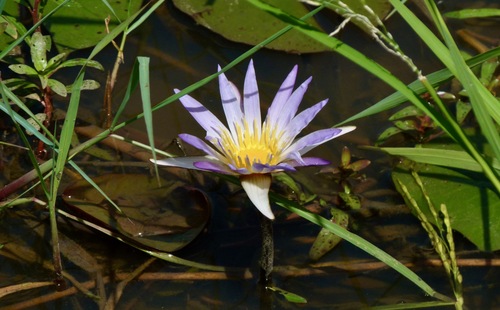
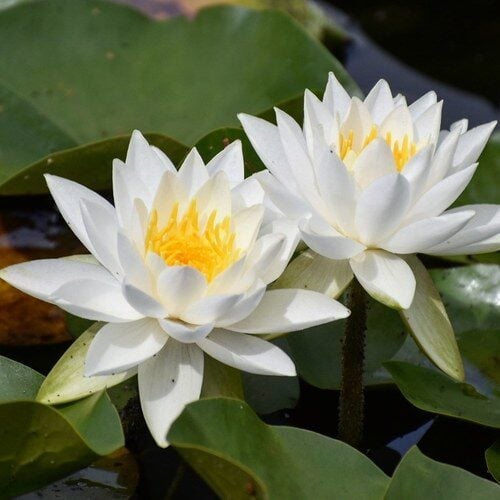
Victoria amazonica
(Poepp.) J. C. Sowerby
Royal water lily, Giant water lily, Amazon water lily
iNaturalist· cc-by-nc
(c) Laurel, some rights reserved (CC BY-NC), uploaded by Laurel
iNaturalist· cc-by-nc
(c) kcarrol2, some rights reserved (CC BY-NC), uploaded by kcarrol2
iNaturalist· cc-by-nc
(c) Pedro Ferreira Bisneto, some rights reserved (CC BY-NC), uploaded by Pedro Ferreira Bisneto
Summary
Source: WikipediaVictoria amazonica ("giant water lily") is a species of flowering plant, the second largest in the water lily family Nymphaeaceae. It is called Vitória-Régia or Iaupê-Jaçanã ("the jacana's waterlily") in Brazil and Atun Sisac ("great flower") in Inca (Quechua). Its native region is tropical South America, specifically Guyana and the Amazon Basin.
Description
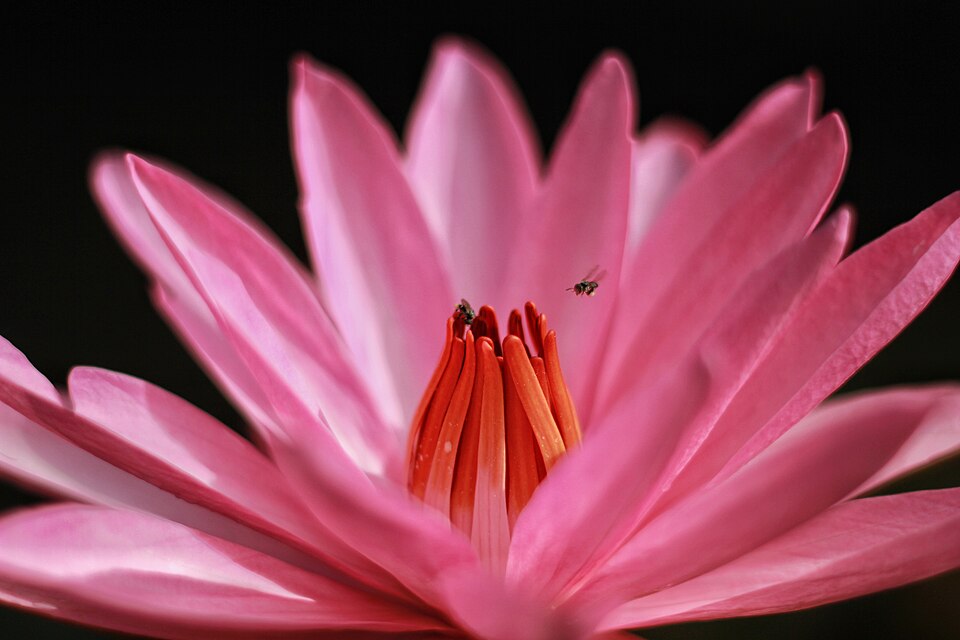
A water lily. It is an annual plant which grows in water. It has a thick rhizome. The leaves are 2 m across. The edges of the leaves curve upwards. There are gaps near the leaf stalk and directly opposite. The leaves float. The leaves have a netlike appearance. They are coppery red underneath. There are prickles under the leaf and on the leaf stalk. The flowers last for 3-4 days. They come out at night and have a sweet smell. The flowers are 25-40 cm across. They start creamy white but change to pink then purple. There are 50-60 petals. They are white or cream with a tinge of red. The fruit are 15 cm across. The fruit is covered with spines. The seeds are 5 mm across. They are green but turn black. The plants are pollinated by beetles.
Edible Uses
The seeds are roasted and eaten. The stems and roots are also edible.
Traditional Uses
The seeds are roasted and eaten.
This uses section is brief — help expand it
Distribution
It is a tropical plant. It grows in mud in water 1.2-2 m deep. They need water temperatures above 24°C. In XTBG Yunnan. It suits hardiness zones 10-12.
Where It Grows
Amazon, Asia, Australia, Bolivia, Brazil, China, Guiana, Guyana, India, Indochina, Indonesia, Mauritius, Peru, SE Asia, South America, Vietnam,
Cultivation
Plants can be grown from seed. The temperature needs to be above 29°C. Flowers can be hand pollinated.
Notes
There are 2 Victoria species in tropical America.
Synonyms
Also Known As
Forno-d'agua, Irupe, Maiz del agua, Reina victoria, Victoria-regia, Water Maize, Water-platter
References (20)
- Ambasta, S.P. (Ed.), 2000, The Useful Plants of India. CSIR India. p 676
- Ann. Mag. Nat. Hist. ser. 2, 6:310. 1850
- Bodkin, F., 1991, Encyclopedia Botanica. Cornstalk publishing, p 1017
- Bortolotto, I. M., et al, 2015, Knowledge and use of wild edible plants in rural communities along Paraguay River, Pantanal, Brazil. Journal or Ethnobiology and Ethnomedicine. 11:46
- Bortolotto, I. M., et al, 2018, Lista preliminar das plantas alimenticias nativas de Mato Grosso do Sul, Brasil. Iheringia, Serie Botanica, Porto Alegre, 73 (supl.):101-116
Show all 20 references Hide references
- Burkill, I.H., 1966, A Dictionary of the Economic Products of the Malay Peninsula. Ministry of Agriculture and Cooperatives, Kuala Lumpur, Malaysia. Vol 2 (I-Z) p 2271
- Cundall, P., (ed.), 2004, Gardening Australia: flora: the gardener's bible. ABC Books. p 1471
- Hedrick, U.P., 1919, (Ed.), Sturtevant's edible plants of the world. p 679 (As Victoria regia)
- http://www.botanic-gardens-ljubljana.com/en/plants
- Kermath, B. M., et al, 2014, Food Plants in the Americas: A survey of the domesticated, cultivated and wild plants used for Human food in North, Central and South America and the Caribbean. On line draft. p 909
- Llamas, K.A., 2003, Tropical Flowering Plants. Timber Press. p 295
- Menninger, E.A., 1977, Edible Nuts of the World. Horticultural Books. Florida p 112
- Morley, B. & Everard, B., 1970, Wild Flowers of the World. Ebury press. Plate 169
- Romanowski, N., 2007, Edible Water Gardens. Hyland House. p 34
- Smith, N., Mori, S.A., et al, 2004, Flowering Plants of the Neotropics. Princeton. p 271 (Drawing), Plate 33 (Photo)
- Slocum, P.D. & Robinson, P., 1999, Water Gardening. Water Lilies and Lotuses. Timber Press. p 87, 166, 283
- Sukarya, D. G., (Ed.) 2013, 3,500 Plant Species of the Botanic Gardens of Indonesia. LIPI p 1155
- Vasquez, Roberto Ch. & Coimbra, German S., 1996, Frutas Silvestres Comestibles de Santa Cruz. p 243
- World Checklist of Useful Plant Species 2020. Royal Botanic Gardens, Kew
- Xu, Z., Tao, G. & Tan, J., 1988, Tropical Wild Flowers and Plants in Xishuangbanna, Agricultural Publishing House. photo 114