Vicia unijuga
A. Braun
Crooked Broad Bean, Slanting head vegetable
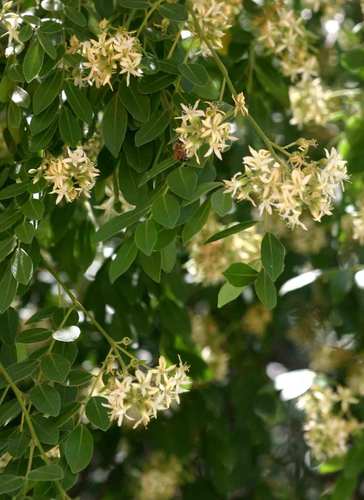
iNaturalist· cc-by-nc
(c) Роман Алдергот, some rights reserved (CC BY-NC), uploaded by Роман Алдергот
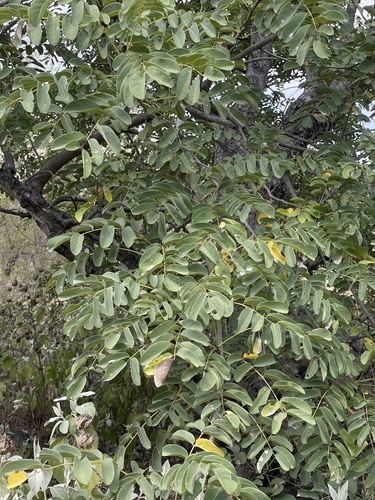
iNaturalist· cc-by-nc
(c) anatoliipomortsev, some rights reserved (CC BY-NC), uploaded by anatoliipomortsev
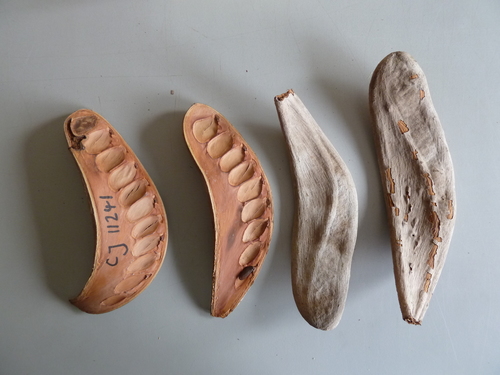
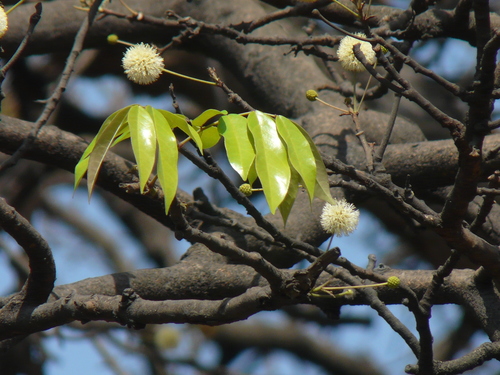
iNaturalist· cc-by-nc
(c) MP Zhou, some rights reserved (CC BY-NC), uploaded by MP Zhou
Summary
Source: WikipediaVicia unijuga, commonly called two-leaf vetch, is a species of flowering plant in the legume family. It is native to eastern Asia, where it is widespread, its range extending through China, Korea, Mongolia, Japan and Russia. It is very common in both China and Japan, and may be the most common species of Vicia in China. It is found in a variety of forested and open habitats. It is a perennial that produces purple flowers in the summer and fall. This species contains a considerable amount of morphological variation, with some forms and varieties being named. Vicia unijuga historically included the similar-looking Vicia ohwiana, which has now been given the rank of species.
Description
A herb. It keeps growing from year to year. It grows 1 m high. It is covered with dense soft silky hairs. The leaves have leaflets along the stalk. There are 2 leaflets and they are 3-10 cm long by 2-4 cm wide. The flowers are purple or purple-red. They are showy and 1.5 cm long. They occur as 6-8 in a group in the axils of leaves. The pod is 3-4 cm long and brown. The seeds are a flattened round shape and brown.
Edible Uses
Young plants and leaves are eaten cooked.
Traditional Uses
The young leaves are eaten with oil and salt. The seeds are occasionally eaten.
This uses section is brief — help expand it
Medicinal Uses
None known.
Distribution
It is a temperate vegetable. It grows in Inner Mongolia in China. It occur throughout much of China below 4,000 m above sea level. In Sichuan and Yunnan.
Where It Grows
Asia, China, Japan, Korea, Manchuria, Mongolia, Russia, Siberia, Tibet,
Cultivation
Succeeds in any well-drained soil in a sunny position if the soil is reliably moist throughout the growing season, otherwise it is best grown in semi-shade.
Propagation
Pre-soak seed for 24 hours in warm water, then sow in situ in spring or autumn.
Other Uses
A highly ornamental plant. Forms a symbiotic relationship with certain soil bacteria, which create nodules on the roots that fix atmospheric nitrogen. Some of this nitrogen feeds the plant itself, while some becomes available to neighbouring plants. Also used as a dynamic accumulator.
Other Information
It is occasionally cultivated.
Notes
There are about 140 Vicia species. They are mostly temperate.
Synonyms
Also Known As
Nanten hagi, Two-leaved vetch
References (12)
- Arora, R. K., 2014, Diversity in Underutilized Plant Species - An Asia-Pacific Perspective. Bioversity International. p 110
- Chen, B. & Qiu, Z., Consumer's Attitudes towards Edible Wild Plants, Ishikawa Prefecture, Japan. p 26 www.hindawi.com/journals/ijfr/aip/872413.pdf
- Hu, Shiu-ying, 2005, Food Plants of China. The Chinese University Press. p 488
- Hwang, H., et al, 2013, A Study on the Flora of 15 Islands in the Western Sea of Jeollanamdo Province, Korea. Journal of Asia-Pacific Biodiversity Vol. 6, No. 2 281-310
- Hwang, HS, et al, 2014, Distribution characteristics of plant in the Ungseokbong Mountain, Gyeongsangnam-do, Korea. Journal of Asia-Pacific Biodiversity. 7(2014) e164-e178
Show all 12 references Hide references
- ILDIS Legumes of the World http:www:ildis.org/Legume/Web
- Index sem. hort. berol. app. 12. 1853
- Plants for a Future database, The Field, Penpol, Lostwithiel, Cornwall, PL22 0NG, UK. http://www.scs.leeds.ac.uk/pfaf/
- READ,
- Urgamal, M., Oyuntsetseg, B., Nyambayar, D. & Dulamsuren, Ch. 2014. Conspectus of the vascular plants of Mongolia. (Editors: Sanchir, Ch. & Jamsran, Ts.). Ulaanbaatar, Mongolia. “Admon“ Press. 334pp. (p. 121-143).
- Wujisguleng, W., & Khasbagen. K., 2010, An integrated assessment of wild vegetable resources in Inner Mongolian Autonomous Region, China. Journal or Ethnobiology and Ethnomedicine 6:34
- Zeven, A. C. & de West, J. M. J., 1982, Dictionary of cultivated plants and their regions of diversity. Wageningen. p 40