Vicia sepium
L.
Bush vetch, Hedge vetch
iNaturalist· cc-by
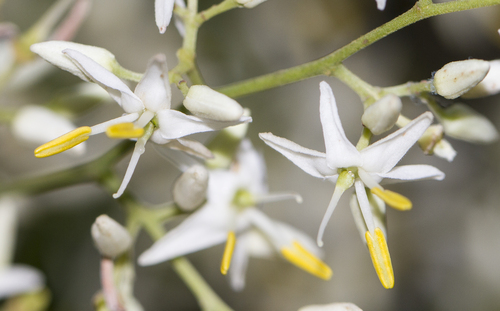
(c) Nasser Halaweh, some rights reserved (CC BY), uploaded by Nasser Halaweh
iNaturalist· cc-by
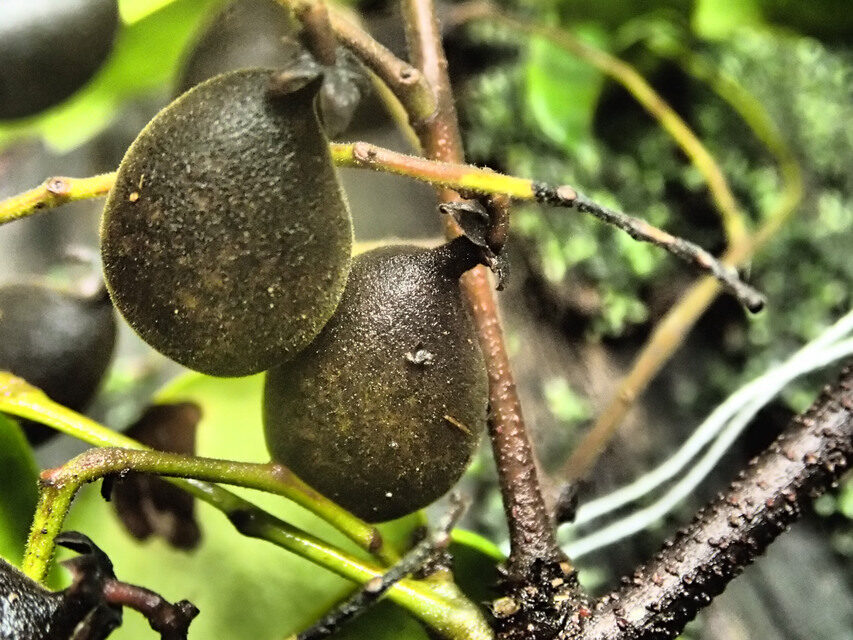
(c) Михаил Малышев, some rights reserved (CC BY), uploaded by Михаил Малышев
iNaturalist· cc-by
(c) Jon Mortin, some rights reserved (CC BY), uploaded by Jon Mortin
Summary
Source: WikipediaVicia sepium or bush vetch is a species of flowering plant in the pea and bean family Fabaceae. A nitrogen-fixing, perennial, leguminous climbing plant that grows in hedgerows, grasslands, the edges of woodland, roadsides and rough ground. It occurs in western Europe, Crimea of Ukraine, Russia including Siberia, Caucasus and Central Asia. It can also be found in eastern Canada, north-eastern states of the USA and, where suitable habitat occurs, in Greenland. It is native to, and has been recorded in, almost all parts of Britain, Ireland and associated islands.
Description
A medium height herb. It keeps growing from year to year and can scramble 1 m high. It has branched tendrils. It is usually hairy. The leaves have 3-9 pairs of oval or oblong leaflets. They can be rounded or have a notch at the tip. The stipules are lobed and have a dark spot near the base. The flowers are purplish-blue. They are 12-15 mm long. The flowers occur in clusters of 2-6. The fruit is a black pod. It is 20-35 mm long and hairless.
Edible Uses
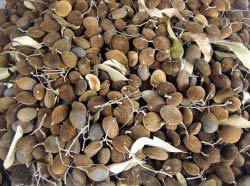
The seeds are eaten cooked.
Traditional Uses
They seeds are cooked and eaten.
This uses section is brief — help expand it
Medicinal Uses
None known.
Distribution
It is a temperate plant. It grows in rocky, bushy and grassy places. In China it grows between 1,000-2,200 m above sea level. In Sichuan and Yunnan.
Where It Grows
Asia, Britain, Central Asia, China, Europe, Falklands, Finland, France, Himalayas, India, Italy, Japan, Kazakhstan, Korea, Kyrgyzstan, Luxembourg, Mediterranean, Mongolia, Norway, Pakistan, Portugal, Russia, Scandinavia, Siberia, Spain, Tajikistan, Turkey, Türkiye,
Cultivation
Succeeds in any well-drained soil in a sunny position if the soil is reliably moist throughout the growing season, otherwise it is best grown in semi-shade.
Propagation
Pre-soak seed for 24 hours in warm water, then sow in situ in spring or autumn.
Other Uses
Forms a symbiotic relationship with certain soil bacteria, which create nodules on the roots that fix atmospheric nitrogen. Some of this nitrogen feeds the plant itself, while some becomes available to neighbouring plants. Also used as a dynamic accumulator.
Notes
There are about 140 Vicia species. They are mostly temperate.
Also Known As
Gjerdevikke
References (10)
- Ambasta, S.P. (Ed.), 2000, The Useful Plants of India. CSIR India. p 675
- Blamey, M and Grey-Wilson, C., 2005, Wild flowers of the Mediterranean. A & C Black London. p 89
- Chen, B. & Qiu, Z., Consumer's Attitudes towards Edible Wild Plants, Ishikawa Prefecture, Japan. p 26 www.hindawi.com/journals/ijfr/aip/872413.pdf
- Flora of Pakistan. www.eFloras.org
- Girard, N. J., 2020, Sustainable Foraging of Wild Edible Plants in Norway. A Biocultural Approach. M. Sc. thesis Norwegian University. p 131
Show all 10 references Hide references
- Hedrick, U.P., 1919, (Ed.), Sturtevant's edible plants of the world. p 678
- Plants for a Future database, The Field, Penpol, Lostwithiel, Cornwall, PL22 0NG, UK. http://www.scs.leeds.ac.uk/pfaf/
- Sp. pl. 2:737. 1753
- Upson, R., & Lewis R., 2014, Updated Vascular Plant Checklist and Atlas for the Falkland Islands. Falklands Conservation and Kew.
- Urgamal, M., Oyuntsetseg, B., Nyambayar, D. & Dulamsuren, Ch. 2014. Conspectus of the vascular plants of Mongolia. (Editors: Sanchir, Ch. & Jamsran, Ts.). Ulaanbaatar, Mongolia. “Admon“ Press. 334pp. (p. 121-143).