Vangueria infausta subsp. rotundata
(Robyns) Verdc.
iNaturalist· cc-by-sa
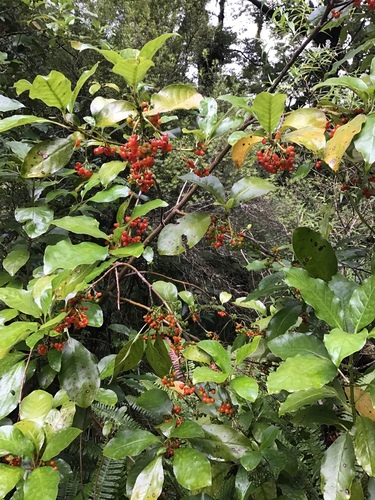
(c) Suvarna Parbhoo Mohan, some rights reserved (CC BY-SA), uploaded by Suvarna Parbhoo Mohan
iNaturalist· cc-by-nc
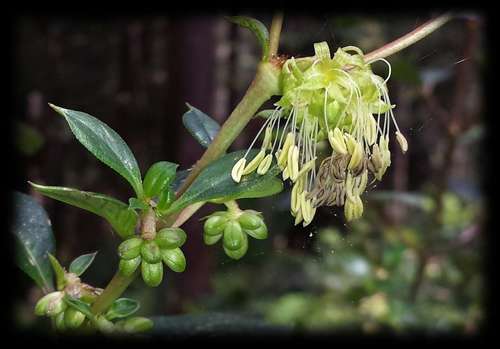
(c) Mark Hyde, Bart Wursten and Petra Ballings, some rights reserved (CC BY-NC)
iNaturalist· cc-by-nc
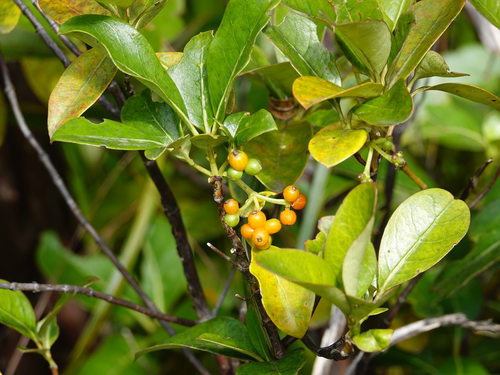
(c) Mark Hyde, Bart Wursten and Petra Ballings, some rights reserved (CC BY-NC)
Summary
Source: WikipediaVangueria infausta, the medlar or African medlar, is a species of plant in the family Rubiaceae, which is native to the southern and eastern Afrotropics. Some other names for V. infausta in Southern African languages include Mpfilwa in Tsonga, ngayi in Tonga, mmilo in Northern Sotho, muzwilu in Venḓa, umviyo in Southern Ndebele, mothwani in Tswana and umtulwa in Zulu. The fruits are consumed by humans and have a pleasant apple-like flavor. The specific name infausta alludes to a superstition that an evil spirit lives within the tree and the misfortune from its use as firewood which is said to 'unlock' the evil spirit from the wood. Many indigenous african names for V. infausta come from the Prot-Bantu mìdìdò (plural "fires").
Description
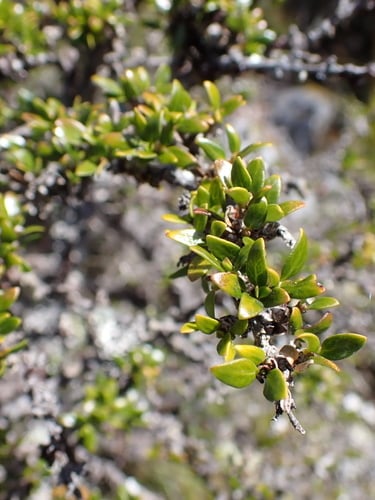
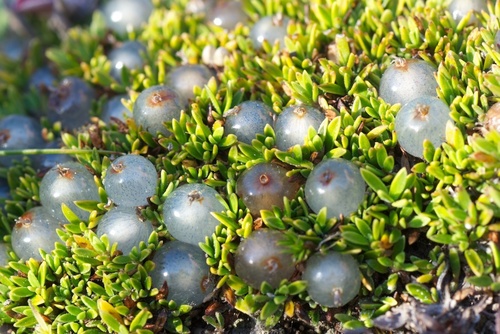
A shrub or small tree. It can grow 5 m tall. The bark is smooth and grey. The leaves are opposite and large. They are dark green above and lighter underneath. They are soft and covered with small hairs. The flowers are white to green and 5 mm long. They are on a branched flower arrangement. The fruit are almost round and 4.5 cm across. They are shiny dark green. Ripe fruit turn greenish brown.
Edible Uses
The African medlar is a traditional food plant in Africa. This little-known fruit has the potential to improve nutrition, boost food security, foster rural development and support sustainable land care. The fruit are consumed raw or the pulp may be dried and stored for later use, while the seeds may be roasted. Goats and game browse on the leaves, while other animals may consume the fruit on the tree, or after they are shed on the ground. The roots and leaves are used by traditional healers. Thin twigs are prone to being populated by spittlebugs.
Traditional Uses
The pulp of the fruit is eaten and the seeds discarded. The fruit pulp is added to milk or water to make a kind of porridge.
This uses section is brief — help expand it
Distribution
A tropical plant. In Kenya it grows from 10-2,450 m altitude. It can grow as well in open and in shaded areas.
Where It Grows
Africa, East Africa, Kenya, Malawi, Mozambique, South Africa, Tanzania, Uganda, Zambia, Zimbabwe,
Cultivation
Plants can be grown from seeds. The seeds germinate in about 3-4 weeks. Breaking the hard seed coat helps germination. The plant can also be grown from root suckers or cuttings. Trees can be pruned.
Production
Trees grown quickly. Fruit can be harvested after 3 years. Mature fruit can be picked and kept to ripen. Dry fruit can be stored for a year. They are then soaked overnight before using. In Tanzania fruit are collected from November to July.
Other Information
Fruit are sold in local markets.
Synonyms
Also Known As
Emaler, Mviru
References (5)
- Awodoyin, R.O., Olubode, O.S., Ogbu, J.U., Balogun, R.B., Nwawuisi, J.U. and Orji, K.O., 2015, Indigenous Fruit Trees of Tropical Africa: Status, Opportunity for Development and Biodiversity Management. Agricultural Sciences, 6, 31-41 (As Vangueria rotundata)
- FAO. 1983, Food and fruit-bearing forest species 1: Examples from Eastern Africa. FAO Food and Forestry Paper 44/1 p 127 (As Vangueria rotundata)
- Goode, P., 1989, Edible Plants of Uganda. FAO p 30 (As Vangueria rotunda and tomentosa )
- Maundu, P. et al, 1999, Traditional Food Plants of Kenya. National Museum of Kenya. 288p
- Ruffo, C. K., Birnie, A. & Tengnas, B., 2002, Edible Wild Plants of Tanzania. RELMA p 702