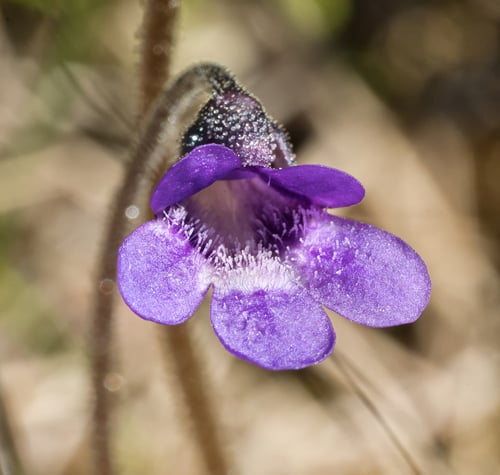
Utricularia vulgaris
L.
Greater Bladderwort, Water bladder wort
iNaturalist· cc-by-nc
(c) Natalia V. Borisova, some rights reserved (CC BY-NC), uploaded by Natalia V. Borisova
iNaturalist· cc-by-nc
(c) Emma Creasey, some rights reserved (CC BY-NC), uploaded by Emma Creasey
iNaturalist· cc-by
(c) Andre Hosper, some rights reserved (CC BY), uploaded by Andre Hosper
Summary
Source: WikipediaUtricularia vulgaris (greater bladderwort or common bladderwort) is an aquatic species of bladderwort found in Asia and Europe. The plant is free-floating and does not put down roots. Stems can attain lengths of over one metre in a single growing season, but die back and form turions in winter. The leaves are finely pinnately divided, between one and eight centimetres long and carry many bladder-like traps. The yellow flowers are borne on stalks above the surface of the water between April and August. In eastern Asia and North America, its place is taken by the related species U. macrorhiza.
Description
A herb. It keeps growing from year to year suspended in water. It has underwater stems which are narrow and divided. It has very thin stolons or runners. The bladders are 0.5 cm across and amongst the leaves. The leaves are narrowly oval and 3-5 cm long by 2-6 mm wide. The flowers are rich golden yellow. They are in groups of 6-8 on long stems above the water.
Edible Uses
The root and leaves are both edible, though no detailed preparation methods are recorded for either. The root can reach up to 1 metre in length, though it is rather thin; one account describes this as a floating aquatic plant with submerged root-like capillary branches rather than a true root. The juice of the plant is drunk for its rich mineral content.
Traditional Uses
The root is eaten.
This uses section is brief — help expand it
Medicinal Uses
The whole plant is mildly astringent, diuretic, and vulnerary. It is used as a poultice applied to wounds.
Distribution
It is a temperate plant. In China it grows in ditches and rice fields from 100-3500 m altitude in northern regions. It needs good sunlight. In Sichuan.
Where It Grows
Afghanistan, Africa, Asia, Australia, Canada, Central Asia, China, Europe, Kazakhstan, Luxembourg, Mongolia, North Africa, North America, Pakistan, Russia, Slovenia, Tajikistan, Tibet, USA, Uzbekistan,
Cultivation
A free-floating water plant, it requires acid conditions and is most commonly found in deep water. This species can become a noxious weed in rice paddies. An insectivores plant. The plant possesses bladders with trap doors. Most of the water is pumped out of the bladder, resulting in a lower pressure inside the bladder than outside. When a tiny (usually microscopic) creature touches one of the trigger hairs on the door, the door opens allowing water to rush in and carry the animal with it - the process taking just a small fraction of a second. The trap door closes and the animal is digested by the plant. An aggregate species.
Propagation
No specific information is available for this species, but sowing seed as soon as it is ripe on the surface of a pot of acid compost immersed in water is suggested. Division should also be possible during the growing season.
Other Uses
None known Special Uses
Production
It is slow growing.
Notes
There are about 200-215 Utricularia species. They trap and digest insects.
Also Known As
Asian bladderwort, Li zao, Navadna mešinka
References (11)
- Bodkin, F., 1991, Encyclopedia Botanica. Cornstalk publishing, p 1002
- Cormack, R. G. H., 1967, Wild Flowers of Alberta. Commercial Printers Edmonton, Canada. p 319
- Hibbert, M., 2002, The Aussie Plant Finder 2002, Florilegium. p 304
- http://www.botanic-gardens-ljubljana.com/en/plants
- Li Heng, Landholt, E., Lemnaceae. Flora of china. p
Show all 11 references Hide references
- Lim, T. K., 2015, Edible Medicinal and Non Medicinal Plants. Volume 9, Modified Stems, Roots, Bulbs. Springer p 84
- Plants for a Future database, The Field, Penpol, Lostwithiel, Cornwall, PL22 0NG, UK. http://www.scs.leeds.ac.uk/pfaf/
- READ,
- Slocum, P.D. & Robinson, P., 1999, Water Gardening. Water Lilies and Lotuses. Timber Press. p 68
- Sp. pl. 1:18. 1753
- Urgamal, M., Oyuntsetseg, B., Nyambayar, D. & Dulamsuren, Ch. 2014. Conspectus of the vascular plants of Mongolia. (Editors: Sanchir, Ch. & Jamsran, Ts.). Ulaanbaatar, Mongolia. “Admon“ Press. 334pp. (p. 158-187).