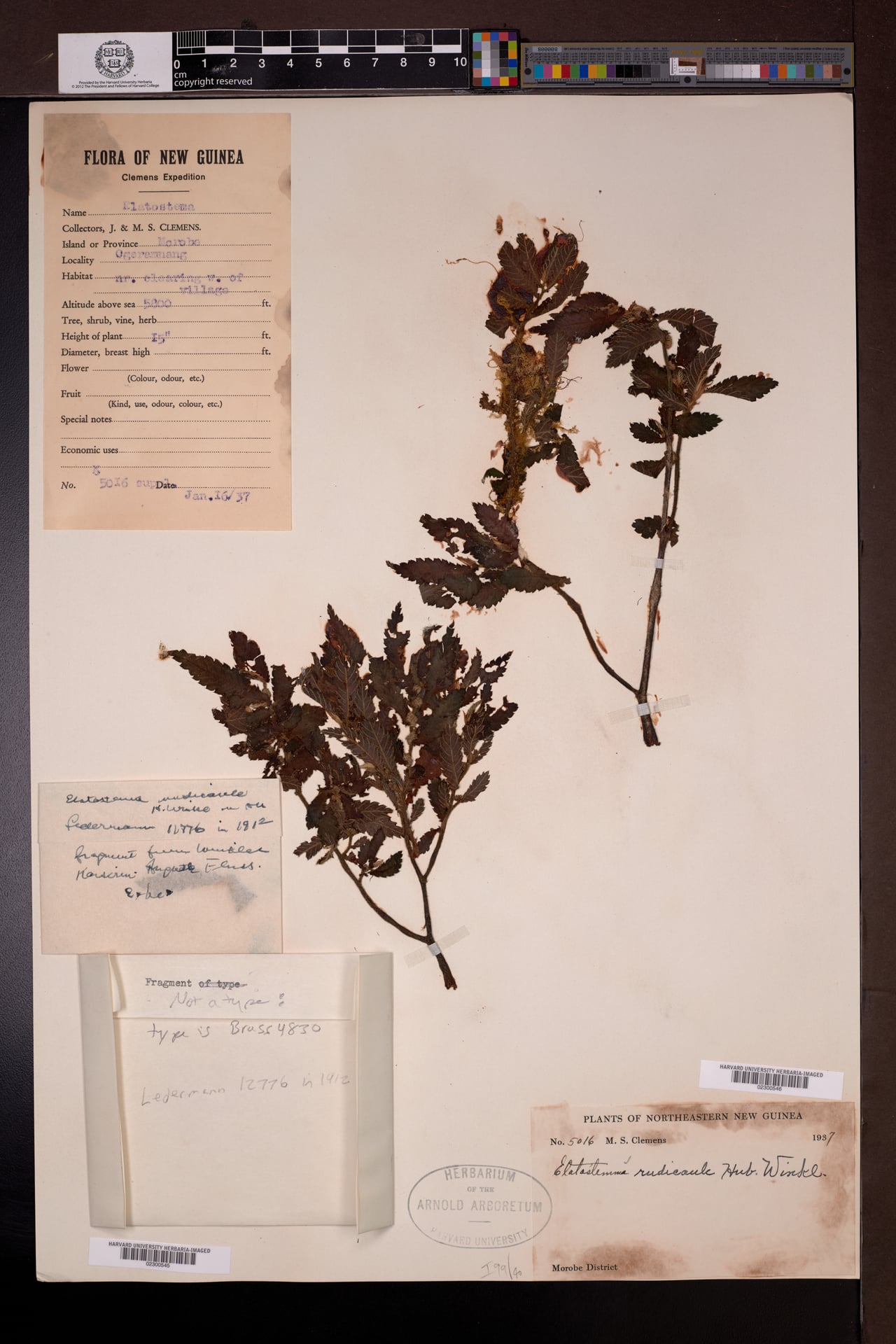
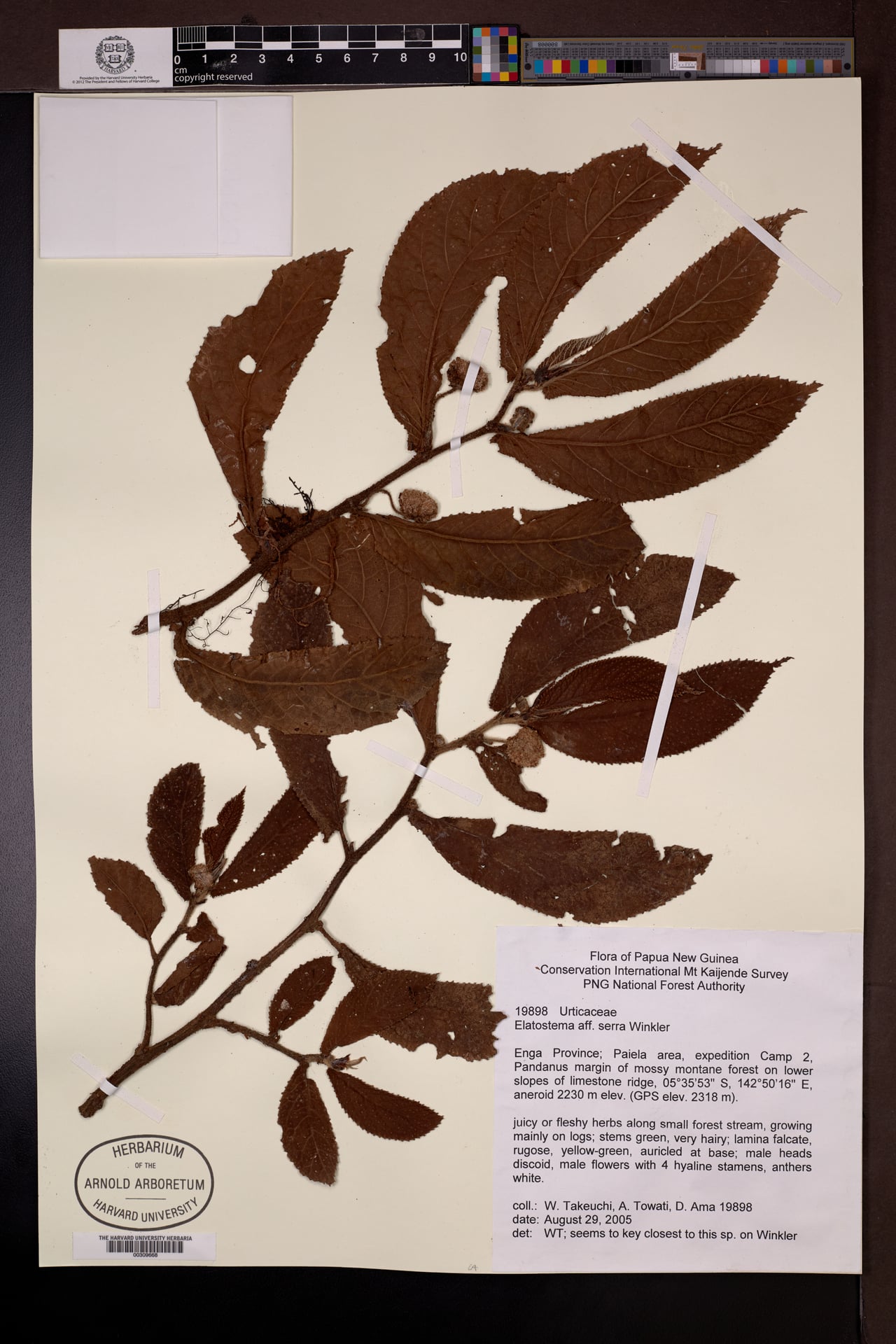
Urtica urens
L.
Small nettle, Lesser Nettle
iNaturalist· cc0
no rights reserved
iNaturalist· cc-by-nc
(c) bennybotany85, some rights reserved (CC BY-NC), uploaded by bennybotany85
iNaturalist· cc-by-nc
(c) lcnygard, some rights reserved (CC BY-NC)
Summary
Source: WikipediaUrtica urens, commonly known as annual nettle, dwarf nettle, small nettle, dog nettle, burning nettle, or bush nettle is a herbaceous annual flowering plant species in the nettle family Urticaceae. It is native to Eurasia, including the Himalayan regions of Kalimpong, Darjeeling and Sikkim in India and can be found in North America, New Zealand and South Africa as an introduced species. It is reputed to sting more strongly than Urtica dioica (common nettle).
Description
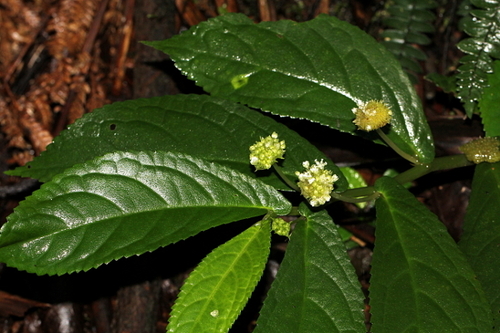
An erect annual herb. It is branched. It grows 60 cm high. The stems are soft and 4 angled. The leaves are broadly oval and deeply toothed. The leaves are 1-4 cm long. They are armed with sharply pointed stinging hairs. The flowers are small. They are in short clusters arising from the base of the leaves.
Edible Uses
Young leaves are cooked and used as a potherb — a highly nutritious food, rich in vitamins and minerals, that makes an excellent spinach substitute and works well in soups and stews. Only young leaves should be harvested, and stout gloves are essential to avoid being stung. Although fresh leaves carry stinging hairs, thorough drying or cooking destroys them completely. The young shoots are also used to brew nettle beer. An oil is extracted from the seeds as well.
Traditional Uses
The young leaves are eaten as a potherb. They are also mixed with meat as a relish. They are also used in omelettes.
This uses section is brief — help expand it
Medicinal Uses
Nettles have a long tradition as a home herbal remedy. A tea made from the leaves has been used as a tonic and blood purifier. The whole plant is antiasthmatic, antidandruff, astringent, depurative, diuretic, galactogogue, haemostatic, hypoglycaemic, and a stimulating tonic. An infusion is highly effective at stemming internal bleeding and is also used to treat anaemia, excessive menstruation, haemorrhoids, arthritis, rheumatism, and skin complaints — particularly eczema. Externally, the plant is applied for arthritic pain, gout, sciatica, neuralgia, haemorrhoids, and hair problems. For medicinal use, the plant is best harvested in May or June as it comes into flower, then dried for later use. This species merits further study for potential applications in kidney and urinary ailments. Nettle juice can be applied as an antidote to the plant's own sting, and an infusion of the fresh leaves makes a healing, soothing lotion for burns. A homeopathic remedy is prepared from the fresh plant gathered while in flower and is used as a first-aid treatment for bites and stings, burns, hives, and breastfeeding problems.
Known Hazards
The leaves of the plants have stinging hairs, causing irritation to the skin. This action is neutralized by heat so the cooked leaves are perfectly safe and nutritious. However, only young leaves should be used because older leaves develop gritty particles called cystoliths which act as an irritant to the kidneys.
Distribution
It grows in temperate regions. In Tibet in China it grows between 2,800-2,900 m altitude. It can grow in arid places. In Argentina it grows from sea level to 1,500 m above sea level. Tasmania Herbarium.
Where It Grows
Africa, Andorra, Argentina, Asia, Australia, Azerbaijan, Balkans, Belarus, Bolivia, Bosnia, Brazil, Britain, Canada, Chile, China, Colombia, Croatia, Cyprus, Czech, Ecuador, Egypt, Eswatini, Europe*, Falklands, Greenland, Hungary, India, Italy, Japan, Latvia, Lesotho, Libya, Lithuania, Luxembourg, Mediterranean, Middle East, Morocco, New Zealand, Norfolk Island, North Africa, North America, Norway, Paraguay, Peru, Poland, Qatar, Russia, Saudi Arabia, Scandinavia, Sicily, Slovakia, Slovenia, South Africa, Southern Africa, South America, Spain, Swaziland, Tasmania, Tibet, Turkey, Türkiye, Uruguay, Yemen,
Cultivation
Prefers a nitrogen-rich soil. The best fibre is produced when plants are grown on deep fertile soils. Dislikes shade.
Propagation
Sow seed in spring in a cold frame.
Other Uses
The stems yield a strong flax-like fibre used for string, cloth, and good-quality paper, harvested as the plant begins to die back in early autumn. The plant is an essential ingredient in 'QR' herbal compost activator; the leaves are also a fine compost addition and can be soaked in water for 7–21 days to produce a nutritious liquid plant feed that doubles as an insect repellent and foliar feed. The growing plant raises the essential oil content of nearby plants, increasing their resistance to insect pests. A hair wash from an infusion of the leaves is used as a tonic and antidandruff treatment. A green dye is obtained from the leaves and stems; a yellow dye from the root. Oil extracted from the seeds is used as an illuminant in lamps.
Notes
There are over 500 Urtica species.
Synonyms
Also Known As
Bubazi, Chichicastle, Chinitta pallo, Dog nettle, Dwarf Nettle, Imbabatane, Imbati, Impawa, Irawu, Irhawu, Isibathi, Isibati, Isirgan, Mala kopriva, Ortiga, Ortiga ardiente, Ortiga chica, Ortiga comun, Ortiga menor, Ortiga negra, Ortiga petita, Pokrzywa, Rupa chico, Ububazi, Umbababazane
References (77)
- Akinola, R., et al, 2020, A Review of Indigenous Food Crops in Africa and the Implications for more Sustainable and Healthy Food Systems. Sustainability 2020, 12, 3493; (
- Bindon, P., 1996, Useful Bush Plants. Western Australian Museum. p 260
- Biscotti, N. et al, 2018, The traditional food use of wild vegetables in Apulia (Italy) in the light of Italian ethnobotanical literature. Italian Botanist 5:1-24
- Blanco-Salas, J., et al, 2019, Wild Plants Potentially Used in Human Food in the Protected Area “Sierra Grande de Hornachos” of Extremadura (Spain). Sustainability 2019, 11, 456
- Bodkin, F., 1991, Encyclopedia Botanica. Cornstalk publishing, p 1001
Show all 77 references Hide references
- Bonet, M. A. & Valles, J., 2002, Use of non-crop food vascular plants in Montseny biosphere reserve (Catalonia, Iberian Peninsula). International Journal of Food Sciences and Nutrition (2002) 53, 225–248
- Bvenura, C. and Afolayan, A. J., 2017, Tackling food and nutrition insecurity using leafy wild vegetables: The nutritional compositions of some selected species.
- Ciftcioglu, C. G., 2015, Sustainable wild-collection of medicinal and edible plants in Lefke region of North Cyprus. Agroforest Syst. Springer
- Cordero, S. E., Abello, L. A., & Galvez, F. L., 2017, Plantas silvestres comestibles y medicinales de Chile y otras partes del mundo. CORMA p 254
- Cribb, A.B. & J.W., 1976, Wild Food in Australia, Fontana. p 133
- Curtis, W.M., 1993, The Student's Flora of Tasmania. Part 3 St David's Park Publishing, Tasmania, p 639
- Dashorst, G.R.M., and Jessop, J.P., 1998, Plants of the Adelaide Plains & Hills. Botanic Gardens of Adelaide and State Herbarium. p 48
- Denes, A., et al, 2012, Wild plants used for food by Hungarian ethnic groups living in the Carpathian Basin. Acta Societatis Botanicorum Poloniae 81 (4): 381-396
- Dogan, Y., et al, 2004, The Use of Wild Edible Plants in Western and Central Anatolia (Turkey). Economic Botany 58(4) pp. 684-690
- Dogan, Y., 2012, Traditionally used wild edible greens in the Aegean Region of Turkey. Acta Societatis Botanicorum Poloniae 81(4): 329-342
- Dogan, Y. et al, 2013, Wild Edible Plants sold in the Local Markets of Izmir, Turkey. Pak. J. Bot. 45(S1): 177-184
- Facciola, S., 1998, Cornucopia 2: a Source Book of Edible Plants. Kampong Publications, p 243
- Flora of Australia, Volume 3, Hamamelidales to Casuarinales, Australian Government Publishing Service, Canberra (1989) p 72
- Flora of Australia Volume 49, Oceanic Islands 1, Australian Government Publishing Service, Canberra. (1994) p 66
- Food Composition Tables for use in Africa FAO http://www.fao.org/infoods/directory No. 710
- Fox, F. W. & Young, M. E. N., 1982, Food from the Veld. Delta Books. p 360
- Geraci, A., et al, 2018, The wild taxa utilized as vegetables in Sicily (Italy): a traditional component of the Mediterranean diet. Journal of Ethnobiology and Ethnomedicine (2018) 14:14
- Hancer, C. K., et al, 2020, Traditional Knowledge of Wild Edible Plants of Biga (Çanakkale), Turkey. Acta Societatis Botanicorum Poloniae / 2020 / Volume 89 / Issue 1 / Article 8914
- Harris, S., Buchanan, A., Connolly, A., 2001, One Hundred Islands: The Flora of the Outer Furneaux. Tas Govt. p 244
- http://nordicfood lab/org/blog/2102/9/wild-edible-plants-an-overview
- http://www.botanic-gardens-ljubljana.com/en/plants
- Hussey, B.M.J., Keighery, G.J., Cousens, R.D., Dodd, J., Lloyd, S.G., 1997, Western Weeds. A guide to the weeds of Western Australia. Plant Protection Society of Western Australia. p 228
- Hu, Shiu-ying, 2005, Food Plants of China. The Chinese University Press. p 365
- Ibadullayeva, S., et al, 2011, Protection of some rare and endangered vegetable plants in the flora of the Nakhichevan AR. International Journal of Biodiversity and Conservation Vol. 3(6), pp. 224-229
- Jardin, C., 1970, List of Foods Used In Africa, FAO Nutrition Information Document Series No 2.p 109
- Kaliszewska, I & Kolodziejska-Degorska, I, 2015, The social context of wild leafy vegetables uses in Shiri, Daghestan. Journal of Ethnobiology and Ethnomedicine, 11:63
- Kayabasi, N. P., et al, 2018, Wild edible plants and their traditional use in the human nutrition in Manyas (Turkey). Indian Journal of Traditional Knowledge. Vol. 17(2), April 2018, pp 299-306
- Kepe, T., 2008, Social Dynamics of the Value of Wild Edible Leaves (Imifino) in a South African Rural Area. Ecology of Food and Nutrition, 47:531-558
- Kermath, B. M., et al, 2014, Food Plants in the Americas: A survey of the domesticated, cultivated and wild plants used for Human food in North, Central and South America and the Caribbean. On line draft. p 889
- Lamp, C & Collet F., 1989, Field Guide to Weeds in Australia. Inkata Press. p 317
- Lazarides, M. & Hince, B., 1993, Handbook of Economic Plants of Australia, CSIRO. p 243
- Lentini, F. and Venza, F., 2007, Wild food plants of popular use in Sicily. J Ethnobiol Ethnomedicine. 3: 15
- Long, C., 2005, Swaziland's Flora - siSwati names and Uses http://www.sntc.org.sz/flora/
- Low, T., 1991, Wild Herbs of Australia and New Zealand. Angus & Robertson. p 92 (Drawing)
- Low, T., 1991, Wild Food Plants of Australia. Australian Nature FieldGuide, Angus & Robertson. p 98
- Low, T., 1992, Bush Tucker. Australia’s Wild Food Harvest. Angus & Robertson. p 150
- Łukasz Łuczaj and Wojciech M Szymański, 2007, Wild vascular plants gathered for consumption in the Polish countryside: a review. J Ethnobiol Ethnomedicine. 3: 17
- Luczaj, L. et al, 2013, Wild edible plants of Belarus: from Rostakinski's questionnaire of 1883 to the present. Journal of Ethnobiology and Ethnomedicine 9:21
- Luczaj et al, 2013, Wild vegetable mixes sold in the markets of Dalmatia (southern Croatia). Journal of Ethnobiology and Ethnomedicine. 8:2
- Lukasz, L., 2016, Wild Edible Plants Traditionally Used in Poland.
- MacKinnon, A., et al, 2009, Edible & Medicinal Plants of Canada. Lone Pine. p 312
- Mahklouf, M. H., 2019, Ethnobotanical Study of Edible Wild Plants in Libya. European Journal of Ecology. 5(2): 30-40
- Malezas Comestibles del Cono Sur, INTA, 2009, Buernos Aires
- Martin, F.W. & Ruberte, R.M., 1979, Edible Leaves of the Tropics. Antillian College Press, Mayaguez, Puerto Rico. p 77, 223
- Nassif, F., & Tanji, A., 2013, Gathered food plants in Morocco: The long forgotten species in Ethnobotanical Research. Life Science Leaflets 3:17-54
- Ozbucak, T. B. et al, 2006, The Contribution of Wild Edible Plants to Human Nutrition in the Black Sea Region of Turkey. Ethnobotanical Leaflets 10: 98-103
- Paczkowska, G . & Chapman, A.R., 2000, The Western Australian Flora. A Descriptive Calatogue. Western Australian Herbarium. p 566
- Pasta, S., et al, 2020, An Updated Checklist of the Sicilian Native Edible Plants: Preserving the Traditional Ecological Knowledge of Century-Old Agro-Pastoral Landscapes. Frontiers in Plant Science. Volume 11|Article 388
- Plants for a Future database, The Field, Penpol, Lostwithiel, Cornwall, PL22 0NG, UK. http://www.scs.leeds.ac.uk/pfaf/
- Prakofjewa, J., et al, 2023, Boundaries Are Blurred: Wild Food Plant Knowledge Circulation across the Polish-Lithuanian-Belarusian Borderland. Biology 2023, 12, 571.
- Pruse, B., et al, 2021, Active Wild Food Practices among Culturally Diverse Groups in the 21st Century across Latgale, Latvia. Biology 2021, 10, 551.
- Redzic, S. J., 2006, Wild Edible Plants and their Traditional Use in the Human Nutrition in Bosnia-Herzegovina. Ecology of Food and Nutrition, 45:189-232
- Rivera, C., et al, 2005, The Ethnobotanical Study of Local Mediterranean Food Plants as Medicinal Resources in Southern Spain. Journal of Physiologyand Pharmacology. 56, Suppl. 1, 97-114
- Royal Botanic Gardens, Kew (1999). Survey of Economic Plants for Arid and Semi-Arid Lands (SEPASAL) database. Published on the Internet; http://www.rbgkew.org.uk/ceb/sepasal/internet [Accessed 13th June 2011]
- Ruiters-Welcome, A. K., 2019, Food plants of southern Africa. Ph.D. thesis. Univ. of Johannesburg p 106
- Sansanelli, S., et al, 2014, Wild food plants traditionall consumed in the area of Bologna (Emilia Romagna region, Italy). Journal of Ethnobiology and Ethnomedicine 10:69
- Sansanelli, S., et al, 2017, Ethnobotanical survey of wild food plants traditionally collected and consumed in the Middle Agri Valley (Basilicata region, southern Italy). Journal of Ethnobiology and Ethnomedicine (2017) 13:50
- Senkardes, I & Tuzlaci, E., 2016, Wild Edible Plants of Southern Part of Nevsehir inTurkey. Marmara Pharmaceutical Journal 20:34-43
- Shava, S., 2000, The Use of Indigenous Plants as Food by a Rural Community in the Eastern Cape: an Educational Exploration. Masters Thesis Rhodes University. p 67
- Skinner, G. & Brown, 1981, C., Simply Living. A gatherer's guide to New Zealand's fields, forests and shores. Reed. p 15
- Soukand, R., et al, 2017, Multi-functionality of the few: current and past uses of wild plants for food and healing in Liubań region, Belarus. Journal of Ethnobiology and Ethnomedicine (2017) 13:10
- Sp. pl. 2:984. 1753
- Swaziland's Flora Database http://www.sntc.org.sz/flora
- Tasmanian Herbarium Vascular Plants list p 58
- Tardio, J., et al, Ethnobotanical review of wild edible plants in Spain. Botanical J. Linnean Soc. 152 (2006), 27-71
- Tbatou, M, et al, 2016, Wild Edible Plants traditionally used in the countryside of El Jadida, Coastal Area in the Center of Morocco. Life Sciences Leaflets 75:28-48
- Torre, de la, L., et al, 2008, Enciclopedia de las Plantas Útiles del Ecuador. Herbario QCA. Pontificia Universidad Católica del Ecuador. p 613
- Uphof,
- Upson, R., & Lewis R., 2014, Updated Vascular Plant Checklist and Atlas for the Falkland Islands. Falklands Conservation and Kew.
- van Wyk, B., 2005, Food Plants of the World. An illustrated guide. Timber press. p 372
- Wehmeyer, A. S, 1986, Edible Wild Plants of Southern Africa. Data on the Nutrient Contents of over 300 species
- Welcome, A. K. & Van Wyk, B.-E., 2019, An inventory and analysis of the food plants of southern Africa. South African Journal of Botany 122 (2019) 136–179