Artocarpus camansi
Blanco
Breadnut, Kamansi
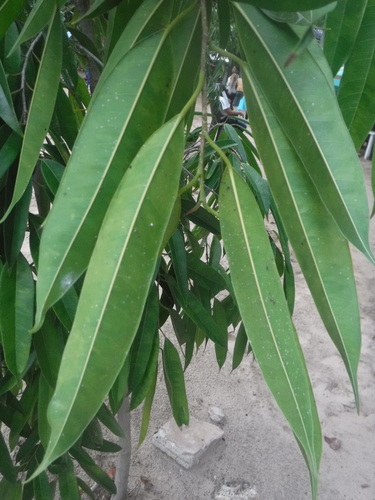
iNaturalist· cc-by-nc
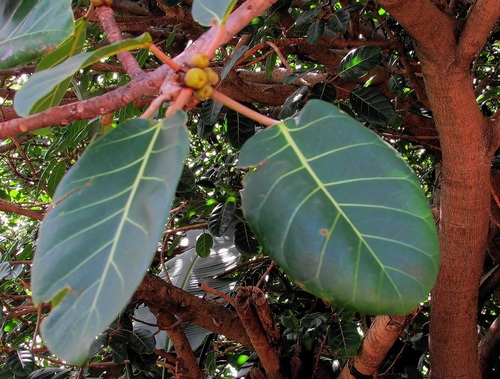
(c) adrianae19, some rights reserved (CC BY-NC)
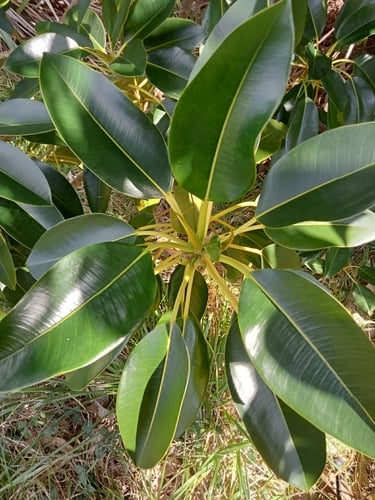
iNaturalist· cc-by-nc
(c) alba204, some rights reserved (CC BY-NC)
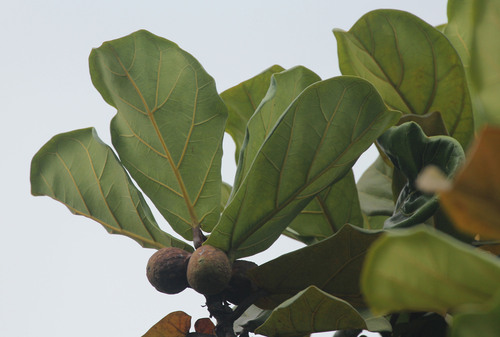
iNaturalist· cc-by-nc
(c) Steve Maldonado Silvestrini, some rights reserved (CC BY-NC), uploaded by Steve Maldonado Silvestrini
Summary
Source: WikipediaArtocarpus camansi, the breadnut, is a species of medium-sized tree in the family Moraceae. The wild ancestor of A. altilis (breadfruit), it is also known as seeded breadfruit to distinguish it from its mostly seedless descendant. The breadnut is native to New Guinea, the Maluku Islands, and the Philippines. Both the fruit and seeds are edible after cooking.
Description
A tree. It grows 15 m high. The flowers are on the ends of branches. The male flowers are club shaped an drooping and female flowers are round and upright. The fruit are oval and 20 cm across. They are green. They turn yellow-brown when ripe.
Edible Uses
Edible Parts: Fruit Oil Seed Edible Uses: Oil Fruit - usually cooked. A sweet aroma and taste. The fruits are nutritious and usually consumed when immature; thinly sliced and boiled as a vegetable in soups or stews. The greenish-yellow, oval or ovoid fruit is 7 - 12cm in diameter and weighs about 800g. Seed - cooked. When roasted they are similar to chestnuts in texture and flavour. They can be canned in brine, or processed into nut butter or nut paste, flour, or oil. The seeds are high in protein and relatively low in fat compared to nuts such as almond, Brazil nut, and macadamia nut; they are a good source of minerals and contain more niacin than most other nuts. The seeds are about 25mm long, with from 12 - 150 seeds per fruit, each seed weighing 7 - 10g and, in total, comprising 30 - 50% or more of the total fruit weight.
Traditional Uses
Young fruit are boiled, fried or roasted and eaten as a vegetable. The seeds are boiled or roasted.
This uses section is brief — help expand it
Medicinal Uses
No specific medicinal uses are reported for this species, but it tree probably has medicinal properties similar to the breadfruit (Artocarpus altilis).
Distribution
A tropical plant. It grows best in the equatorial lowland. It grows up to 600 m altitude. It suits a rainfall between 1300-3800 mm per year. It is best in deep fertile soil and it needs to be well-drained. It will grow up to 17° N and S of the equator. It does best in full sun. It needs a temperature above 5-10°C. It does best at temperatures of 21-32°C.
Where It Grows
Africa, Asia, Central Africa, Central America, Congo, Costa Rica, Indonesia, Malaysia, Pacific, Papua New Guinea, PNG, Philippines, Puerto Rico, SE Asia, Suriname, West Indies,
Cultivation
It grows best in areas where the mean maximum temperature of the hottest month is no more than 32 - 38c and the mean minimum temperature of the coolest month is no less than 16 - 18c. It prefers a mean annual rainfall in the range 1,300 - 3,800mm with no distinct dry season. Established plants can grow in full sun, but young plants need 20 - 50% shade. Grows best in a deep, light, fertile, well drained soil. Prefers a pH in the range 6.1 - 7.4. Plants can tolerate waterlogged soils and also periodic inundation of the soil for brief periods. Plants can withstand strong winds and will re-sprout after sustaining wind damage. Once established, breadnut trees can withstand a dry season of 3 - 4 months, although they prefer moist conditions. A moderately fast growing tree. Trees can start producing fruit when 8 - 10 years old. The tree has a shallow-rooting system, with roots often growing along the ground. Trees can produce 600-800 fruits in a season.
Propagation
Seed - it has a very short viability and needs to be sown as soon as it is ripe.
Other Uses
Fuel Insecticide Latex Mulch Oil Plant support Soil stabilization Wood Other uses rating: Medium (3/5). Agroforestry Uses: Breadnut can be interplanted with a wide range of crops and plants, such as yam, banana (Musa spp.), coconut (Cocos nucifera), sugarcane, medicinal plants, aroids, ginger, Indian mulberry (Morinda citrifolia, noni), small fruit trees, and field and vegetable crops such as corn, beans, peanut, tomato, and eggplant. The large leaves of breadnut provide abundant mulch for the tree and other plants growing beneath the canopy. Breadnut naturally occurs on frequently flooded river banks, where it helps to stabilize the soil. The tree is planted in home gardens to provide beneficial shade to other plants. It could also be used as a trellis tree for yam (Dioscorea species). Other Uses A sticky, white, milky latex is present in all parts of the tree. Dried male flowers can be burned to repel mosquitoes and other flying insects. The wood is light in weight, flexible, and easy to work and carve It is made into statues, bowls, fishing floats, and other objects. The wood is fast burning, but generally only older, less productive trees are used for fuel. Special Uses Carbon Farming Food Forest
Production
It is moderately fast growing. Trees can produce 600-800 fruits in a season.
Notes
There are about 50 Artocarpus species. They are in the tropics and subtropics of Asia and the Pacific.
Synonyms
Also Known As
Amuke, Castana, Chataigner, Dulugian, Kolo, Kapiak, Kelur, Kemangsi, Kluwih, Kulor, Kulur, Kuror, Mei kakano, Pakau, Pana de pepitas, Pulor, Ugod
References (14)
- Arora, R. K., 2014, Diversity in Underutilized Plant Species - An Asia-Pacific Perspective. Bioversity International. p 58
- Coronel, R.E., 1982, Fruit Collections in the Philippines. IBPGR Newsletter p 6, 9
- Elevitch, C.R.(ed.), 2006, Traditional Trees of the Pacific Islands: Their Culture, Environment and Use. Permanent Agriculture Resources, Holualoa, Hawaii. p 101
- Facciola, S., 1998, Cornucopia 2: a Source Book of Edible Plants. Kampong Publications, p 153 (As Artocarpus altilis var. seminifera)
- Jardin, C., 1970, List of Foods Used In Africa, FAO Nutrition Information Document Series No 2.p 39 (As Artocarpus altilis var. seminifera)
Show all 14 references Hide references
- Maxwell, A, et al, 2012, Morphological diversity in breadfruit (Artocarpus, Moraceae): insights into domestication, conservation, and cultivar identification. Genetic Resources and Crop Evolution. Published on line 22 May, 2012.
- PROSEA (Plant Resources of South East Asia) handbook, Volume 2, 1991, Edible fruits and nut. p 80
- Siong, K. H., 2003, Indigenous Fruits of Sarawak. Forest Department Sarawak. p 92
- Sukenti, K., et al, 2016, Ethnobotanical study on local cuisine of the Sasak tribe in Lombok Island, Indonesia. Journal of Ethnic Foods. 3 (2016) 189-200 p 198
- Suwardi, A. B., et al, 2020, Ethnobotany and conservation of indigenous edible fruit plants in South Aceh, Indonesia. Biodiversitas Vol. 21, No. 5, pp 1850-1860
- Terra, G.J.A., 1973, Tropical Vegetables. Communication 54e Royal Tropical Institute, Amsterdam, p 26 (As Artocarpus camansi)
- World Checklist of Useful Plant Species 2020. Royal Botanic Gardens, Kew
- www.worldagroforestrycentre.org/treedb/
- Zaldivar, M. E., et al, 2002, Species Diversity of Edible Plants Grown in Homegardens of Chibehan Amerindians from Costa Rica. Human Ecology, Vol. 30, No. 3, pp. 301-316 (As Artocarpus altilis var. seminifera)