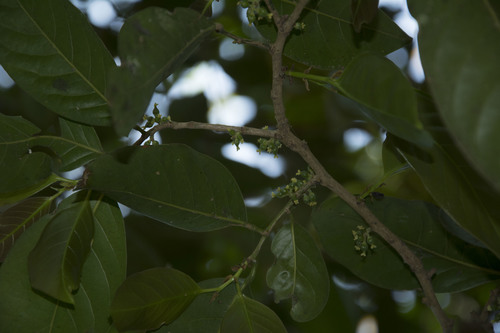
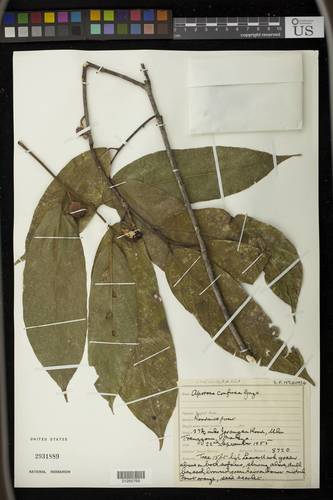
Uapaca sansibarica
Pax
Lesser mahobohobo
iNaturalist· cc-by-nc
(c) Mark Hyde, Bart Wursten and Petra Ballings, some rights reserved (CC BY-NC)
iNaturalist· cc-by-nc
(c) Mark Hyde, Bart Wursten and Petra Ballings, some rights reserved (CC BY-NC)
iNaturalist· cc-by-sa
(c) Tony Rebelo, some rights reserved (CC BY-SA)
Description
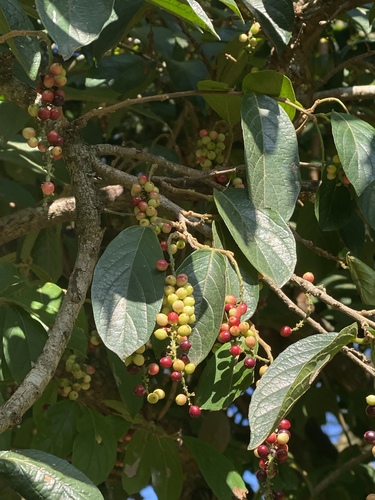
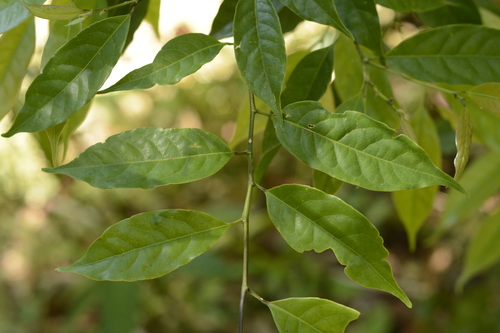
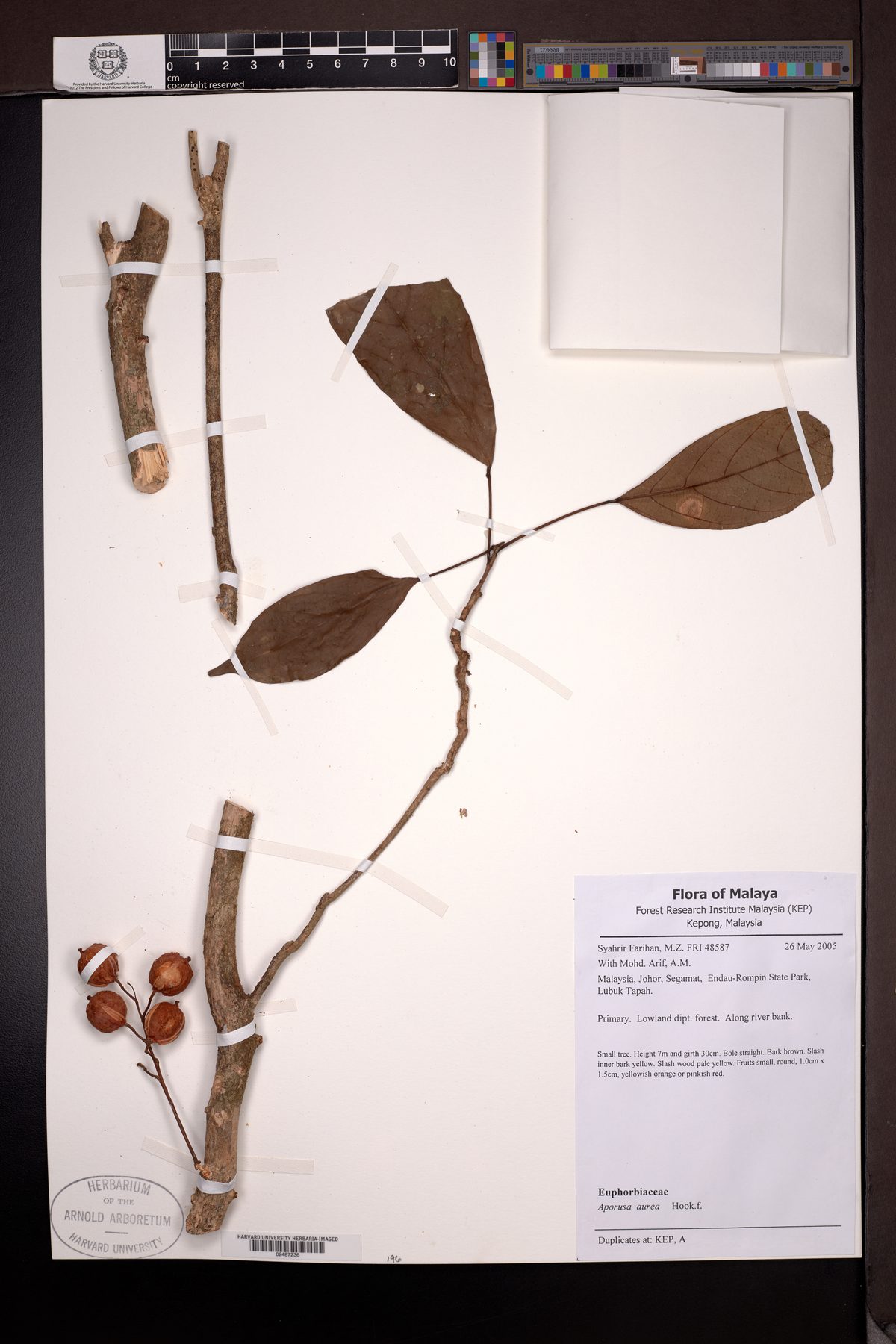
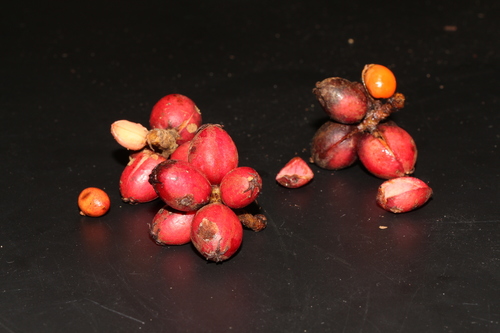
A small to medium sized tree. They are 6-10 m high. The bark is dark grey and rough. The leaves are scattered or clustered near the ends of branches. They are oval and 5-14.5 cm long by 2.3-7 cm wide. They are stiffly leathery. They are dark green above and paler underneath. The edges are rolled under. The flowers are greenish-yellow. The fruit are yellow and round. They are 1.5-2 cm across. The fruit stalks are 1.4-2 cm long.
Edible Uses
The ripe fruit are eaten raw for their sweet, jelly-like flesh, and are especially popular with children.
Traditional Uses
The ripe fruit are eaten raw. The edible flesh is jelly like and sweet.
This uses section is brief — help expand it
Medicinal Uses
The ripe fruit are traditionally eaten raw.
Known Hazards
The bark is used as a fish poison.
Distribution
A tropical plant. They grow at low altitudes in deciduous woodland and bamboo thicket. It grows between 500-1,830 m above sea level. It can grow in arid places.
Where It Grows
Africa, Angola, Burundi, Central Africa, Congo, East Africa, Malawi, Mozambique, Southern Africa, Sudan, Tanzania, Uganda, Zambia, Zimbabwe,
Cultivation
Plants can be grown from fresh seed. Trees can be cut back and will re-grow.
Propagation
Seed - best sown as soon as it is ripe.
Other Uses
A blue dye is obtained from the roots. It is used for dyeing cloth. The wood is used in for the construction of buildings, tool handles, bedsteads, grain mortars and beehives.
Production
In Tanzania fruit are avilable from June to August.
Other Information
The fruit are especially eaten by children.
References (14)
- Bot. Jahrb. Syst. 34:370. 1905
- Fowler, D. G., 2007, Zambian Plants: Their Vernacular Names and Uses. Kew. p 28
- Fox, F. W. & Young, M. E. N., 1982, Food from the Veld. Delta Books. p 196
- Jardin, C., 1970, List of Foods Used In Africa, FAO Nutrition Information Document Series No 2.p 166
- JSTOR Global Plants edible
Show all 14 references Hide references
- Mpasiwakomu, R. A., 2017, The Diversity and Utilization of Wild Edible and Medicinal Plant Species found in Uvinza Miombo Woodlands, Tanzania. M. Sc. thesis University of Tanzania.
- Palgrave, K.C., 1996, Trees of Southern Africa. Struik Publishers. p 409
- Peters, C. R., O'Brien, E. M., and Drummond, R.B., 1992, Edible Wild plants of Sub-saharan Africa. Kew. p 113
- Royal Botanic Gardens, Kew (1999). Survey of Economic Plants for Arid and Semi-Arid Lands (SEPASAL) database. Published on the Internet; http://www.rbgkew.org.uk/ceb/sepasal/internet [Accessed 16th April 2011]
- Ruffo, C. K., Birnie, A. & Tengnas, B., 2002, Edible Wild Plants of Tanzania. RELMA p 692
- Tredgold, M.H., 1986, Food Plants of Zimbabwe. Mambo Press. p 132
- Walsh, M., 2009, The Use of Wild and Cultivated Plants as famine Foods on Pemba Island, Zanzibar. Études océan Indien. 42-43
- Williamson, J., 2005, Useful Plants of Malawi. 3rd. Edition. Mdadzi Book Trust. p 255
- World Checklist of Useful Plant Species 2020. Royal Botanic Gardens, Kew