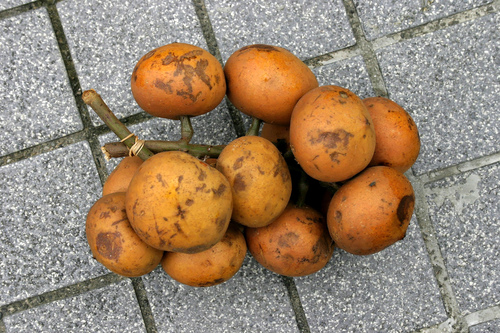
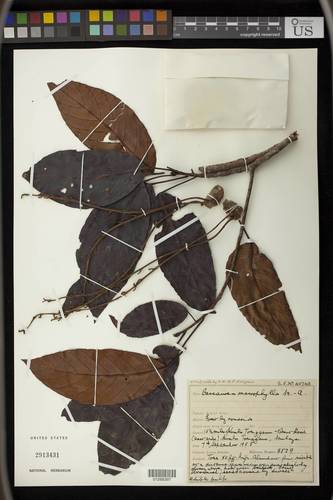
Uapaca heudelotii
Baill.
wikimedia· cc0
Wikimedia Commons - NMNH
gbif· cc-by-sa
Saint Fédriche NDZAI
gbif· cc-by-sa
Saint Fédriche NDZAI
Summary
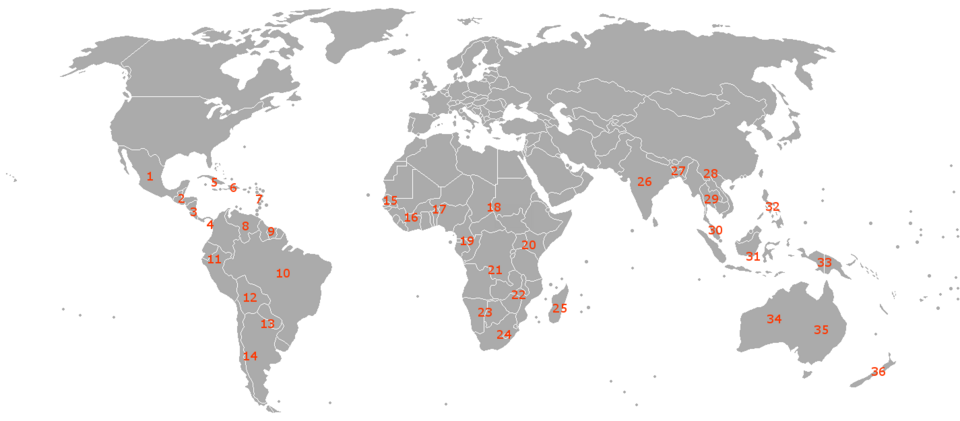
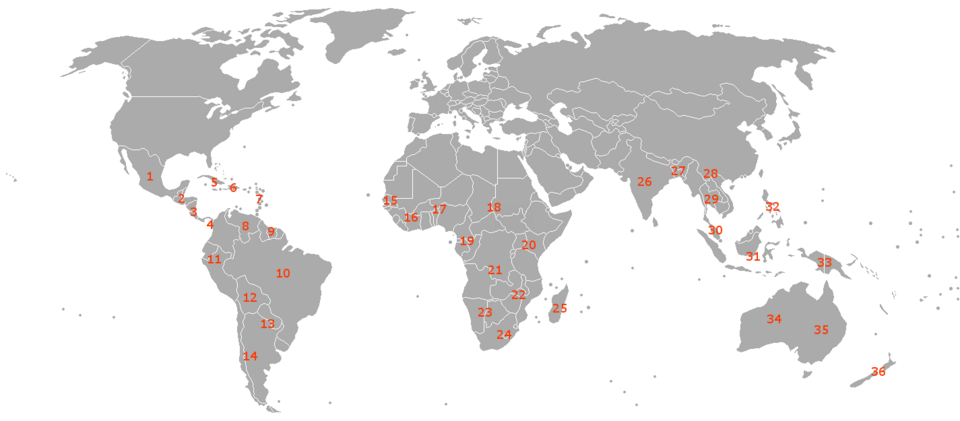
Source: WikipediaUapaca heudelotii, also known as rikio des rivières, is an evergreen plant in the family Phyllanthaceae. It is found in western Tropical Africa (Senegal, the Central African Republic, Angola, and the Democratic Republic of Congo) and is always located in wet places, mostly on river borders as it stabilizes the soil.
Description
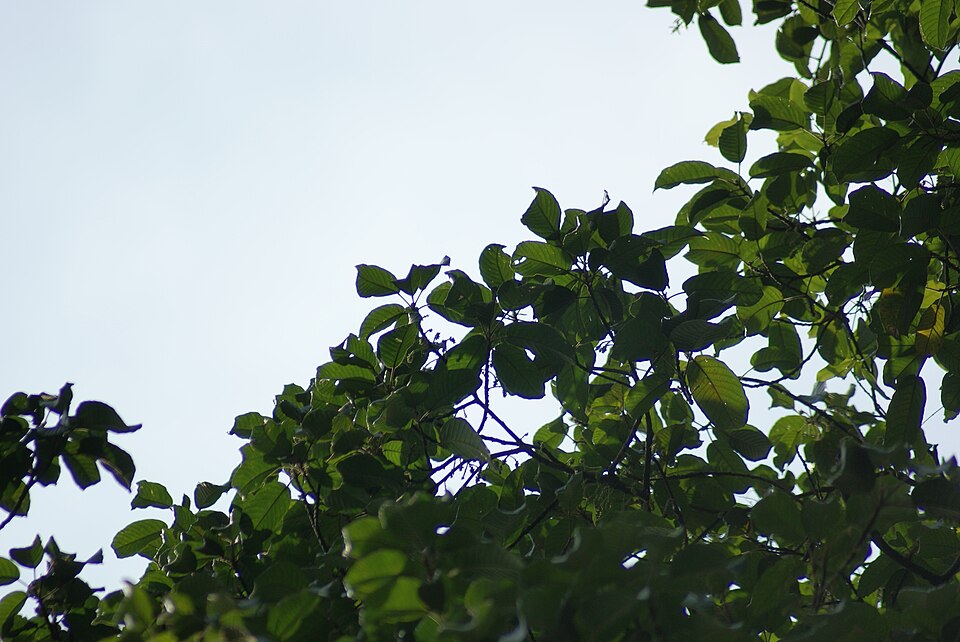
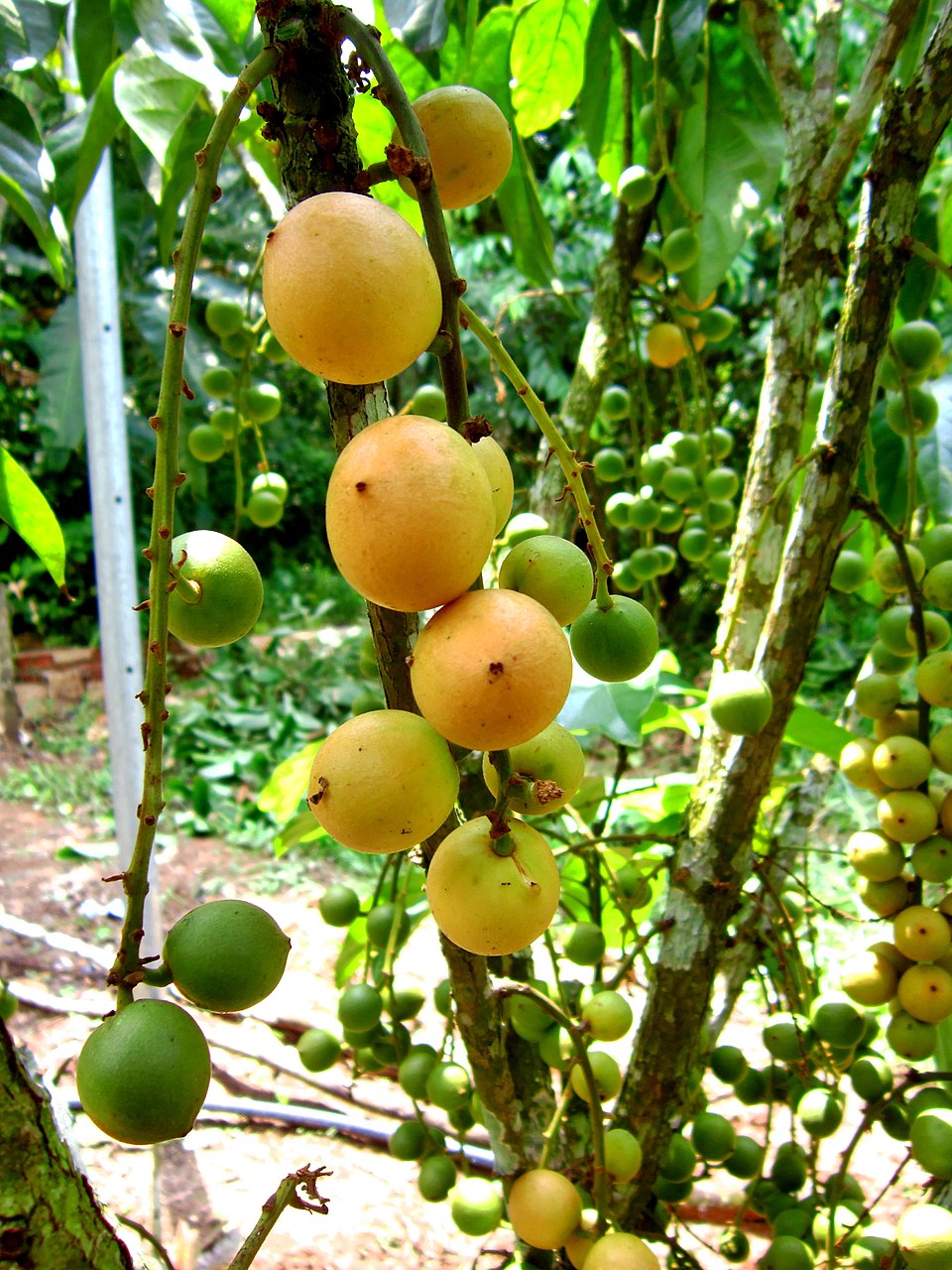
A tree. It grows to 20-30 m high. The trunk is 3 m around. It has stilt roots up to 5 m high. It can also have aerial roots. The bark is grey and rough. The crown is dense and with many branches. The leaves have tufts of short reddish hairs at their base. The leaves are 7-23 cm long by 2.5-7.5 cm wide. They are oval with a blunt point at the tip. They are narrowly wedge shaped at the base. They are dark green above and pale green underneath. The leaf stalks are slender and 2.5 cm long. The flowers have cream coloured bracts. The male heads are white or cream and on stalks 18 mm long. The fruit are elongated and 3 cm long by 2.5 cm wide. There are 3 elongated seeds.
Edible Uses
Fruit. The flavour is said to be similar to the medlar (Mespilus germanica). The ellipsoid to obovoid fruit is 22 - 30 mm long and 18 - 22mm wide.
Traditional Uses
The fruit are eaten raw.
This uses section is brief — help expand it
Medicinal Uses
The inner bark contains a sticky red sap. A bark-extract is used on skin-affections and as an emetic. A stem or root-bark-decoction is used in the treatment of female sterility, food-poisoning, rheumatism, localised oedemas and rachitic and premature babies. It is applied as an enema in the treatment of haemorrhoids. The decoction is used as a mouthwash and gargle for treating tooth-troubles. The leaves, or the bark, are pulped with palm-oil for external application to furuncles, migraines and rheumatism; it is also used as a massage for children who are late in learning to walk. A quantity of saponin is present in the leaves, but there are no reports of other active principles. The plant (part not specified) is used to promote intelligence.
Distribution
A tropical plant. It grows in swamp forest near water. It also grow on the edges of savannah forest. In Nigeria it has been recorded at 300 m above sea level.
Where It Grows
Africa, Burkina Faso, Cameroon, Central Africa, Central African Republic, CAR, Congo, Côte d'Ivoire, Ghana, Guinea, Guinée, Guinea-Bissau, Ivory Coast, Liberia, Nigeria, Sierra Leone, West Africa,
Cultivation
A dioecious species, both male and female forms need to be grown if fruit and seed are required.
Other Uses
The inner bark contains a sticky red sap. A bark-extract is used to dye fishing-lines. The heartwood is reddish-brown; the sapwood light-coloured tinged with red. The grain resembles mahogany but is a bit harder, more fibrous and less easily worked. The wood is durable. It splits well. It is cut for building poles; is suitable for carpentry and general construction; is used in buildings; and is cut for planks and timbers. It has been suggested for barrel-staves. The stilt-roots and the branches are used for ribs of boats and parts of canoes. The wood makes a good fuel and charcoal. The stilt-roots, and in addition adventitious aeration roots, of the tree on stream-banks encourage accumulation of silt and the formation of solid ground, thus countering erosion.
Production
In Central African Republic plants have been recorded flowering in February and August and September.
Synonyms
Also Known As
Akun, Kuntan-akoa, N'chambana, Nombi, Odang, Odon, Yeye
References (8)
- Abbiw, D.K., 1990, Useful Plants of Ghana. West African uses of wild and cultivated plants. Intermediate Technology Publications and the Royal Botanic Gardens, Kew. p 48
- Awodoyin, R.O., Olubode, O.S., Ogbu, J.U., Balogun, R.B., Nwawuisi, J.U. and Orji, K.O., 2015, Indigenous Fruit Trees of Tropical Africa: Status, Opportunity for Development and Biodiversity Management. Agricultural Sciences, 6, 31-41
- Dalziel, 1937
- Diop, A. l., et al, 2021, Cultural importance of wild edible plants in three sympatric communities: Agni, Akyé and Gwa in the Department of Alépé (Southeast of Côte d’Ivoire). Ethnobotany Research and Applications 22:35. p 7
- Jardin, C., 1970, List of Foods Used In Africa, FAO Nutrition Information Document Series No 2.p 166
Show all 8 references Hide references
- Peters, C. R., O'Brien, E. M., and Drummond, R.B., 1992, Edible Wild plants of Sub-saharan Africa. Kew. p 113
- Vivien, J., & Faure, J.J., 1996, Fruitiers Sauvages d'Afrique. Especes du Cameroun. CTA p 157
- World Checklist of Useful Plant Species 2020. Royal Botanic Gardens, Kew