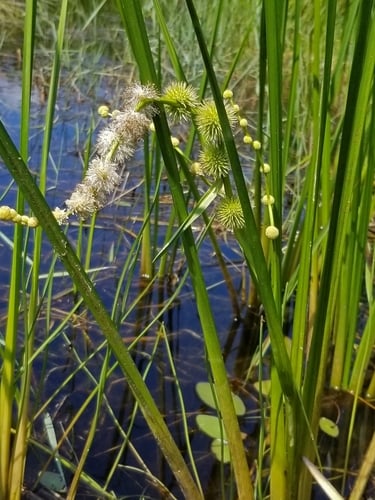
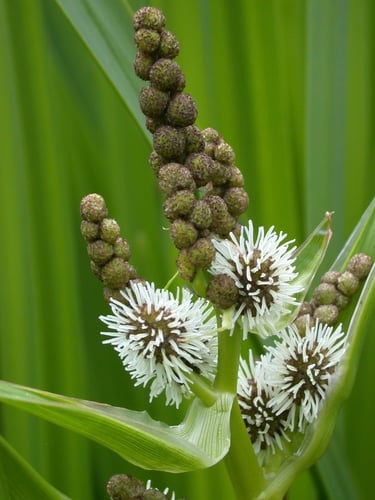
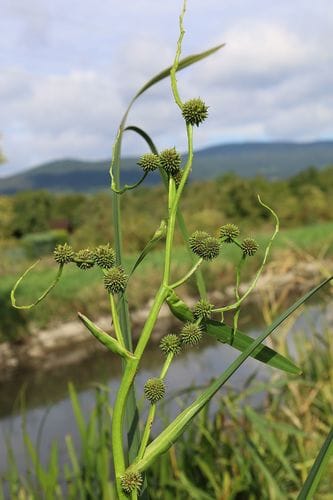
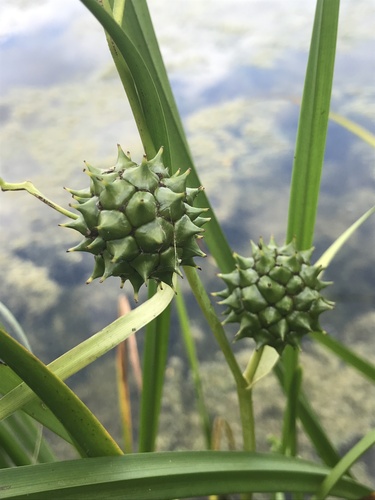
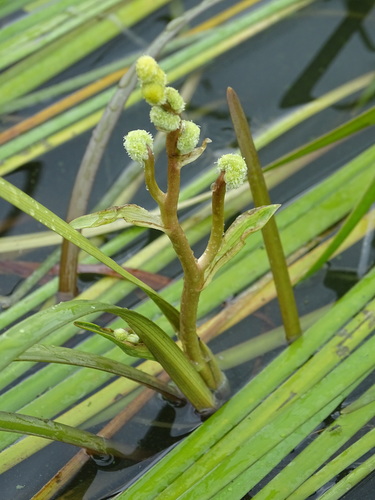
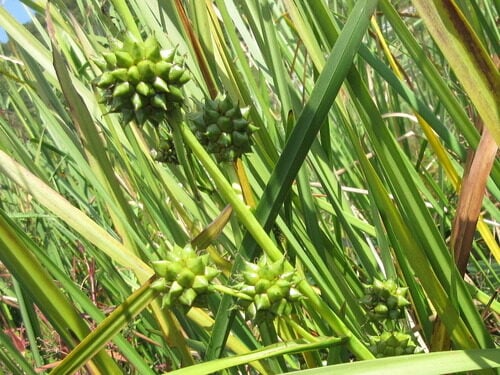
Typha bungeana
China
wikimedia· cc-by-sa
Wikimedia Commons - Le.Loup.Gris
wikimedia· cc-by-sa
Wikimedia Commons - Agnieszka Kwiecień, Nova
Summary
Source: WikipediaFast-growing perennial cattail with monoecious wind-pollinated flowers. Tolerates light sandy, medium loamy, and heavy clay soils across mildly acid to basic pH ranges. Requires full sun and prefers wet soil or shallow water. Not shade-tolerant.
Description
Fast-growing perennial cattail with monoecious wind-pollinated flowers. Tolerates light sandy, medium loamy, and heavy clay soils across mildly acid to basic pH ranges. Requires full sun and prefers wet soil or shallow water. Not shade-tolerant.
Edible Uses
The following notes are based on other members of this genus and likely apply to this species as well. Roots can be eaten raw or cooked — boiled like potatoes or macerated and boiled to produce a sweet syrup. They can also be dried, ground into a protein-rich powder and used as a soup thickener or added to cereal flours to make biscuits, bread and cakes. Young spring shoots are eaten raw or cooked as an asparagus substitute. The base of the mature stem is eaten raw or cooked with the outer layer removed. The young flowering stem can be eaten raw, cooked or made into soup and has a sweet corn flavour. Seeds are cooked; small and fiddly to harvest, they have a pleasant nutty taste when roasted. An edible oil is obtained from the seed, though the small seed size makes this an impractical crop. Pollen is a protein-rich addition to flour for bread and porridge, and is easier to use when eaten along with the young flowers. To harvest, hold the flowering stem over a wide shallow container and gently tap and brush off the pollen — this also aids pollination and helps ensure both pollen and seeds can be collected.
Medicinal Uses
The pollen is diuretic, emmenagogue and haemostatic. Dried pollen is considered anticoagulant, but when roasted with charcoal it becomes haemostatic. Internally, it is used to treat kidney stones, haemorrhage, painful menstruation, abnormal uterine bleeding, post-partum pains, abscesses and cancer of the lymphatic system. It should not be prescribed for pregnant women. Externally, it is used in the treatment of tapeworms, diarrhoea and injuries.
Known Hazards
Should not be prescribed for pregnant women.
Distribution
It is a temperate plant.
Where It Grows
Asia, China,
Cultivation
We have very little information on this species and do not know if it will be hardy in Britain, though judging by its native range it should succeed outdoors in many parts of this country. The following notes are based on the general needs of the genus. Grows in boggy pond margins or shallow water to 15cm deep. Requires a rich soil if it is to do well. Succeeds in sun or part shade. Provides excellent cover for water fowl. Plants can be very invasive, spreading freely at the roots when in a suitable site.
Propagation
Seed — surface sow in a pot standing in 3cm of water. Pot up seedlings as soon as possible, gradually increasing the water depth as plants develop, and plant out in summer. Division in spring is very easy — harvest young shoots at 10–30cm tall with some root attached and plant directly into permanent positions.
Other Uses
The following notes are based on other members of this genus and likely apply to this species as well. Stems and leaves are versatile — useful for thatching, papermaking and weaving into mats, chairs, hats and similar items. The plant is a good biomass source, suitable as a compost addition or fuel. Fruit hairs are used as stuffing for pillows, with good insulating and buoyancy properties. The highly inflammable pollen is used in making fireworks. The plant's extensive root system is effective for stabilizing wet riverbanks and lakesides.
Notes
There are 10 Typha species.
References (1)
- Plants for a Future database, The Field, Penpol, Lostwithiel, Cornwall, PL22 0NG, UK. http://www.scs.leeds.ac.uk/pfaf/