Tulbaghia violacea
Harv.
Society garlic, Sweet garlic
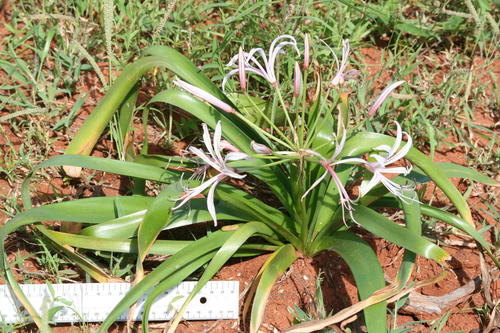
iNaturalist· cc-by-nc
(c) Peter Small, some rights reserved (CC BY-NC), uploaded by Peter Small
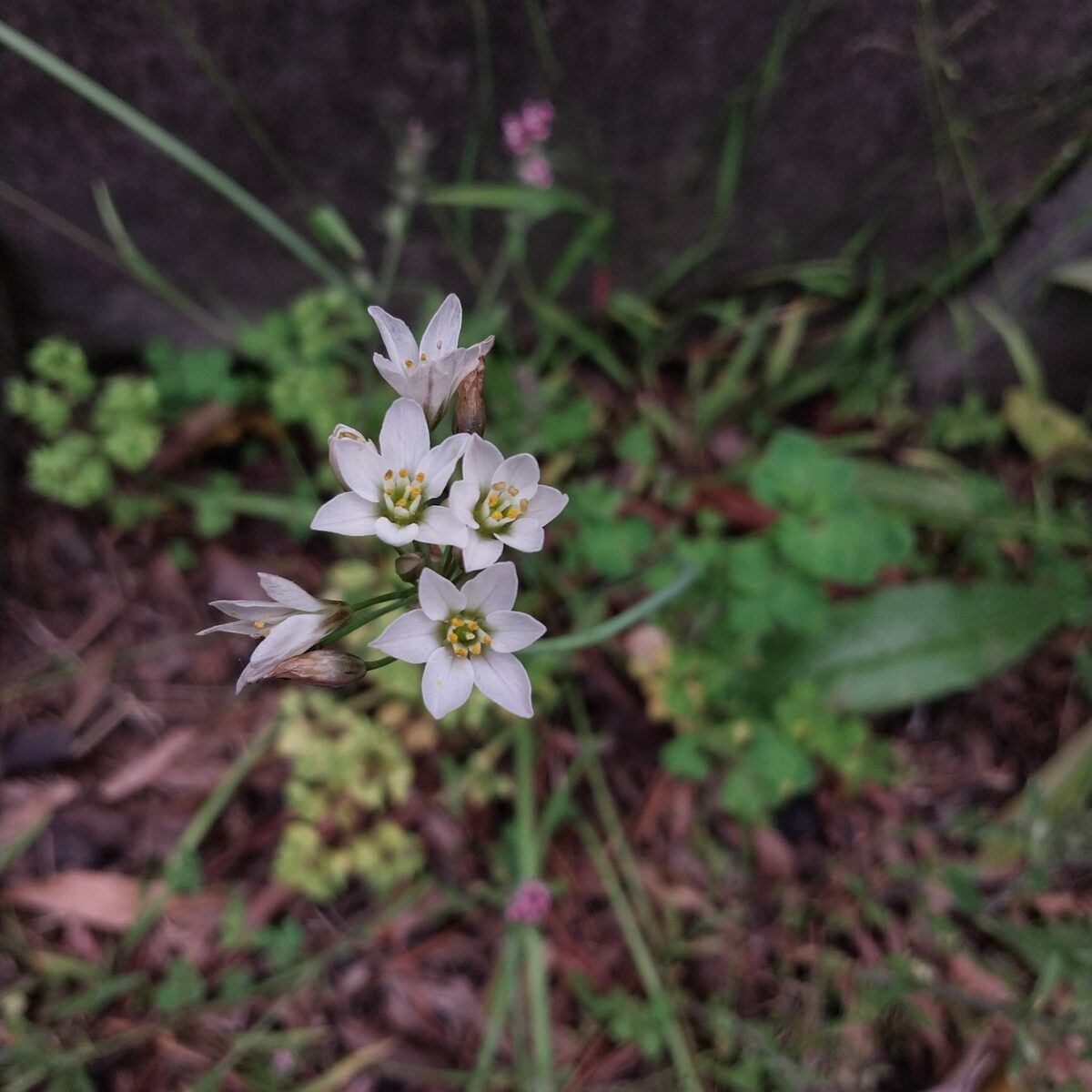
iNaturalist· cc-by-nc
(c) ruele228, some rights reserved (CC BY-NC)
Summary
Source: WikipediaTulbaghia violacea, commonly known as society garlic, pink agapanthus, wild garlic, sweet garlic, spring bulbs, or spring flowers, is a species of flowering plant in the family Amaryllidaceae. It is indigenous to southern Africa (KwaZulu-Natal and Cape Province), and reportedly naturalized in Tanzania and Mexico. Growing to 60 cm (24 in) tall by 25 cm (10 in) wide, it is a clump-forming perennial with narrow leaves and large clusters of fragrant, violet flowers from midsummer to autumn (fall).
Description
An onion family plant. It is a clump forming plant. It can remain evergreen or die down during the year. It grows 30-60 cm high. It spreads 30 cm wide. The leaves are narrow and 25 cm long. They are grey-green. They have a garlic scent. The flowers are small and funnel shaped. They are pale purple. The stalk is 60 cm tall. They have a sweet scent.
Edible Uses
Leaves and stems can be eaten raw or cooked. They have a mild garlic flavour and are used as a flavouring in soups and salads, serving as a substitute for chives and garlic. Flowers can be eaten raw or cooked — added to salads, used as a garnish, or as a flavouring in cooked foods. The flowers are very ornamental and have a sweet, onion-like heat in the mouth.
Traditional Uses
The leaves and flowers are used like chives. The bulbs are used like spring onions. The flowers can be eaten raw or cooked and added to salads or used as flavouring in cooked foods.
Medicinal Uses
There is some evidence that Society Garlic has antifungal properties. It is used locally as a herbal remedy to treat several ailments.
Known Hazards
Some fatalities and symptoms like gastro-enteritis, abdominal pain, cessation of gastro-intestinal peristalsis, sloughing of the intestinal mucosa, and contraction of the pupils, have been implicated in medication prepared with T. violacea. There has been speculation that T. violacea may cause poisonings but tests on rabbit showed no negative effects. It is possible that reported adverse effects are due to extensive use and/or high dosages of the plant. Adverse effects are generally assumed to be associated with the steroidal saponins and/or the sulphur compounds. Ncube et al. (2011) found that the leaves and flowers of the plant are edible as vegetables. Elgorashi et al. (2003) used the Ames and VITOTOX tests and found that these parts (leaves and flowers) are non-toxic.
Distribution
It is a Mediterranean climate plant. It occurs naturally in South Africa. It needs moderate moisture but it can be dry while dormant. It needs fertile, well drained soil. It can grow in full sun or light shade. It is hardy to frost. It is drought resistant. It suits hardiness zones 8-10. Melbourne Botanical Gardens.
Where It Grows
Africa, Australia, East Africa, Hawaii, Pacific, South Africa*, Southern Africa, Tasmania, USA, Zambia, Zimbabwe,
Cultivation
Requires a well-drained soil in a sunny sheltered position. Hardy in the mildest areas of Britain, tolerating temperatures down to about -10°c, it can be grown as a bedding plant or at the base of a warm wall. Plants succeed outdoors at Edinburgh botanical gardens. Plants grow from a cluster of small bulbs attached to a basal plate that is sometimes regarded as a rhizome. The flowers are very fragrant at night, the whole plant has a garlic-like aroma. There are some named varieties, selected for their ornamental value. 'Silver Lace' is a dwarf clumping plant that grows well in containers and is more attractive with larger flowers than the type. Bloom Color: Lavender, Pink. Main Bloom Time: Early summer, Early fall, Early spring, Late summer, Late fall, Late spring, Mid summer, Mid fall, Mid spring. Form: Upright or erect. Society Garlic is self-fertile. The leaves and flowers are typically harvested in summer, specifically from late spring to early autumn for culinary use. Society Garlic usually flowers in summer, from late spring to early summer, producing clusters of lavender to white flowers. Society Garlic grows relatively quickly and can establish itself in the garden within one growing season.
Propagation
Seed is best sown as soon as it is ripe in the greenhouse. Stored seed should be sown in early spring in the greenhouse. Prick seedlings into individual pots once large enough to handle and grow on in the greenhouse for at least their first winter. If planting outdoors, this is best done in late summer when the plants are dormant. Dormant plants can also be divided in late summer.
Other Uses
Society Garlic is used as a ground cover and its garlic scent helps deter pests, making it useful in companion planting. The flowers attract pollinators such as bees and butterflies, providing nectar and pollen. The plant does not provide significant food for wildlife and its foliage is not typically consumed by animals. As a ground cover it provides some shelter for invertebrates and helps retain soil moisture. The strong garlic scent can deter some pests, helping to protect neighbouring plants. Society Garlic and the cultivars 'Purple Eye' and 'Silver Lace', with cream-margined leaves, have all received the Royal Horticultural Society's Award of Garden Merit. The plant is suitable for borders, containers, ground cover, rock gardens and seaside situations, and its flowers are suitable for cutting.
Production
It is fast growing.
Notes
There are 20 Tulbaghia species. Also put in the families Alliaceae and Liliaceae.
Also Known As
Ajo ornamental, Isihaqa, Veldknoffel, Wildeknoffel, Wild garlic
References (16)
- Bot. Mag. 64: t. 3555. 1837
- Bvenura, C. and Afolayan, A. J., 2017, Tackling food and nutrition insecurity using leafy wild vegetables: The nutritional compositions of some selected species.
- Cundall, P., (ed.), 2004, Gardening Australia: flora: the gardener's bible. ABC Books. p 1436
- De Vynk, J. C., et al, 2016, Indigenous edible plant use by contemporary Khoe-San descendants of South Africa's Cape South Coast. South African Journal of Botany. 102 (2016) 60-69
- Fox, F. W. & Young, M. E. N., 1982, Food from the Veld. Delta Books. p 256
Show all 16 references Hide references
- Hibbert, M., 2002, The Aussie Plant Finder 2002, Florilegium. p 302
- https://growwild.co.za Edible Indigenous plants
- Joffe, P., 2007, Creative Gardening with Indigenous Plants. A South African Guide. Briza. p 299
- Kermath, B. M., et al, 2014, Food Plants in the Americas: A survey of the domesticated, cultivated and wild plants used for Human food in North, Central and South America and the Caribbean. On line draft. p 883
- Llamas, K.A., 2003, Tropical Flowering Plants. Timber Press. p 51
- Plants for a Future database, The Field, Penpol, Lostwithiel, Cornwall, PL22 0NG, UK. http://www.scs.leeds.ac.uk/pfaf/
- Ruiters-Welcome, A. K., 2019, Food plants of southern Africa. Ph.D. thesis. Univ. of Johannesburg p 9
- Staples, G.W. and Herbst, D.R., 2005, A tropical Garden Flora. Bishop Museum Press, Honolulu, Hawaii. p 693 (Drawing)
- van Wyk, B-E., 2011, The potential of South African plants in the development of new food and beverage products. South African Journal of Botany 77 (2011) 857–868
- Welcome, A. K. & Van Wyk, B.-E., 2019, An inventory and analysis of the food plants of southern Africa. South African Journal of Botany 122 (2019) 136–179
- World Checklist of Useful Plant Species 2020. Royal Botanic Gardens, Kew