Tuber aestivum
Vittadini
Truffle, Summer truffle, Cook's truffle, Red-grained black truffle, Summer black truffle, Truffe de la Saint-Jean
iNaturalist· cc-by
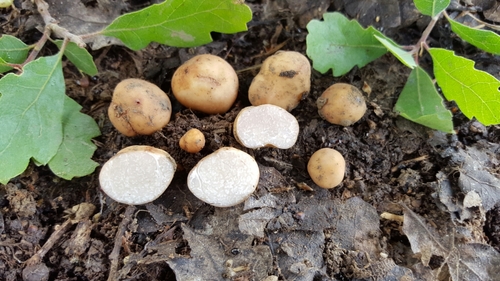
(c) Davide Puddu, some rights reserved (CC BY), uploaded by Davide Puddu
iNaturalist· cc-by-nc
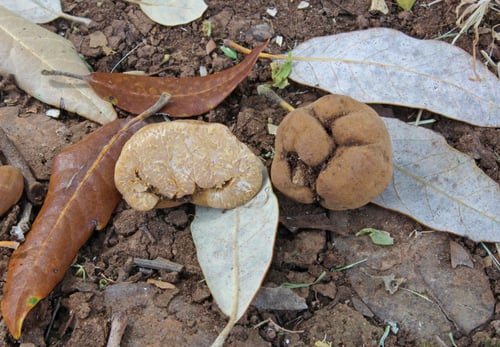
(c) Simon, some rights reserved (CC BY-NC), uploaded by Simon
iNaturalist· cc-by-nc-sa
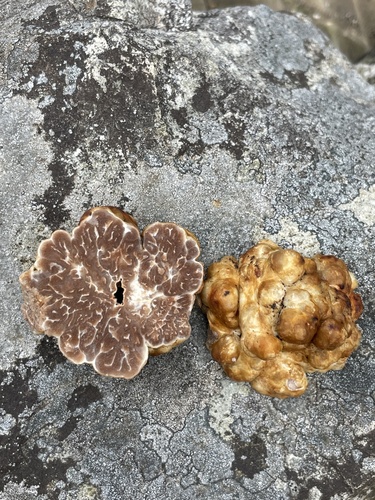
(c) John Plischke, some rights reserved (CC BY-NC-SA), uploaded by John Plischke
Summary
Source: WikipediaTuber aestivum (summer truffle) or Tuber uncinatum (burgundy truffle) is a species of truffle found across Europe.
Description
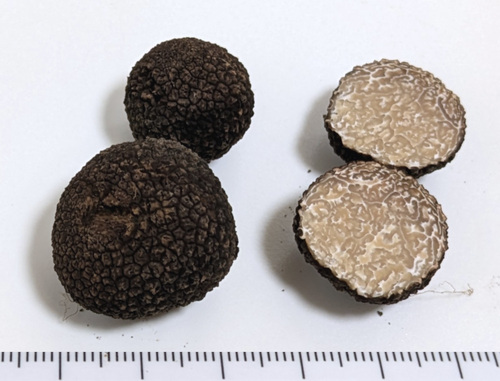
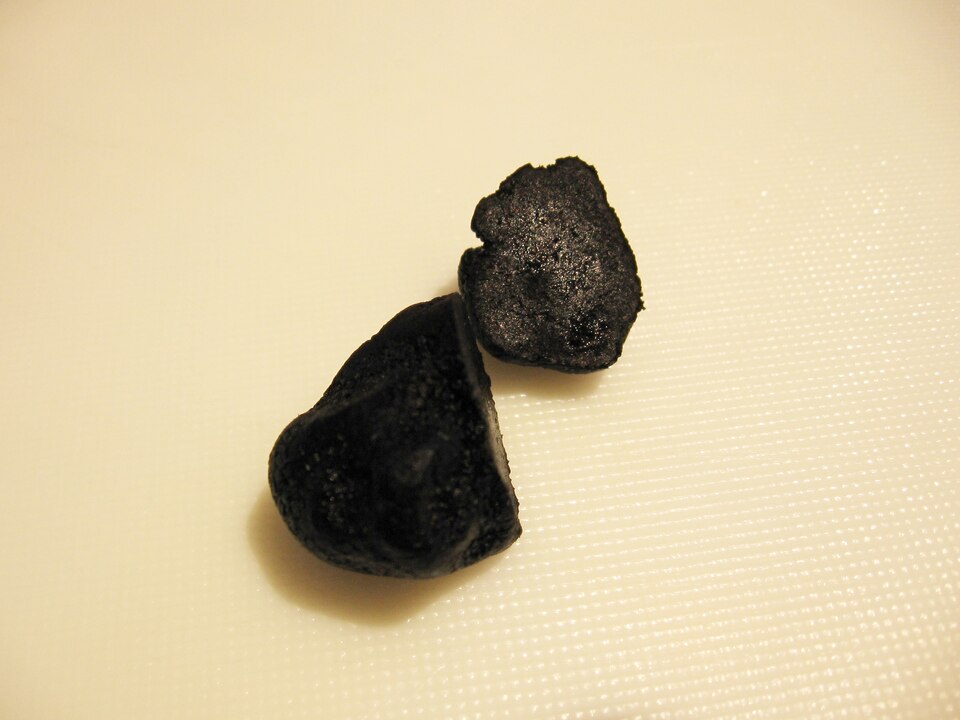
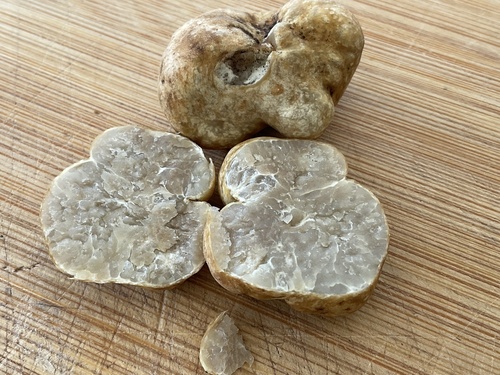
A truffle (underground fungus) that is black on the outside and white inside, found in temperate regions.
This description is brief — help expand it
Edible Uses
The fruiting bodies are eaten; when very young they can be eaten raw, but are normally baked, sautéed in butter, or added to soups.
Traditional Uses
The fruiting bodies are eaten. When very young they can be eaten raw. They are normally baked, sauteed in butter or added to soups.
This uses section is brief — help expand it
Distribution
It is a temperate plant.
Where It Grows
Asia, Balkans, Britain, Bulgaria, China, Czech Republic, Europe, Hungary, India, Italy, Japan, Mediterranean, North America, Norway, Poland, Scandinavia, Serbia, Sicily, Slovenia, Spain, Sweden, Turkey, Türkiye, USA,
Nutrition
| Part | Moisture | kJ | kcal | Protein | Vit A | Vit C | Iron | Zinc |
|---|---|---|---|---|---|---|---|---|
| Truffle | 54.8 | — | — | 31.4 | — | — | — | — |
Synonyms
Also Known As
Xiakuaijun
References (19)
- Bianchini, F., Corbetta, F., and Pistoia, M., 1975, Fruits of the Earth. Cassell. p 118
- Boa, E. R., 2004, Wild edible fungi and their importance to people. FAO Non Wood Forest Products Booklet 17
- Bremness, L., 1994, Herbs. Collins Eyewitness Handbooks. Harper Collins. p 292
- Cerne, M., 1992, Wild Plants from Slovenia used as Vegetables. Acta Horticulturae 318
- Denchev, C. M., et al, The wild edible mushrooms in Bulgaria. Bulgarian Academy of Science.
Show all 19 references Hide references
- Facciola, S., 1998, Cornucopia 2: a Source Book of Edible Plants. Kampong Publications, p 256
- Hall, I. R. Ectomycorrhizal Fungi with Edible Fruiting Bodies, 3. Tuber magnatum, Tuberaceae. Economic Botany, Vol. 52, No. 2, pp. 192-200
- Hall, I. R., et al, 2003, Edible and Poisonous Mushrooms of the World. Timber Press. p 314
- Jordan, P., 2000, The Mushroom Guide and Identifier, Hermes House, p 94
- Kiple, K.F. & Ornelas, K.C., (eds), 2000, The Cambridge World History of Food. CUP p 1872
- Lentini, F. and Venza, F., 2007, Wild food plants of popular use in Sicily. J Ethnobiol Ethnomedicine. 3: 15
- Mabey, R., 1973, Food for Free. A Guide to the edible wild plants of Britain, Collins. p 55
- Mattia, B., et al, 2009, The Cultivation of Truffles in Italy. Acta Botanica Yunnanica. 0253-2700 Suppl. XVI - 021-08
- Pace, G., 1998, Mushrooms of the world. Firefly books. p 240
- Radomir, M., et al, 2018, Conservation and trade of wild edible mushrooms of Serbia – history, state of the art and perspectives. Nature Conservation 25: 31–53
- Schneider, E., 2001, Vegetables from Amaranth to Zucchini: The essential reference. HarperCollins. p 674
- Uphof,
- Vishwakarma, P., et al, 2016, Nutritional and antioxidant properties of wild edible macrofungi from North-Eastern Uttar Pradesh, India. Indian Journal of Traditional Knowledge. Vol. 15(1) pp. 143-148
- www.plantnames.unimelb.edu.au