Tsuga heterophylla
(Rafin.) Sargent
Western hemlock, Western Hemlock Spruce
iNaturalist· cc-by-nc
(c) Jason Headley, some rights reserved (CC BY-NC), uploaded by Jason Headley
iNaturalist· cc-by-nc
(c) Jason Headley, some rights reserved (CC BY-NC), uploaded by Jason Headley
iNaturalist· cc-by-nc
(c) Jason Headley, some rights reserved (CC BY-NC), uploaded by Jason Headley
Summary
Source: WikipediaTsuga heterophylla, the western hemlock or western hemlock-spruce, is a species of hemlock. It typically grows to 70 metres (230 feet) tall and is long-lived at high elevations. Native to the northwest coast of North America, it is a source of timber, tannin, and edible cambium.
Description
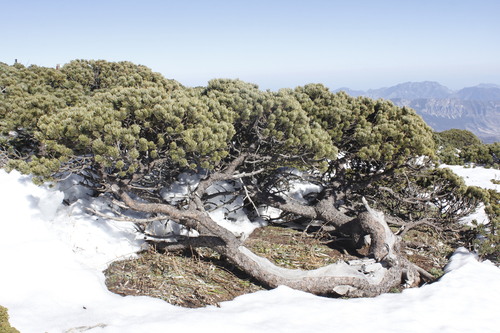
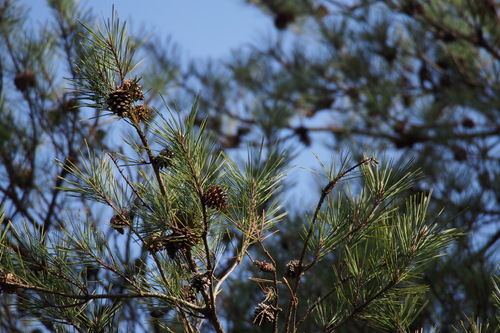
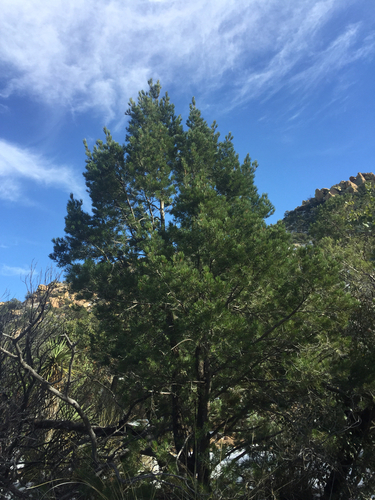
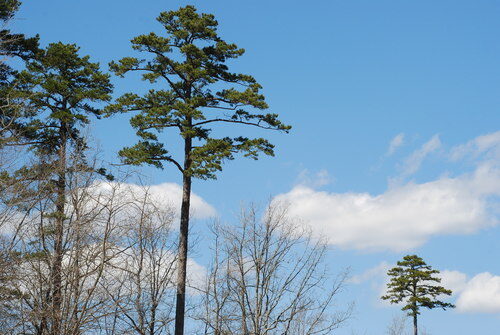
An evergreen tree. It grows 22-30 m high and spreads 6-9 m across. It is conical in shape. The bark is cracked and purple-brown. The branches are slender. The lower branches droop. The leaves are flattened and needle-like. They are 5-20 mm long. They are dark green with silvery bands underneath. The small shoots hang down. The cones are oval and green. They ripen to dark brown. They are 20-25 mm long. They have blunt tips and short stalks. Cones openly in autumn and seed are shed gradually. Cones can remain on the tree for 1 or 2 years.
Edible Uses
The inner bark can be eaten raw or cooked. It can be dried, ground into a powder, and used as a thickening in soups or mixed with cereals for bread, and has also been used as a sweetener for other foods. The inner bark was often cooked and then dried for winter use, and was one of the staple foods of the Alaskan Indians, being at its best in spring. It is also classed as an emergency food used when all else fails. The leaves and twigs yield 'spruce oil' used commercially to flavour chewing gum, soft drinks and ice cream. Pitch obtained from crevices in the bark has been chewed as a gum. The leaves and young shoots have been chewed as an emergency food to sustain oneself when lost in the woods. A herbal tea is made from the leaves and shoot tips, which are also an ingredient in 'spruce beer'.
Traditional Uses
The inner bark was baked and eaten. It is made into cakes or bread. The young twigs are boiled with honey or molasses to produce spruce beer. It is also the source of an oil used as flavouring in the food industry.
Medicinal Uses
Western hemlock was widely used medicinally by several native North American Indian tribes for a variety of complaints, though it is little if at all used in modern herbalism. The bark is astringent, diaphoretic and diuretic. A decoction of pounded bark has been used to treat haemorrhages, tuberculosis and syphilis. Boiled bark combined with liquorice fern (Polypodium glyccyrhiza) has also been used for haemorrhages. An infusion of the inner bark or twigs helps treat kidney or bladder problems, works as an enema for diarrhoea, and can be used as a gargle or mouthwash for mouth and throat problems. Externally, it can be applied as a wash on sores and ulcers. A poultice of the plant has been applied to bleeding wounds, and a moxa of the twigs used to remove warts. The powdered bark can be placed in shoes for tender or sweaty feet or foot odour. Gum from the trunk has been applied to cuts and to the skin to prevent chapping and sunburn. A poultice of chewed leaves has been used to treat burns.
Distribution
It is a temperate plant. It grows naturally in forests in W North America. It is frost hardy. It can tolerate shade. It will grow on a variety of soils. It does well in acid soils. Plenty of moisture in the soil and atmosphere is important for good growth. In Hobart Botanical Gardens. It suits hardiness zones 6-10. Arboretum Tasmania.
Where It Grows
Alaska, Australia, Britain, Canada, Europe, North America*, Tasmania, USA,
Cultivation
Plants can be grown from seed or by cuttings.
Propagation
Seed germinates better with a short cold stratification and is best sown in a cold frame from autumn to late winter. It can also be sown in early spring, though germination may be delayed until after the following winter. Where seed is plentiful, an outdoor spring sowing is possible. Pot-grown seedlings should be moved into individual pots once large enough to handle, grown on in a cold frame, and planted out in early summer the following year. Trees transplant well up to 80cm tall but are best established in their final positions at 30–45cm or less in height, usually at 5–8 years old. Larger trees check badly and put on little growth for several years, which also badly affects root development and wind resistance.
Other Uses
A resin similar to that of Abies balsamea is gathered by incisions in the trunk or by boiling the wood. The bark contains 8–18% tannin and is a major source of tannin in America. A reddish-brown dye is obtained from the bark, and a decoction of the bark has been used to clean rust off iron and steel. Hemlock pitch, obtained by distillation of the young branches, is rubbed on the hair to eliminate head lice. The plant tolerates light trimming and makes a good hedge in Britain. The wood is light, hard, tough and easy to work. Commercially superior to other members of this genus, it is an important timber for construction, exterior building use, and carving into items such as spoons, and is also a major source of pulp. The wood burns slowly and can be used to bank up a fire to keep it going overnight.
Production
It is fast growing.
Notes
There are 10 or 11 Tsuga species.