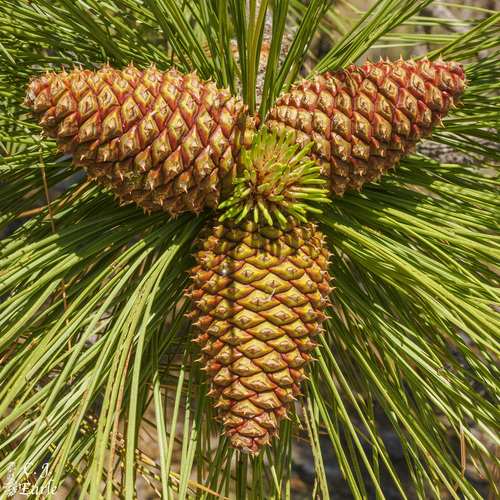
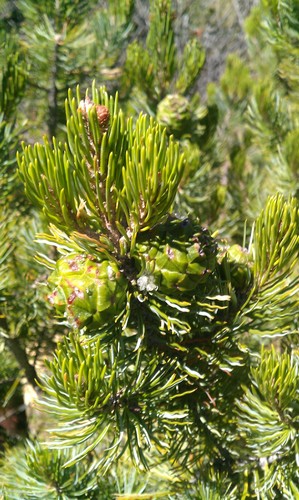
Tsuga canadensis
(Linn.) Carriere
Eastern hemlock, Canadian Hemlock
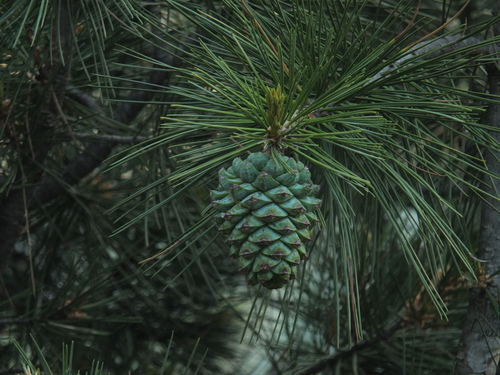
iNaturalist· cc-by-nc
(c) jaskir, some rights reserved (CC BY-NC), uploaded by jaskir
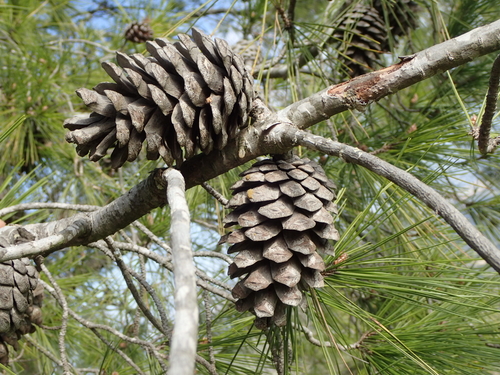
iNaturalist· cc-by
(c) Ian Manning, some rights reserved (CC BY), uploaded by Ian Manning
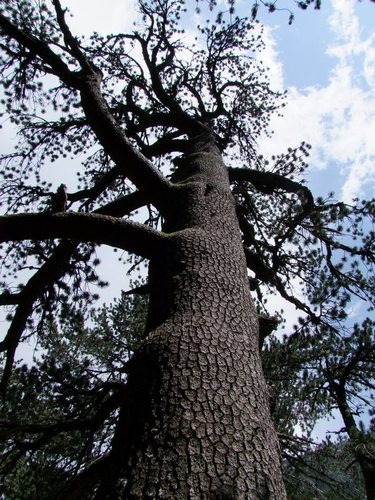
iNaturalist· cc-by-sa
(c) Douglas Goldman, some rights reserved (CC BY-SA), uploaded by Douglas Goldman
Summary
Source: WikipediaTsuga canadensis, also known as eastern hemlock, eastern hemlock-spruce, or Canadian hemlock, and in the French-speaking regions of Canada as pruche du Canada, is a coniferous tree native to eastern North America. It is the state tree of Pennsylvania. Eastern hemlocks are widespread throughout much of the Great Lakes region, the Appalachian Mountains, the Northeastern United States, and The Maritimes. They have been introduced in the United Kingdom and mainland Europe, where they are used as ornamental trees. Eastern hemlock populations in North America are threatened in much of their range by the spread of the invasive Hemlock woolly adelgid, which infests and eventually kills trees. Declines in population from hemlock wooly adelgid infestation have led to Tsuga canadensis being listed as Near Threatened on the IUCN Red List. Eastern hemlocks are long lived trees, with many examples living for more than 500 years. They can grow to heights of more than 30 metres (100 ft), and are tolerant of shade, moist soil, and slopes. Hemlock wood is used in construction, and for railroad ties. Historically its bark was an important source of tannin for the leather tanning industry. Eastern hemlocks are popular as ornamental trees, thanks to their tolerance of a wide variety of soil and light conditions, as well as their characteristic drooping branches of the mutated tree known as 'weeping hemlock'.
Description
An evergreen tree. It grows 15-25 m tall and spreads to 6-9 m across. The trunk can be 1 m across. It is conical shape. The bark is scaly when young and becomes deeply furrowed. The leaves are dark green. They have silver lines underneath. The leaves are like needles and are slightly tapered. They are flat and have fine teeth. They are 10-20 mm long. The upper surface is shiny green and grooved. The needles are clearly arranged in two ranks. There are a few shorter ones on the upper side. The cones are oval and light brown. They are 2.5 cm long. The twigs are arranged in flat sprays and are yellowish brown. The seed cones are oval and 12-20 mm long. They are purplish-brown. They are pointed. Cones open in autumn and shed their seed later in the autumn. Cones remain on the tree into the following season.
Edible Uses
The inner bark can be eaten raw or cooked. It is usually harvested in spring and can be dried, ground into a powder, and used as a thickening agent in soups or mixed with cereals when making bread. It is considered an emergency food, used only when other options are exhausted. The leaves and twigs yield a 'spruce oil' used commercially to flavour chewing gum, soft drinks, and ice cream. Young shoot tips are used to make a herbal tea and are also an ingredient in 'spruce beer'.
Traditional Uses
The inner bark was baked and eaten. The young tips are used for tea. They are also added to root beer and spruce beer. The young leaves and twigs are the source of an oil used to flavour chewing gum, ice cream, soft drinks and candy. They are also mixed with maple syrup.
Medicinal Uses
Canadian hemlock was widely used medicinally by several native North American Indian tribes and is still valued in modern herbalism for its astringent and antiseptic properties. The bark is rich in tannin. A decoction of the bark treats diarrhoea, colitis, diverticulitis and cystitis. Externally, it is applied as a poultice to cleanse and tighten bleeding wounds, used as a douche for excessive vaginal discharge, thrush and prolapsed uterus, and as a mouthwash and gargle for gingivitis and sore throats. A bark poultice has also been applied to the armpits to treat itchiness. The inner bark is diaphoretic and styptic — an infusion treats colds and abdominal pains, and a decoction applied externally addresses eczema and other skin conditions. Pulverized inner bark applied to cuts and wounds stops bleeding. Tea from leafy twig tips treats dysentery, kidney ailments, colds and rheumatism, and is used in steam baths for colds and rheumatism and to induce sweating. A decoction of branches boiled to a syrup or thick paste is used as a poultice on arthritic joints. Crushed branch tips have been applied as a poultice to treat infections on an infant's navel. Hemlock pitch is used externally as a counter-irritant for rheumatism.
Distribution
It is a temperate plant. It grows naturally on hilly or rocky woods in eastern North America. It is frost hardy. It grows on a variety of soils. It needs a cool moist site. It is very shade tolerant. It suits hardiness zones 4-9.
Where It Grows
Australia, Britain, Canada, Europe, North America, Slovenia, USA,
Cultivation
Plants can be grown from seed. They can also be grown from cuttings of mature wood.
Propagation
Seed germinates better with a short cold stratification and is best sown in a cold frame from autumn to late winter. It can also be sown in early spring, though germination may not occur until after the following winter. Where seed is plentiful, an outdoor spring sowing is possible. Pot-grown seedlings should be moved into individual pots once large enough to handle, grown on in a cold frame, and planted out in early summer the following year. Trees transplant well up to 80cm tall, but are best placed in their final positions when 30–45cm or less in height, typically at 5–8 years old. Larger trees check badly and put on little growth for several years, which also badly affects root development and wind resistance.
Other Uses
A resin similar to that of Abies balsamea is obtained by making incisions in the trunk or by boiling the wood. A pitch known as hemlock pitch is obtained by distillation of the young branches, and 'Oil of Hemlock' is also distilled from young branches according to some reports. The bark contains 8–14% tannin, and the inner bark is used in basket-making. A red to brown dye is obtained from the bark — a red dye specifically from the inner bark, with a little rock dust added as a mordant when boiling. Boiled bark produces a wash for removing rust from iron and steel and preventing further rusting. The plant tolerates light trimming and can be grown as a hedge, though it does not make a good hedge in Britain. Some cultivars work as ground cover when planted about 1 metre apart; 'Pendula' is slow-growing but provides very good cover. The wood is coarse-grained, light, soft, not strong, brittle, and not durable outdoors. It is difficult to work as it splits easily, weighs 26lb per cubic foot, and contains numerous hard knots that can quickly dull an axe blade. It is used occasionally for the exterior of buildings. It should be used with caution as outdoor fuel, as it can project embers and burning wood several metres from the fire.
Production
Trees can live for 600 years.
Notes
There are 10 or 11 Tsuga species.
Also Known As
Hemlock spruce, Kanadska čuga, Spruce pine
References (25)
- Beckstrom-Sternberg, Stephen M., and James A. Duke. "The Foodplant Database." http://probe.nalusda.gov:8300/cgi-bin/browse/foodplantdb.(ACEDB version 4.0 - data version July 1994)
- Bodkin, F., 1991, Encyclopedia Botanica. Cornstalk publishing, p 995
- Brickell, C. (Ed.), 1999, The Royal Horticultural Society A-Z Encyclopedia of Garden Plants. Convent Garden Books. p 1026
- Coombes, A.J., 2000, Trees. Dorling Kindersley Handbooks. p 77
- Cundall, P., (ed.), 2004, Gardening Australia: flora: the gardener's bible. ABC Books. p 1435
Show all 25 references Hide references
- Elias, T.S. & Dykeman P.A., 1990, Edible Wild Plants. A North American Field guide. Sterling, New York p 122
- Esperanca, M. J., 1988. Surviving in the wild. A glance at the wild plants and their uses. Vol. 1. p 324
- Facciola, S., 1998, Cornucopia 2: a Source Book of Edible Plants. Kampong Publications, p 171
- Farrar, J.L., 1995, Trees of the Northern United States and Canada. Iowa State University press/Ames p 120
- Harris, E & J., 1983, Field Guide to the Trees and Shrubs of Britain. Reader's Digest. p 221
- Hedrick, U.P., 1919, (Ed.), Sturtevant's edible plants of the world. p 662
- Hibbert, M., 2002, The Aussie Plant Finder 2002, Florilegium. p 302
- http://www.botanic-gardens-ljubljana.com/en/plants
- Joyce, D., 1998, The Garden Plant Selector. Ryland, Peters and Small. p 174
- Kermath, B. M., et al, 2014, Food Plants in the Americas: A survey of the domesticated, cultivated and wild plants used for Human food in North, Central and South America and the Caribbean. On line draft. p 883
- Kiple, K.F. & Ornelas, K.C., (eds), 2000, The Cambridge World History of Food. CUP p 1785
- Little, E.L., 1980, National Audubon Society Field Guide to North American Trees. Alfred A. Knopf. p 299
- Lord, E.E., & Willis, J.H., 1999, Shrubs and Trees for Australian gardens. Lothian. p 90
- MacKinnon, A., et al, 2009, Edible & Medicinal Plants of Canada. Lone Pine. p 40
- Marinelli, J. (Ed), 2004, Plant. DK. p 158
- Moerman, D. F., 2010, Native American Ethnobotany. Timber Press. p 570
- Phillips, R. & Rix, M., 2002, The Botanical Garden Vol. 1. Trees and Shrubs. MacMillan. p 47
- Saunders, C.F., 1948, Edible and Useful Wild Plants. Dover. New York. p 149
- Schuler, S., (Ed.), 1977, Simon & Schuster's Guide to Trees. Simon & Schuster. No. 46
- Traite gen. conif. 189. 1855