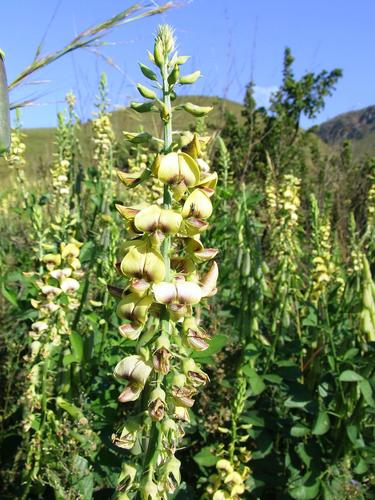
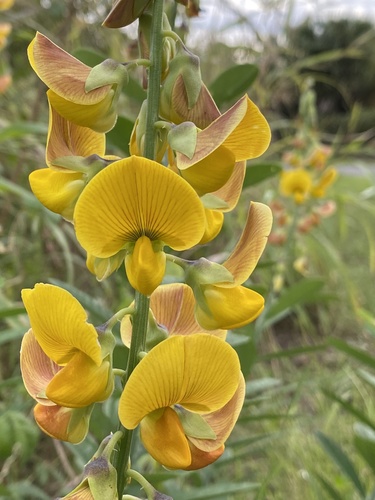
Trifolium hybridum
L.
Alsike clover, Swedish clover
iNaturalist· cc-by-nc
(c) Misha Zitser, some rights reserved (CC BY-NC)
iNaturalist· cc-by-nc
(c) Misha Zitser, some rights reserved (CC BY-NC)
iNaturalist· cc-by-nc
(c) Misha Zitser, some rights reserved (CC BY-NC)
Summary
Source: WikipediaTrifolium hybridum, the alsike clover, is a species of flowering plant in the pea family Fabaceae. The stalked, pale pink or whitish flower head grows from the leaf axils, and the trifoliate leaves are unmarked. The plant is up to 40 centimetres (1.3 ft) tall, and is found in fields and on roadsides – it is also grown as fodder (hay or silage). It has been linked with toxicity in horses and has some agricultural uses. The plant blooms from spring to autumn (April to October in the northern hemisphere). Originating in mainland Europe, it has become established as an introduced plant in the British Isles and throughout the temperate regions of the world.
Description
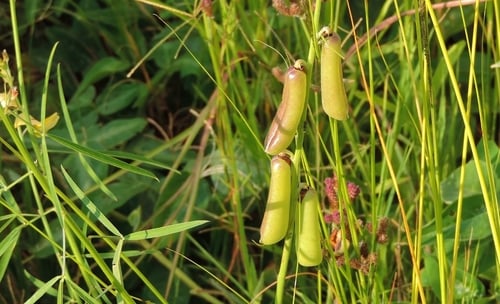
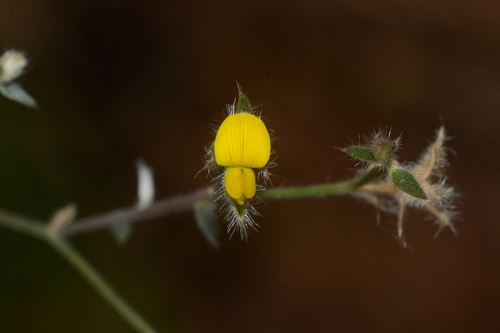
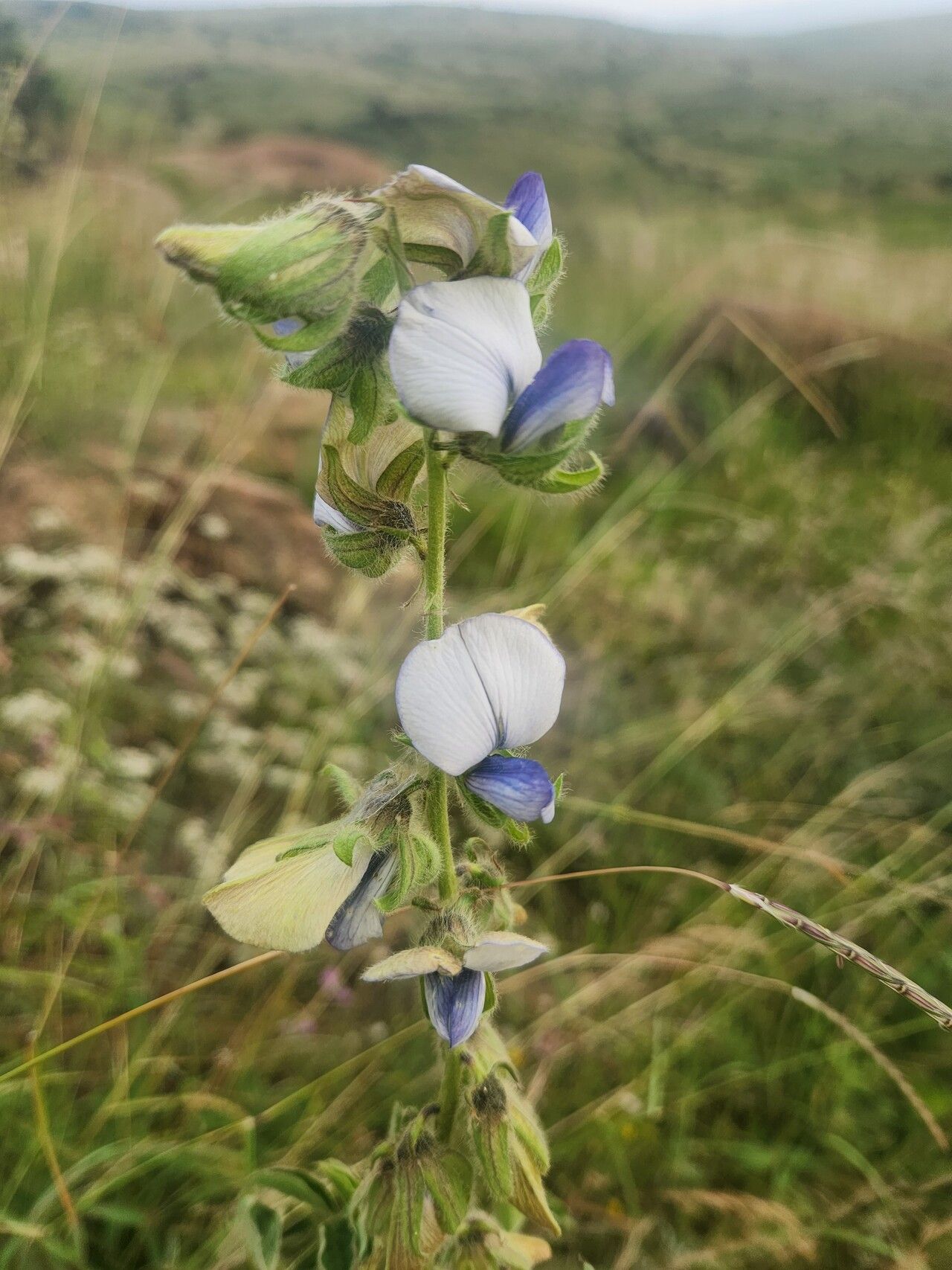
A herb that keeps growing from year to year. It can lie along the ground or be erect. It grows 50 cm tall. The flowers are white and pink.
This description is brief — help expand it
Edible Uses
Leaves and flower heads can be eaten raw or cooked — boiled, or after soaking for several hours in salty water. The dried flower heads make a delightful and healthful tea, usually blended with other teas. Dried flower heads and seeds can also be ground together into a nutritious flour.
Traditional Uses
The leaves can be used in salads or cooked as a green. The dried flowerheads can be used for tea. The flowers are also eaten fresh. The dried flower heads and seeds can be ground into flour.
Medicinal Uses
A cold infusion of the plant has been used as a wash on the breasts of a nursing mother to help increase milk flow (galactogogue).
Known Hazards
There is limited evidence of Trifolium Hybridum having toxic effects on horses including photosensitization and Alsike clover poisoning. Photosensitivity in horses, also known as alsike rash, is a reversible condition in which the mechanism is unknown. A diet in equestrians of at least 20% Trifolium Hybridum over the course of four weeks could lead to poisoning which includes deleterious neurological effects and liver failure. The active toxin is unknown. The plant can irritate skin if handled.
Distribution
It grows in temperate places. Tasmania Herbarium.
Where It Grows
Argentina, Asia, Australia, Austria, Balkans, Bosnia, Britain, Bulgaria, Canada, Central Asia, Chile, China, Crete, Czech, Europe, Falklands, France, Greece, Hungary, India, Italy, Korea, Luxembourg, Macedonia, Mediterranean, North America, Romania, Russia, South America, Spain, Switzerland, Tajikistan, Tasmania, Turkey, Türkiye, Uruguay, USA, Yugoslavia,
Cultivation
Succeeds in a moist, well-drained circum-neutral soil in full sun. Succeeds in poor soils. Closely related to T. repens. It grows well in an apple orchard, the trees will produce tastier fruit that stores better. It should not be grown with camellias or gooseberries because it harbours a mite that can cause fruit drop in the gooseberries and premature budding in the camellias. This species has a symbiotic relationship with certain soil bacteria, these bacteria form nodules on the roots and fix atmospheric nitrogen. Some of this nitrogen is utilized by the growing plant but some can also be used by other plants growing nearby. Buttercups growing nearby depress the growth of the nitrogen bacteria by means of a root exudate.
Propagation
Pre-soak seed for 12 hours in warm water, then sow in spring in situ. If seed is scarce, sow in pots in a cold frame instead. Prick seedlings out into individual pots once large enough to handle, and plant out after the last expected frosts. Can also be propagated by division in spring.
Other Uses
Used as fodder. Functions as a dynamic accumulator and nitrogen fixer, and is noted for carbon farming applications.
Notes
There are about 240 Trifolium species. They are mostly temperate.
Synonyms
Also Known As
Klever, Svedska djtelina
References (11)
- Ambasta, S.P. (Ed.), 2000, The Useful Plants of India. CSIR India. p 651
- Facciola, S., 1998, Cornucopia 2: a Source Book of Edible Plants. Kampong Publications, p 111
- Kermath, B. M., et al, 2014, Food Plants in the Americas: A survey of the domesticated, cultivated and wild plants used for Human food in North, Central and South America and the Caribbean. On line draft. p 875
- Kolosova, V., et al, 2020, Foraging in Boreal Forest: Wild Food Plants of the Republic of Karelia, NW Russia. Foods 2020, 9, 1015; p 14
- MacKinnon, A., et al, 2009, Edible & Medicinal Plants of Canada. Lone Pine. p 259
Show all 11 references Hide references
- Paczkowska, G . & Chapman, A.R., 2000, The Western Australian Flora. A Descriptive Calatogue. Western Australian Herbarium. p 452
- Plants for a Future database, The Field, Penpol, Lostwithiel, Cornwall, PL22 0NG, UK. http://www.scs.leeds.ac.uk/pfaf/
- Redzic, S. J., 2006, Wild Edible Plants and their Traditional Use in the Human Nutrition in Bosnia-Herzegovina. Ecology of Food and Nutrition, 45:189-232
- Sp. pl. 2:766. 1753
- Tasmanian Herbarium Vascular Plants list p 32
- Upson, R., & Lewis R., 2014, Updated Vascular Plant Checklist and Atlas for the Falkland Islands. Falklands Conservation and Kew.