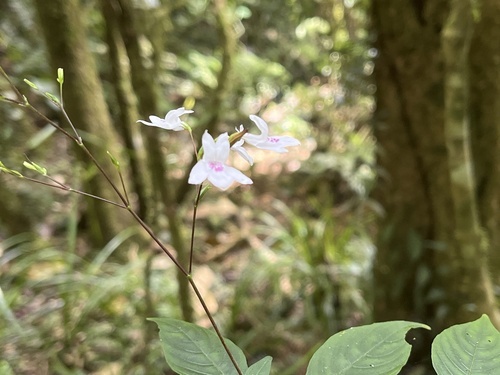
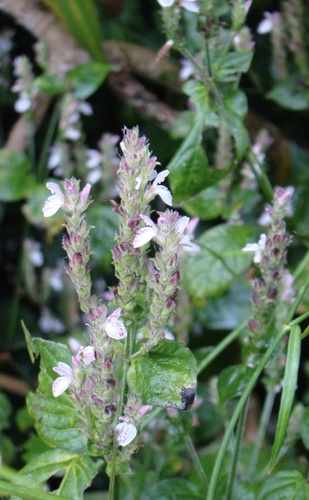
Thunbergia lancifolia
T. Anders
Blue thunbergia
iNaturalist· cc-by-nc-sa
(c) Bart Wursten, some rights reserved (CC BY-NC-SA)
iNaturalist· cc-by-nc
(c) Stefaneakame, some rights reserved (CC BY-NC)
Description
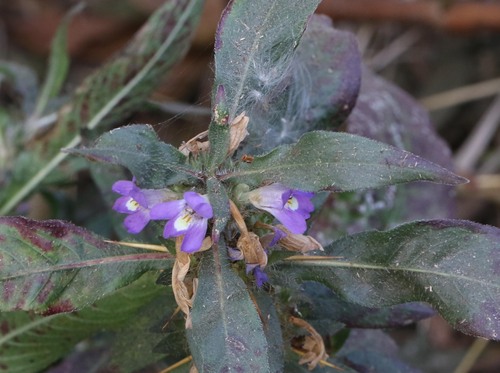
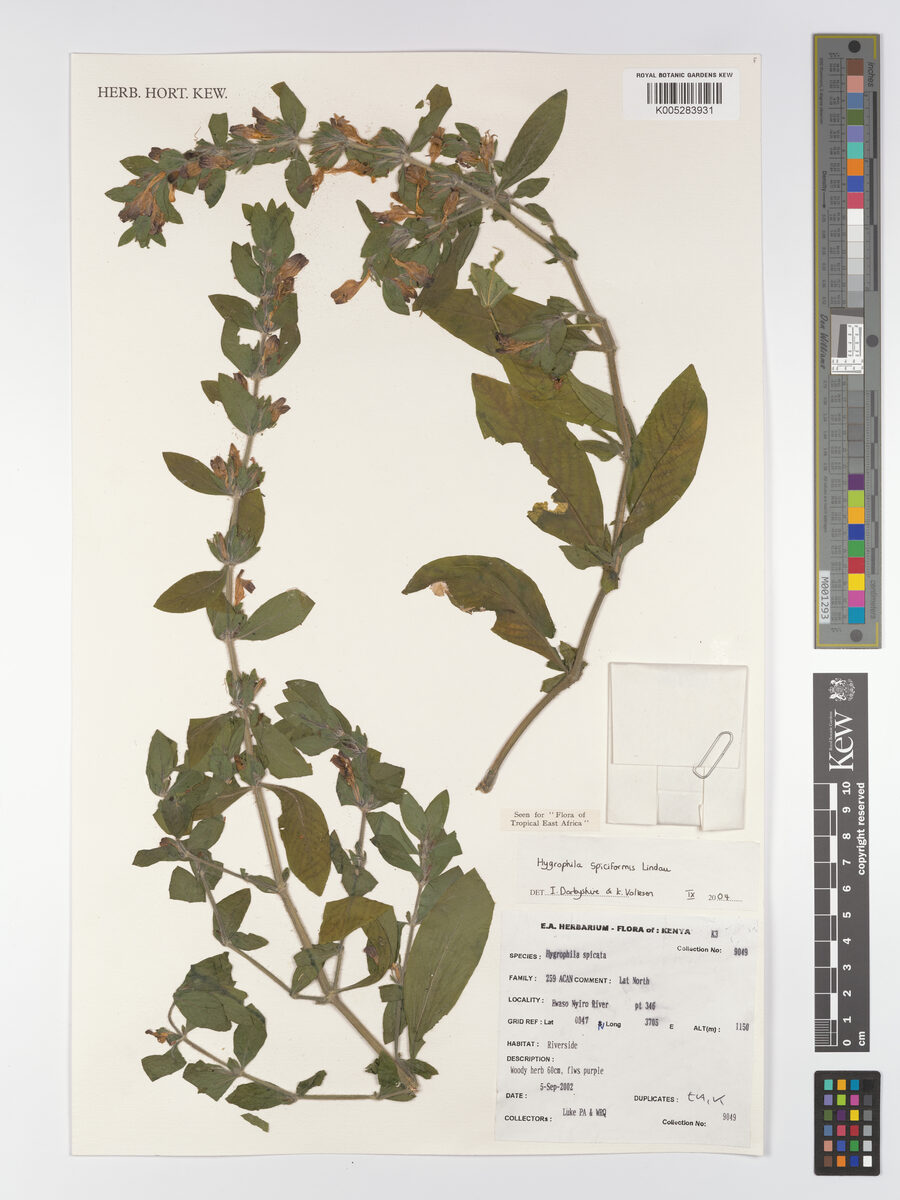
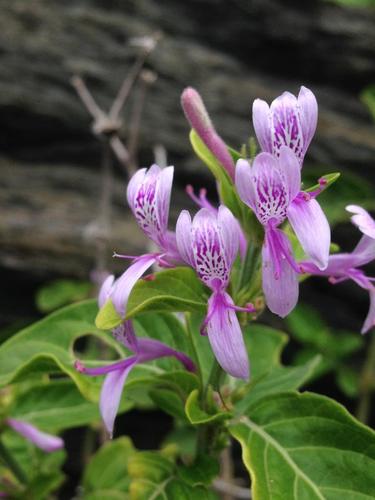
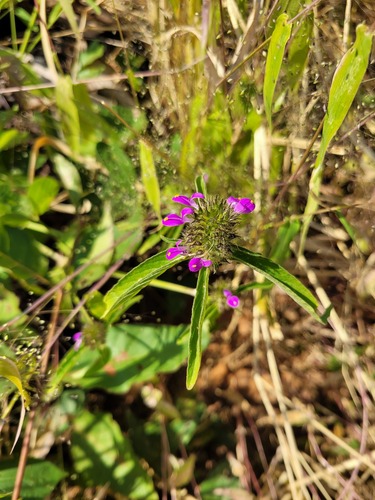
A herb. It has an erect stem 60-90 cm high. It has a woody rhizome. The leaves vary from narrow to more broadly oval. The flowers are tube shaped. They are blue with an orange-yellow throat. The fruit is a capsule and covered with fine hairs.
Edible Uses
Young leaves are cooked and eaten as a vegetable. The flowers are sucked for their sweetness and nectar.
Traditional Uses
The young leaves are cooked and eaten. Flowers are sucked for their sweetness.
This uses section is brief — help expand it
Medicinal Uses
The rhizome is applied as a dried powder on swellings, and an extraction in water is drunk against bilharzia. Ash of the burned rhizome is eaten with food by women as contraceptive. The macerated leaves are applied as a poultice on burns. An infusion of the plant is used to treat skin diseases.
Known Hazards
A minor vegetable eaten locally only in times of food scarcity.
Distribution
A tropical plant. In Malawi it grows at high altitude. It grows in dry savannah that is burnt often. It also grows in open woodland. It grows between 1,000-1,800 m above sea level.
Where It Grows
Africa, Angola, Burundi, Central Africa, Congo, East Africa, Malawi, Mozambique, Tanzania, Zambia, Zimbabwe,
Other Uses
After soaking the leaves for some hours, the extracted liquid is used as a hair shampoo.
Other Information
A minor vegetable eaten locally in times of food scarcity.
Also Known As
Jandalala, Malavu masonguia, Mlombwe, Mndombwe, Mwanaluni
References (8)
- Fowler, D. G., 2007, Zambian Plants: Their Vernacular Names and Uses. Kew. p 6
- Grubben, G. J. H. and Denton, O. A. (eds), 2004, Plant Resources of Tropical Africa 2. Vegetables. PROTA, Wageningen, Netherlands. p 529
- Herb., E. A., 1981,
- Jardin, C., 1970, List of Foods Used In Africa, FAO Nutrition Information Document Series No 2.p 106
- Martin, F.W. & Ruberte, R.M., 1979, Edible Leaves of the Tropics. Antillian College Press, Mayaguez, Puerto Rico. p 172
Show all 8 references Hide references
- Peters, C. R., O'Brien, E. M., and Drummond, R.B., 1992, Edible Wild plants of Sub-saharan Africa. Kew. p 45
- Williamson, J., 2005, Useful Plants of Malawi. 3rd. Edition. Mdadzi Book Trust. p 245
- World Checklist of Useful Plant Species 2020. Royal Botanic Gardens, Kew