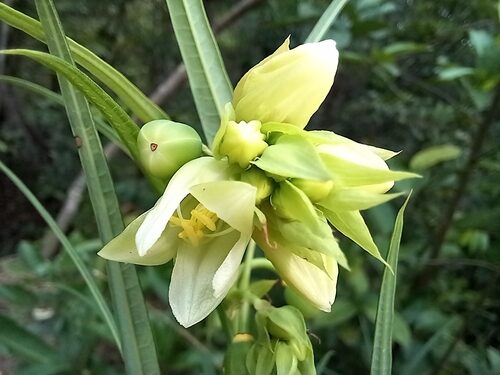
Plukenetia conophora
Mull. Arg.
Awusa nut, African walnut
iNaturalist· cc-by-nc
(c) Sandrine Gallois, some rights reserved (CC BY-NC), uploaded by Sandrine Gallois
iNaturalist· cc-by-nc
(c) Babajide Agboola, some rights reserved (CC BY-NC)
Summary
Source: WikipediaPlukenetia conophora, also called Nigerian walnut, and conophore, is a climbing shrub in the genus Plukenetia. It is not related to the walnut, being so named because its nuts bear a superficial resemblance to the walnut. It is native to tropical western and central Africa from Togo to Congo and in Sierra Leone. It is abundant in the Nigeria, Cameroon, Republic of the Congo and Democratic Republic of Congo. It prefers rain-forest hedge in half-shady places; low bush; secondary forest; plantations at elevations from 250–1,400 m (820–4,590 ft). Although it is well recorded in Sierra Leone, it is apparently not indigenous to Sierra Leone, since it is not recorded in Liberia and Ghana. Its presence in Sierra Leone is due to returning slaves for it is known to the Krio by its Yoruba (Nigerian) name. Plukenetia conophora is the only Plukenetia species native to West Africa or Central Africa. Other Plukenetia species are indigenous to other parts of Africa, the Indian subcontinent, Southeast Asia, and America.
Description
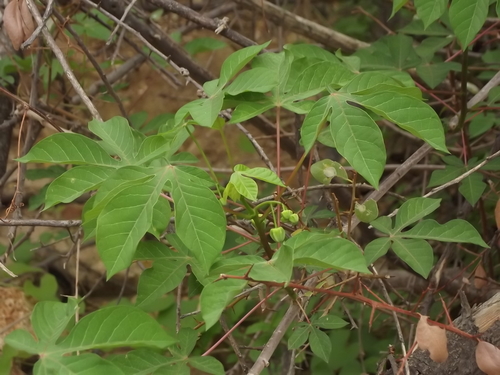
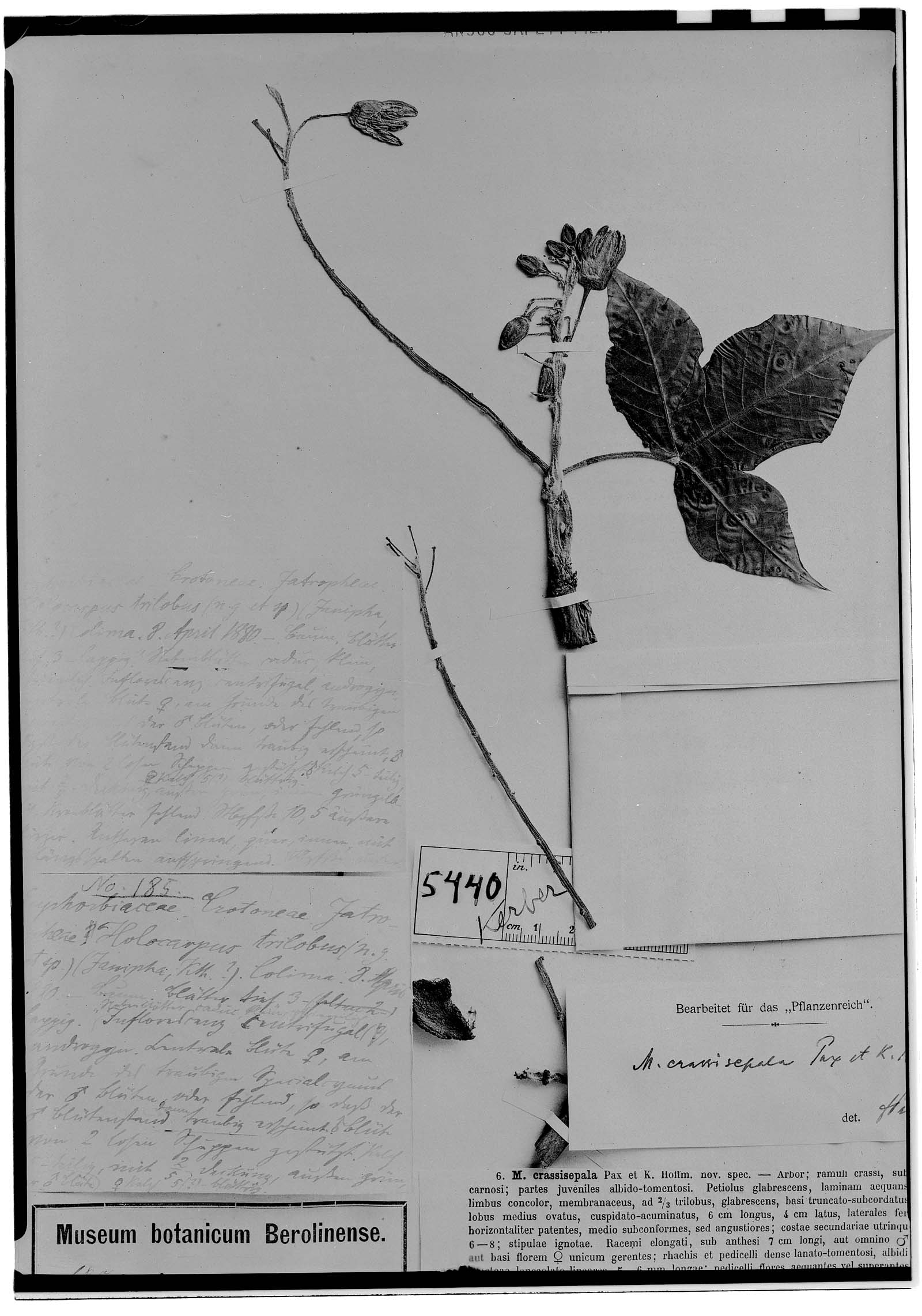
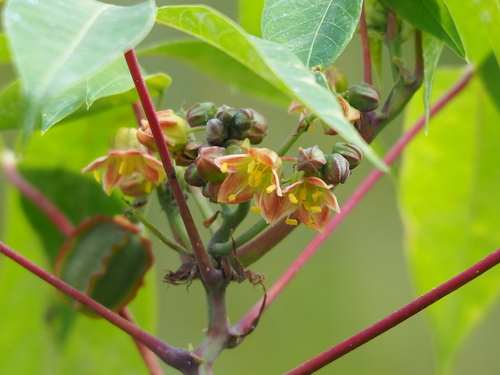
A shrub or creeper. It can be 30 m long. It has many branches. The leaves narrow to the tip and are 18 cm long by 10 cm wide. The flowers are very small and white and grouped in clusters. The male flowers fall off leaving the female flowers. The fruit has 4 or 5 lobes. There are 4-5 large seeds. The seeds are eaten after roasting.
Edible Uses
The seed can be eaten raw or cooked, and has a pleasant odor. It is most commonly boiled or roasted and often served with corn on the cob. Ground into a powder, it can be combined with flour to make cakes. Raw seeds have a bitter flavor reminiscent of kola nut and are considered tonic. The thin-shelled seeds are about 25mm long. They yield 48–60% of a light golden oil with a flavor resembling linseed oil; the oil comprises linolenic acid 64%, palmitic and stearic acids 15%, oleic acid 11%, and linoleic acid 10%. The fruit is eaten with rice. Leaves and young shoots are also eaten with rice.
Traditional Uses
The leaves, young shoots and fruit are eaten with rice. They are also dried. The seeds are boiled or roasted and eaten. The skin is removed. They are also used for edible oil.
Medicinal Uses
The leaves are considered a remedy for headaches. Raw seeds are regarded as aphrodisiac and tonic. The oil extracted from the seeds is used medicinally in massages.
Distribution
A tropical plant. It grows in secondary forest growing up tall trees.
Where It Grows
Africa, Angola, Benin, Cameroon, Central Africa, Congo DR, Congo R, Equatorial Guinea, Gabon, Nigeria, Sierra Leone, West Africa,
Cultivation
Cultivated in the hot and humid zones of tropical Africa around gardens and backyards, mainly for subsistence consumption. Grows on moist, deep, fertile, well-drained loam soils and in silt clay loam soils. Nut production is seasonal. The kernels can yield 50-60% oil. Carbon Farming Solutions - Cultivation: regional crop only. Management: standard (Describes the non-destructive management systems that are used in cultivation).
Propagation
Plants are grown from seed. Stem cuttings can also be used.
Other Uses
The seeds yield 48–60% of a drying oil that dries more quickly than linseed oil. Known in the paint and varnish trade as awusa oil, it is usable in the paint industry provided the supply is consistent and the kernels contain low levels of free fatty acids. It is not suitable for soap manufacture. Fresh oil has an iodine value of 190, which is excellent for a drying oil, but the seeds deteriorate in storage due to enzymatic action; heat-treatment at the time of collection is needed to prevent this.
Production
The vine starts producing after 5 years. Nut production is seasonal. In Congo they are available August to October. The kernels can yield 50-60% oil.
Other Information
It is a cultivated food plant. Seeds are sold in local markets. They are in high demand in season.
Nutrition
| Part | Moisture | kJ | kcal | Protein | Vit A | Vit C | Iron | Zinc |
|---|---|---|---|---|---|---|---|---|
| Seeds flour | — | — | 26.3 | — | — | — | — | — |
Synonyms
Also Known As
Angeko, Angeti, Bodombu, Botito, Conophor, Ekporo, Eti, Kaso, Kasso, Kasu, Kpwo-ngo, Limba, Lokaso, Lukaswa, Makasu nsinga, Ngaso, Ngezi, Nkasu, Okhue, Otito, Owusa nut, Tiito, Tito, Titose, Tobe, Tobye, Ukpa, Wanut
References (45)
- Awodoyin, R.O., Olubode, O.S., Ogbu, J.U., Balogun, R.B., Nwawuisi, J.U. and Orji, K.O., 2015, Indigenous Fruit Trees of Tropical Africa: Status, Opportunity for Development and Biodiversity Management. Agricultural Sciences, 6, 31-41
- Billong Fils, P. E., et al, 2020, Ethnobotanical survey of wild edible plants used by Baka people in southeastern Cameroon. Journal or Ethnobiology and Ethnomedicine. 16:64 p 9 (As Tetracarpidium conophorum)
- Burkill, H. M., 1985, The useful plants of west tropical Africa, Vol. 2. Kew.
- Busson, 1965,
- Dalziel, J. M., 1937, The Useful plants of west tropical Africa. Crown Agents for the Colonies London.
Show all 45 references Hide references
- Danforth, R.M., & Boren, P.D., 1997, Congo Native fruits. Twenty-five of the best. Privately published. p 40
- Facciola, S., 1998, Cornucopia 2: a Source Book of Edible Plants. Kampong Publications, p 101
- Fl. W. trop. Afr. 1:307. 1928
- Flora 47:530. 1864 (As Plukenetia conophora)
- Food Composition Tables for use in Africa FAO http://www.fao.org/infoods/directory No. 510
- Grivetti, L. E., 1980, Agricultural development: present and potential role of edible wild plants. Part 2: Sub-Saharan Africa, Report to the Department of State Agency for International Development. p 32
- Grubben, G. J. H. and Denton, O. A. (eds), 2004, Plant Resources of Tropical Africa 2. Vegetables. PROTA, Wageningen, Netherlands. p 565
- Hart. T. B. and Hart, J. A., 1986, The Ecological Basis of Hunter-Gatherer Subsistence in African Rain Forests: The Mbuti of eastern Zaire. Human Ecology. Vol. 14, No. 1. pp 29-55
- http://aflora.africa.kyoto-u.ac.jp
- Ingram, V. & Schure, J. 2010, Review of Non Timber Forest Products (NTFPs) in Central Africa, Cameroon. Center for International Forestry Research (CIFR). p 34 (As Tetracarpidium conophorum)
- Jardin, C., 1970, List of Foods Used In Africa, FAO Nutrition Information Document Series No 2.p 37, 106, 165
- Kuhnlein, H. V., et al, 2009, Indigenous Peoples' food systems. FAO Rome p 261
- Latham, P & Mbuta, A., 2017, Useful Plants of Central Province, Democratic Republic of Congo. Volume 2. Salvation Army p 212 (As Tetracarpidium conophorum)
- Liengola, I. B., 2001, A contribution to the study of native edible plants by the Turumbu and Lokele of the Tshopo District, Province Orientale, D. R. Congo. Syst. Geogr. Pl. 71:687-698
- Martin, F.W. & Ruberte, R.M., 1979, Edible Leaves of the Tropics. Antillian College Press, Mayaguez, Puerto Rico. p 192 (As Tetracarpidium commophorum)
- Mawunu, M., et al, 2020, First Survey of the Edible Non-Wood Forest Products Sold in Uige Province, Northern Angola. European Journal of Agriculture and Food Sciences. Vol. 2, No. 6
- Menninger, E.A., 1977, Edible Nuts of the World. Horticultural Books. Florida p 56
- Menninger, E.A., 1977, Edible Nuts of the World. Horticultural Books. Florida p 53 (As Plukenetia conophora)
- Meregini, O. A., 2005, Some endangered plants producing edible fruits and seeds in Southeastern Nigeria. Fruits, Vol. 60 pp 211-220
- Mosango, M., Szafranski, F., 1985, Plantes sauvages à fruits comestibles dans les environs de Kisangani (Zaïre). In: Journal d'agriculture traditionnelle et de botanique appliquée, 32e année, pp. 177-190 (As Tetracarpidium conophorum)
- Moutsambote, J., 1996, Vegetation forestiere et plantes alimentaires de la region de la Sangha. Chp. 11 of Bien Manger et Bien Vivre. ORSTOM p 119 (As Tetracarpidium conophorum)
- Nkeoua, G. & Boundzanga, G. C., 1999, Donnees sur les produits forestieres non ligneux en Republique du Congo. FAO. p 38 (As Tetracarpidium conophorum)
- Odoemelam, S. A., 2003, Chemical composition and functional properties of conophor nut (Tetracarpidium conophorum) flour International Journal of Food Science & Technology 38(6):729-734 - now Plukenetia conophora
- Okigbo, B.N., Vegetables in Tropical Africa, in Opena, R.T. & Kyomo, M.L., 1990, Vegetable Research and development in SADCC countries. Asian Vegetable Research and development Centre. Taiwan. p 42
- Peters, C. R., O'Brien, E. M., and Drummond, R.B., 1992, Edible Wild plants of Sub-saharan Africa. Kew. p 112
- Terashima, H., et al, 1992, Ethnobotany of the Lega in the Tropical Rainforest of Eastern Zaire (Congo): Part Two, Zone de Walikale, African Study Monographs, Suppl. 19:1-60 (As Tetracarpidium conophorum)
- Terashima, H., & Ichikawa, M., 2003, A comparative ethnobotany of the Mbuti and Efe hunter-gatherers in the Ituri Forest, Democratic Republic of Congo. African Study Monographs, 24 (1, 2): 1-168, March 2003 (As Tetracarpidium conophorum)
- Termote, C. & Van Damme, P., Wild Edible Plant Use in Tshopo District, DR Congo. Bioversity International. (As Tetracarpidium conophorum)
- Termote, C., et al, 2011, Eating from the wild: Turumbu, Mbole and Bali traditional knowledge of non-cultivated edible plants, District Tshopo, DRCongo, Gen Resourc Crop Evol. 58:585-618
- Termote, C., et al, 2012, Wild Edible Plant Markets in Kisangani, Democratic Republic of Congo. Human Ecology 40:269-285
- Terra, G.J.A., 1973, Tropical Vegetables. Communication 54e Royal Tropical Institute, Amsterdam, p 79
- Ubom, R. M., 2010, Ethnobotany and Diversity Conservatioon in the Niger Delta, Nigeria. International Journal of Botany. 6(3): 310-322
- Udo, E. S., et al, 2009, Life-form and Density of Valuable Non-timber Plants in Ukpom Community Forest, Akwa Ibom State, Nigeria. African Research Review 3(3) p 8
- USDA, ARS, National Genetic Resources Program. Germplasm Resources Information Network - (GRIN). [Online Database] National Germplasm Resources Laboratory, Beltsville, Maryland. Available: www.ars-grin.gov/cgi-bin/npgs/html/econ.pl (10 April 2000) (As Plukenetia conophora)
- Vivien, J., & Faure, J.J., 1996, Fruitiers Sauvages d'Afrique. Especes du Cameroun. CTA p 155
- Wickens, G.E., 1995, Edible Nuts. FAO Non-wood forest products. FAO, Rome. p 123
- Wickens, G.E., 1995, Edible Nuts. FAO Non-wood forest products. FAO, Rome. p 122 (As Plukenetia conophora)
- Wiersema, J. H. & Leon, B., 2013, World Economic Plants. A Standard Reference CRC Press. 2nd Ed. p 542
- Zapfack, L., et al, 2001, Ethnobotanical Survey of the Takamanda Forest Reserve. Consultancy Report PROFA, Cameroon. p 23 (As Tetracarpidium conophorum)
- Zeven, A. C. & de West, J. M. J., 1982, Dictionary of cultivated plants and their regions of diversity. Wageningen. p 126