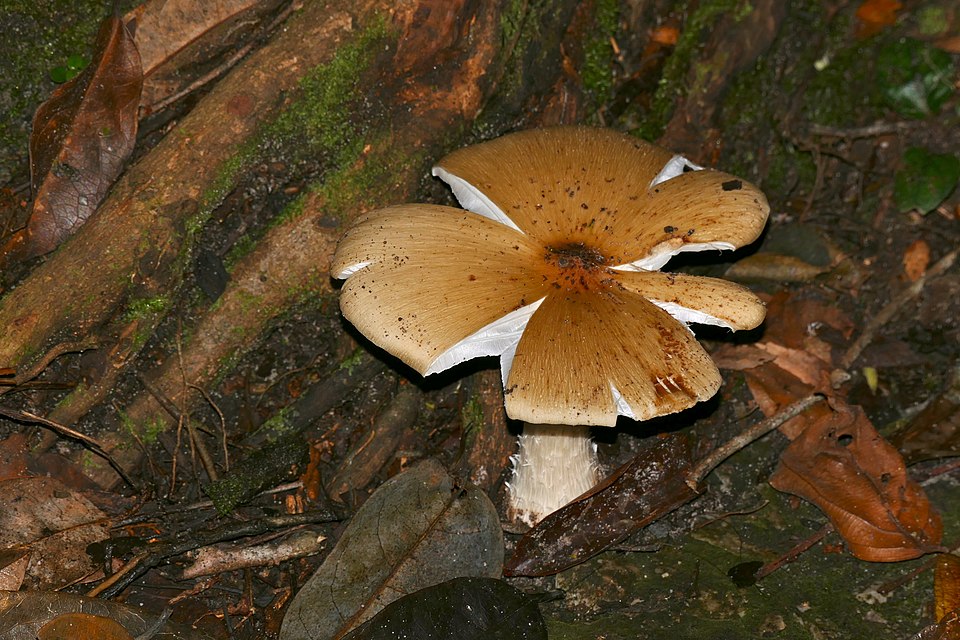
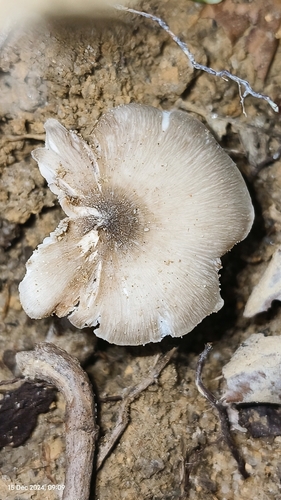
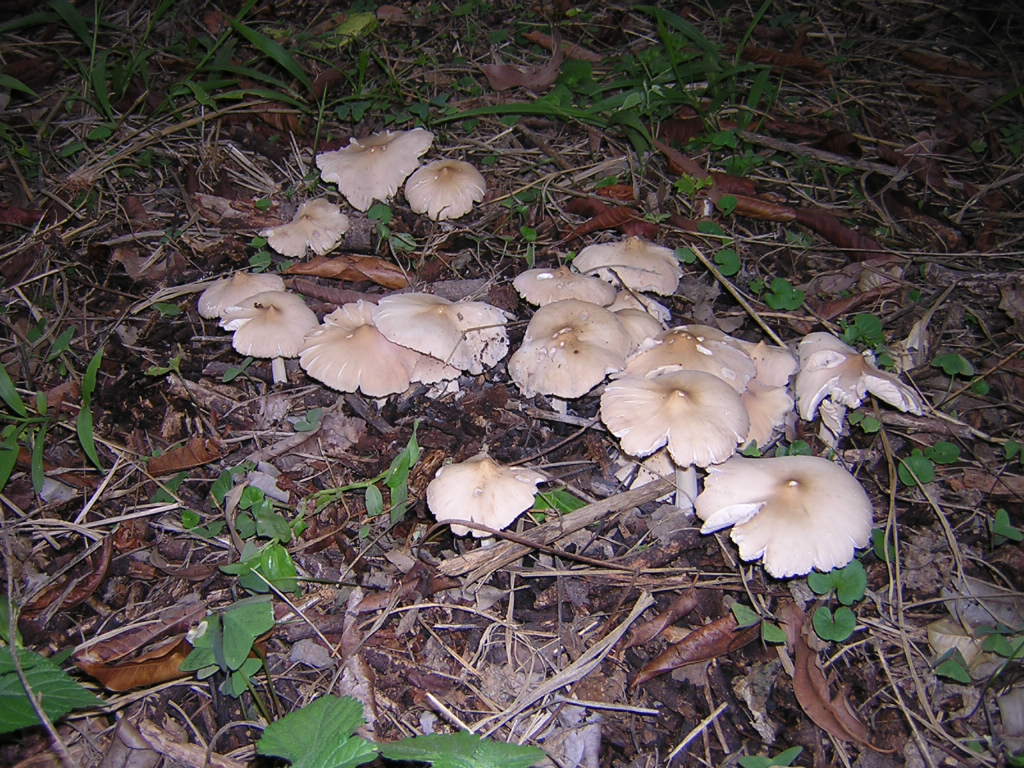
Termitomyces le-testui
(Pat.) R. Heim
iNaturalist· cc-by-nc
(c) Julian, some rights reserved (CC BY-NC)
iNaturalist· cc-by-nc
(c) Jesse, some rights reserved (CC BY-NC)
iNaturalist· cc-by-nc
(c) Benford Kayuni, some rights reserved (CC BY-NC)
Description
A tropical agaric fungus in the family Lyophyllaceae that grows on termite mounds in Africa. It is edible and used as food.
This description is brief — help expand it
Edible Uses
The mushroom is eaten as food.
Distribution
A tropical plant. It grows on termite mounds.
Where It Grows
Africa, Benin, Burundi, Cameroon, Central Africa, Central African Republic, CAR, Congo DR, Congo R, Côte d'Ivoire, East Africa, Gabon, Ghana, Guinea, Guinée, Ivory Coast, Kenya, Tanzania, Togo, Uganda, West Africa, Zambia,
Notes
Also put in the family Agaricaceae.
Nutrition
| Part | Moisture | kJ | kcal | Protein | Vit A | Vit C | Iron | Zinc |
|---|---|---|---|---|---|---|---|---|
| Mushroom | — | 277 | 45 | — | — | — | — | — |
Synonyms
Also Known As
Digbende, Gabonidi, Gueto, Oussousou koadja, Tle kekpeka, Wikulwe
References (13)
- Bloesch, U., 2008, Mushroom study, The potential of wild edible mushrooms. GTZ project. p 16
- Boa, E. R., 2004, Wild edible fungi and their importance to people. FAO Non Wood Forest Products Booklet 17
- Degreef, J., et al, 2016, Wild edible mushrooms, a valuable resource for food security and rural development in Burundi and Rwanda. Biotechnol. Agron. Soc. Environ. 2016 20(4), 441-452
- efta-online.org, Edible Fungi of Tropical Africa, Jardin botanique Meise
- Fongnzossie Fedoung, E., et al, 2020, Wild edible plants and mushrooms of the Bamenda Highlands in Cameroon: ethnobotanical assessment and potentials for enhancing food security. Journal of Ethnobiology and Ethnomedicine 16:12
Show all 13 references Hide references
- Grivetti, L. E., 1980, Agricultural development: present and potential role of edible wild plants. Part 2: Sub-Saharan Africa, Report to the Department of State Agency for International Development. p 34
- Jardin, C., 1970, List of Foods Used In Africa, FAO Nutrition Information Document Series No 2.p 115
- Kokwaro, J. O. and Johns. T., Luo Biological Dictionary. p 79
- Latham, P & Mbuta, A., 2017, Useful Plants of Central Province, Democratic Republic of Congo. Volume 2. Salvation Army p 256
- Msola, D. K., 2007, The role of Wild Foods in Household Income and Food Security in Mufundi District, Tanzania. Morogoro, Tanzania. p 48
- Msuya, T. S., et al, 2010, Availability, Preference and Consumption of Indigenous Foods in the Eastern Arc Mountains, Tanzania, Ecology of Food and Nutrition, 49:3, 208-227
- Njouonkou, A.L., et al, 2016, Diversity of Edible and Medicinal Mushrooms used in the Noun Division of the West Region of Cameroon. International Journal of Medicinal Mushrooms, 18(5): 387-396
- Tibuhwa, 2013, Wild Mushroom - an underutilized healthy food resource and income generator: experience from Tanzania rural areas. Journal of Ethnobiology and Ethnomedicine 9:49