Terminalia whitmorei
Coode
Aitabage
gbif· cc-by
Royal Botanic Gardens, Kew
gbif· cc-by
Royal Botanic Gardens, Kew
gbif· cc-by
Royal Botanic Gardens, Kew
Description
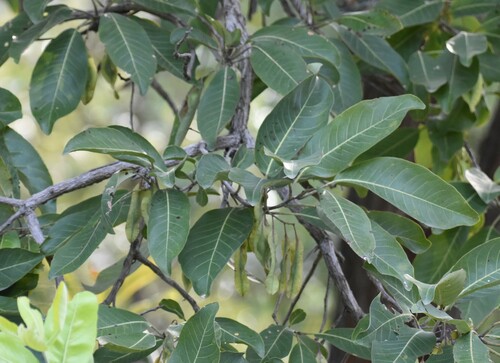
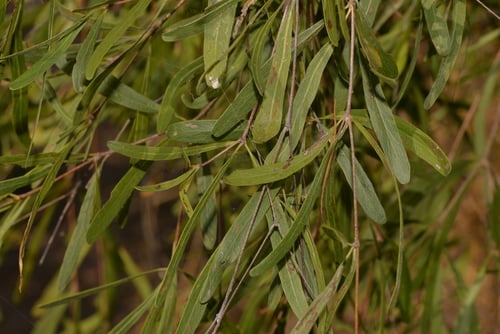
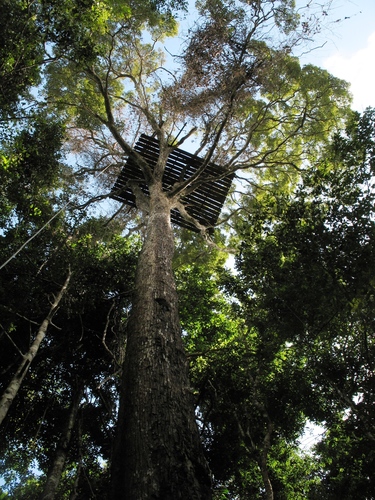
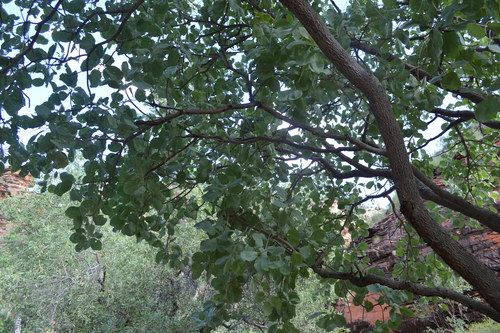
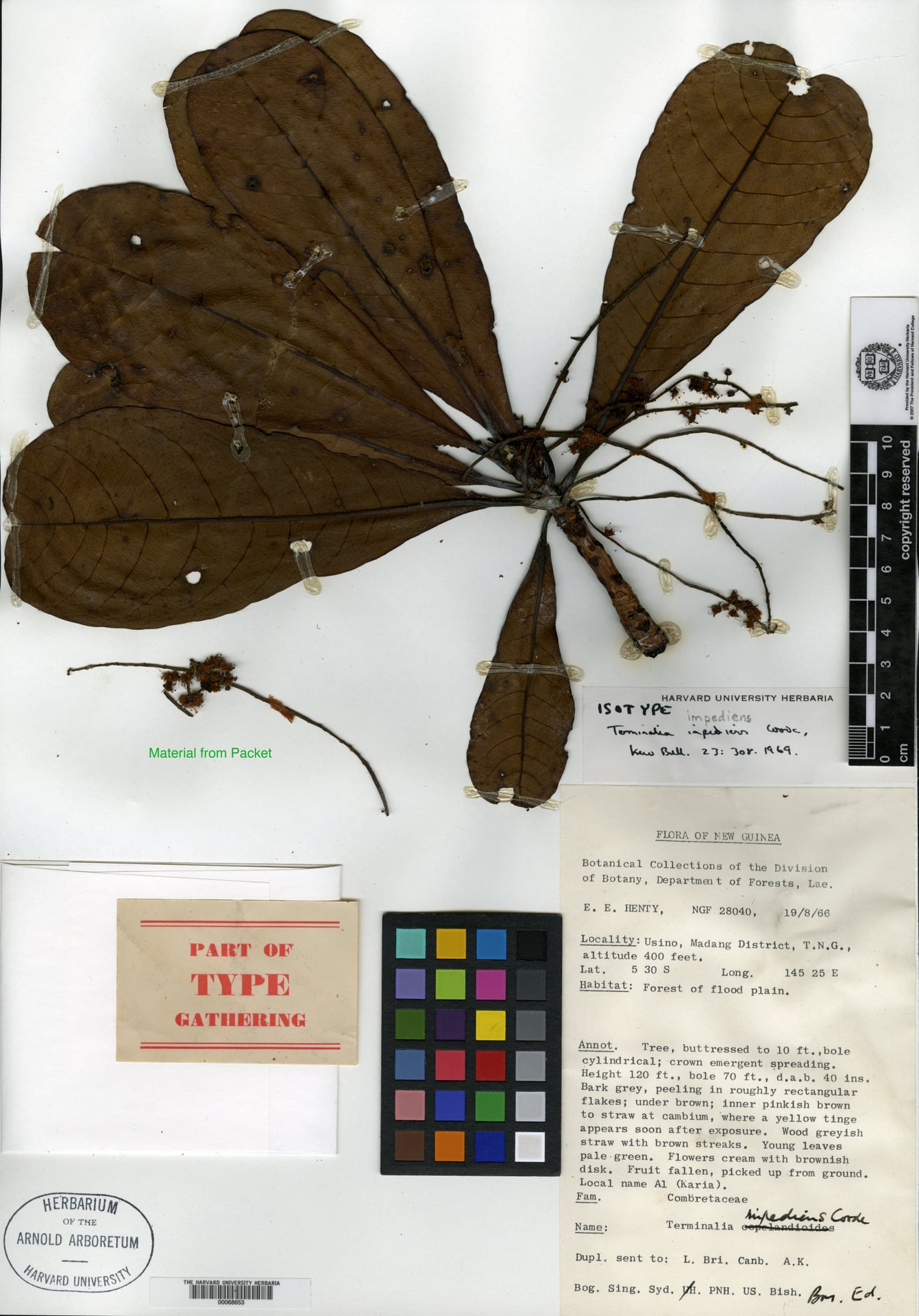
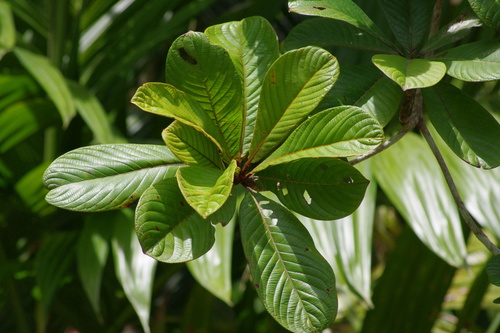
A medium sized tree. It grows to 20 m tall. The twigs have leaf scars close together on them. The young plant parts are densely hairy. The leaves are tightly clustered near the tips of twigs. The leaf stalks are thick and up to 1 cm long. The leaf blade is 12-20 cm long by 6-9 cm wide. The leaf tapers towards the base. The tip is pointed. The flowers are small. The fruit are flattened and oval. Young fruit have thin wide wings. The mature fruit is oval, red and fleshy. They are 4 cm long by 3 cm wide.
Edible Uses
The ripe fruit is eaten raw or roasted. The seeds are eaten with coconut and fish but require processing to remove toxins.
Traditional Uses
The fruit are eaten raw or roasted. The seeds are eaten with coconut and fish. They need to be processed to remove toxins.
This uses section is brief — help expand it
Known Hazards
Seeds contain toxins and must be processed before consumption.
Distribution
A tropical plant. It occurs at low altitudes on coral slopes in the Solomon Islands. It occurs naturally on Santa Isabel and the Guadalcanal group of islands in the Solomon Islands. It is growing in the Fairchild Botanical Gardens in the USA.
Where It Grows
North America, Pacific, Papua New Guinea, PNG, Solomon Islands, USA,
Notes
There are about 200-250 Terminalia species. They are tropical.
References (3)
- Coode, M.J.E., in Womersley, J.S., (Ed), 1978, Handbooks of the Flora of Papua New Guinea. Melbourne University Press. Vol 1. p 107
- French, B.R., 2010, Food Plants of Solomon Islands. A Compendium. Food Plants International Inc. p 190
- Lepofsky, D., 1992, Arboriculture in the Mussau Islands, Bismarck Archipelago. Economic Botany, Vol 46, No. 2, pp. 192-211