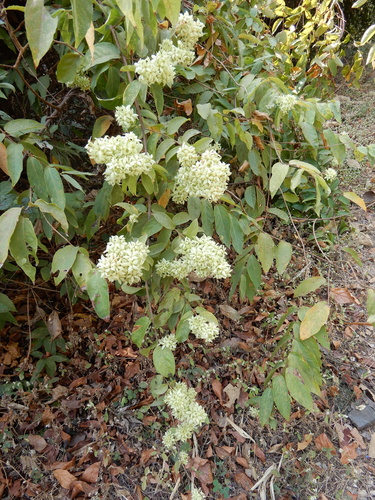
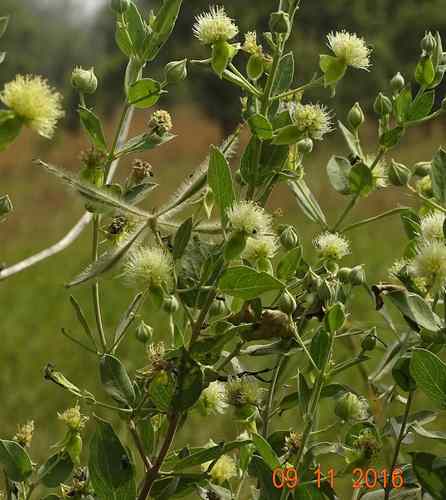
Terminalia oblongata subsp. volucris
(R. Br. ex Benth.) Pedley
Wild peanut, Rosewood
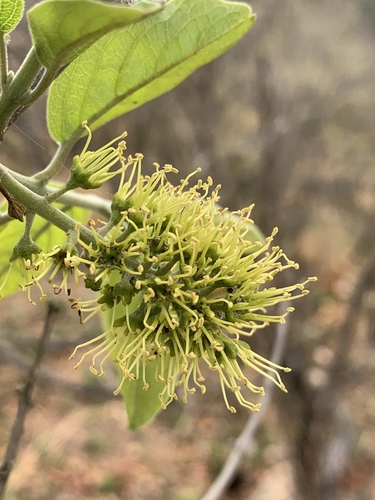
iNaturalist· cc-by-nc
(c) Aaron Bean, some rights reserved (CC BY-NC), uploaded by Aaron Bean
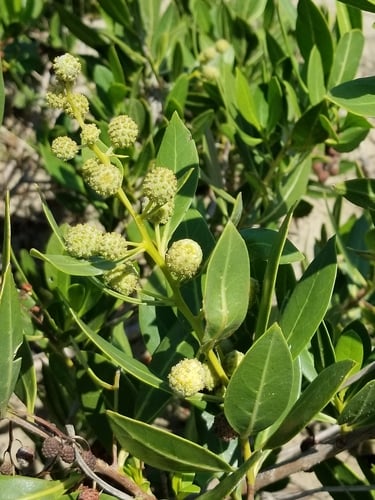
iNaturalist· cc-by-nc
(c) Aaron Bean, some rights reserved (CC BY-NC), uploaded by Aaron Bean
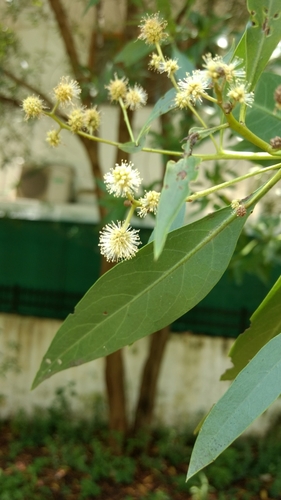
iNaturalist· cc-by-nc
(c) Mark C, some rights reserved (CC BY-NC)
Summary
Source: WikipediaTerminalia oblongata, commonly known as yellow-wood or rosewood, is a species of plant in the Combretaceae family. It is native to Australia. The mean maximum and minimum annual temperatures suitable for its growth are within the range 22 - 38°c, though it can tolerate 12 - 44°c as well.
Description
A small tree. It grows up to 6 m tall. It loses its leaves during the year. The bark is grey and has a checkered pattern. The leaves are different greens on the upper and lower surfaces. The new leaves are bright green and arranged in spirals. There are glands on the leaf stalk or the base of the leaf. The flowers can be bisexual or male. The flowers are small and white and in spikes. The fruit is a 2 winged nut. The wings are nearly as wide as the nut.
Edible Uses
The gum exuded from the tree is eaten, softened in fire if hardened. The seed is removed from the fruit and eaten.
Traditional Uses
The gum exuded from the tree is eaten. It is softened in the fire if it has gone hard. The seed is removed from the fruit and eaten.
This uses section is brief — help expand it
Medicinal Uses
None mentioned.
Distribution
It is a tropical plant. It grows naturally on grey sandy soils over sandstone rock in northern Australia. It grows from sea level to 400 m above sea level.
Where It Grows
Australia*,
Production
Trees flower and fruit during October to January.
Notes
There are about 200-250 Terminalia species. They are tropical.
Synonyms
Also Known As
Kiriri, Marrminimini, Yellow-wood
References (7)
- Cooper, W. and Cooper, W., 2004, Fruits of the Australian Tropical Rainforest. Nokomis Editions, Victoria, Australia. p 129
- Doran, J.C., & Turnbull, J.W. (Eds), 1997, Australian Trees and Shrubs: species for land rehabilitation and farm plantings in the tropics. ACIAR Monograph No 24. p 358
- Kenneally, K.E., Edinger, D. C., and Willing T., 1996, Broome and Beyond, Plants and People of the Dampier Peninsula, Kimberley, Western Australia. Department of Conservation and Land Management. p 90
- Lazarides, M. & Hince, B., 1993, Handbook of Economic Plants of Australia, CSIRO. p 235
- Paczkowska, G. & Chapman, A.R., 2000, The Western Australian Flora. A Descriptive Catalogue. Western Australian Herbarium. p 216
Show all 7 references Hide references
- Wightman, Glenn et al. 1992. Mudburra Ethnobotany: Aboriginal Plant Use from Kulumindini (Elliott) Northern Australia. Northern Territory Botanical Bulletin No 14. Parks and Wildlife Commission of the Northern Territory. p 32
- Wightman, Glenn et al. 1994, Gurindji Ethnobotany: Aboriginal Plant Use from Daguragu Northern Australia. Northern Territory Botanical Bulletin No 18. Parks and Wildlife Commission of the Northern Territory. p 52