Tephrosia purpurea
(L.) Pers.
Purple tephrosia
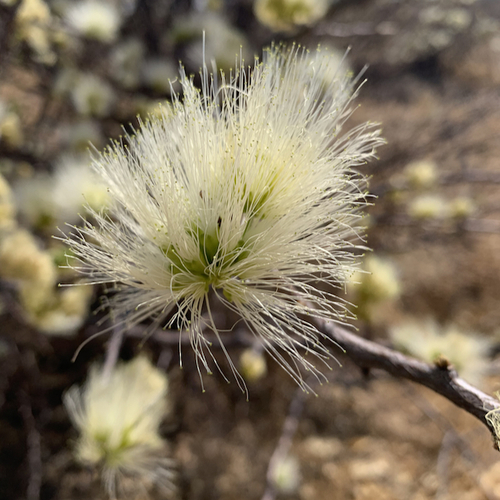
iNaturalist· cc-by-nc
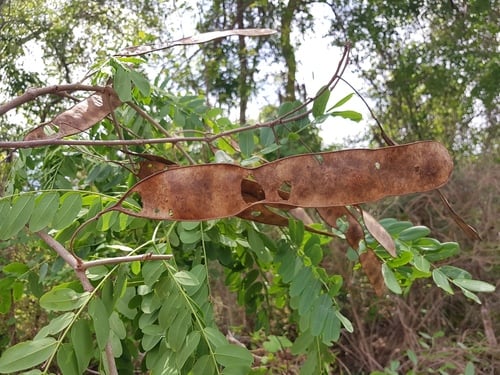
(c) 桃子, some rights reserved (CC BY-NC)
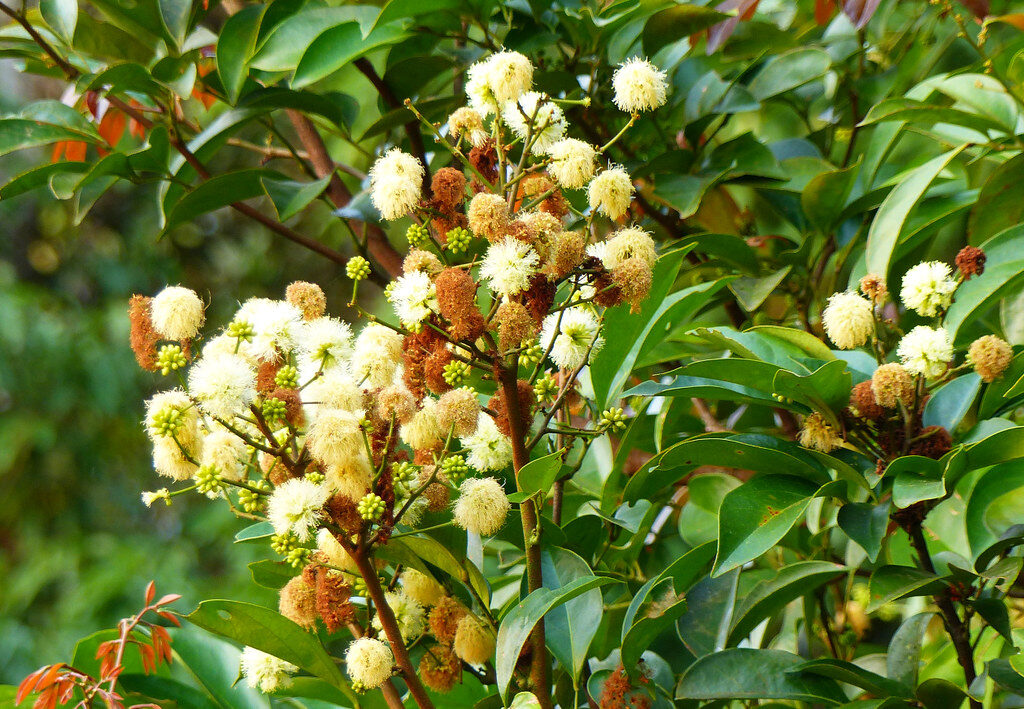
iNaturalist· cc-by-nc
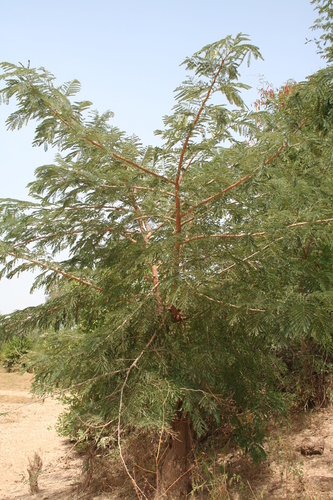
(c) Célio Moura Neto, some rights reserved (CC BY-NC), uploaded by Célio Moura Neto
Summary
Source: WikipediaTephrosia purpurea is a species of flowering plant in the family Fabaceae. It grows in poor soils as a common wasteland weed and has a pantropical distribution. It is a type of legume native to south-western Asia (the Levant, Arabian Peninsula, Socotra, Iran, Pakistan, India and Sri Lanka) and north-eastern Africa (Egypt, Sudan, Ethiopia, Eritrea, Djibouti, Somalia). The leaflets of the plant are obovate-oblong and equal-sided, and of a silky texture. The fruits (legumes) are typically 1 to 2 in (25 to 51 mm) long and contain six or seven brownish seeds. The species typically grows in areas where the soils are relatively deep, especially in semi-arid and wadi areas, and on terraces and slight inclines and hills. Tephrosia purpurea is known to be toxic to goats. Although it has been used in Oman and the United Arab Emirates to treat bronchitis, cough, earache, nasal congestion and wounds and bone fractures, as of 1993 its wider impact on humans had not been assessed. It can be used to make indigo-like dyes, and the leaves and those of other plants are used to make hot drinks by the Bedouin in parts of Sinai and the Negev.
Description
An erect or scrambling herb. It can grow each year from seed or continue growing for a few years. It is 40-80 cm high. The stems can be hairy or smooth. The leaves have an odd number of leaflets. The leaves have 9-21 leaflets which are oblong and 2 cm long by 6 mm wide. They have a point at the tip. The flowers are 8 mm long in slender flower arrangements growing opposite leaves. These stalks can be 20 cm long. The flower standard is white inside and purple outside. The keel is green with a purple tip. The fruit are narrow pods curved upwards towards the tip. They are 4-5 cm long and 4-6 mm wide. They have short hairs. There are 6-9 seeds spaced more widely apart.
Edible Uses
The roasted seeds are used as a coffee substitute, and the seeds are eaten whole. The roots flavour milk, the leaves are made into tea, and the pods and flowers are also consumed as vegetables.
Traditional Uses
The roasted seeds are used instead of coffee. The seeds are eaten. The roots are used to flavour milk. The leaves are used for tea.
This uses section is brief — help expand it
Medicinal Uses
Tephrosia purpurea is also used in folk medicine and has some anti-bacterial properties. According to Ayurveda, the plant is anthelmintic, alexiteric, restorative, and antipyretic. The leaves and the root have been used in traditional medicinal on bronchitis, cough, earache, wounds and bone fractures by herbalists in countries such as Oman and the United Arab Emirates. The ground leaves of Tephrosia purpurea are also insufflated in cases of nasal congestion, or boiled with water to make eardrops. Powdered bark can be mixed with water and poured into the ears of camels with ticks, and powdered leaves have been made into a paste to be smeared on wounds. It has also been rubbed on limbs in conjunction with Fagonia indica and Ocomim basilicum of people affected with polio, without any effect. It is used in the treatment of leprosy, ulcers, asthma, and tumors, as well as diseases of the liver, spleen, heart, and blood. A decoction of the roots is given in dyspepsia, diarrhea, rheumatism, asthma and urinary disorders. The root powder is salutary for brushing the teeth, where it is said to quickly relieve dental pains and stop bleeding. An extract, termed 'betaphroline' (not a systematic name) is claimed to promote release of endorphins, and finds use in certain cosmetic preparations. African shepherds use crushed plants to make an antidotal beverage for animals bitten by snakes. When dried, the leaves of Tephrosia purpurea were found to contain 4.4% moisture, 21.1% of crude protein, 19.8% of crude fiber, and 10.9% of ash. A chemical analysis found that it contains rotenoids, isolflavones, flavanones, chalcones, and flavones, The chloroform extract of the aerial part of Tephrosia purpurea also revealed seven new 8-prenylated flavonoids, including tephroapollin A-G (1-7). In 2006, researchers of Oman's Sultan Qaboos University published their findings from a chemical investigation into the leaves in which they found it contained semiglabrin, semigalbrinol, and a new flavanone named apollineanin. One 2014 study revealed that pseudosemiglabrin extracted from the aerial parts of Tephrosia purpurea had an antiproliferative effect on cancer cell lines. A study of Tephrosia purpurea from the Wadi Ejili, in Ras Al Khaimah, UAE, focusing on seeds collected from specimens of the traditional medicinal plant explored its exogenous production of silver nanoparticles. The study is thought to be the first time the antimicrobial activity of silver nanoparticles synthesized via living plants has been observed.
Known Hazards
Tephrosia purpurea is cited as "unpalatable", although the seeds of the plant are reportedly a favourite of sandgrouse inhabiting the scrub-desert of northern Sudan, and the butterfly Colias croceus is known to feed on it. This has allowed it to colonize the landscape in parts of the Middle East which have been overgrazed, especially at lower altitudes. The species is known to be toxic to goats; a study published in the early 1980s revealed that 11 out of 12 goats died after 1 to 40 days of daily oral dosing of Tephrosia purpurea shoots (fresh or dried), and that they displayed adverse reactions to ingesting it such as dyspnoea, weakness of the limbs and joints causing instability in movement, changes in fat composition, catarrhal enteritis, and hemorrhage in the heart, lungs, and intestinal mucosa. Rotenoids extracted from the seeds of the plant also caused complete mortality in Aphis craccivora, when applied at a concentration of 0.1% for 48 hours. Tephrosia purpurea is used as a fish poison for fishing. Its leaves and seeds contain tephrosin, which paralyzes fish. Larger doses are lethal to fish, but mammals and amphibians are unaffected.
Distribution
It is a tropical plant. It is self sown in grasslands. In Papua New Guinea it grows from 30 to 120 m altitude. It grows on the Deccan in India. It grows in the Sahara. It grows in arid places. In Sichuan and Yunnan.
Where It Grows
Africa, American Samoa, Angola, Asia, Australia, Bangladesh, Brazil, Burkina Faso, Cambodia, Cameroon, Central Africa, Central African Republic, CAR, Central America, Chad, China, Colombia, Comoros, Congo R, Cook Is., Cuba, Dkibouti, Dominican Republic, East Africa, Eswatini, Fiji, Gambia, Ghana, Guianas, Guinea-Bissau, Guyana, Haiti, Hawaii, Himalayas, India, Indochina, Indonesia, Iran, Ivory Coast, Jamaica, Kenya, Laccadive Is., Laos, Lesser Antilles, Madagascar, Malawi, Malaysia, Mali, Marquesas, Mauritius, Mediterranean, Mexico, Morocco, Mozambique, Myanmar, Nepal, New Caledonia, Niue, North Africa, Oman, Pacific, Pakistan, Papua New Guinea, PNG, Philippines, Puerto Rico, Reunion, Rotuma, Samoa, Saudi Arabia, SE Asia, Senegal, Seychelles, South Africa, Southern Africa, South America, Sri Lanka, Suriname, Swaziland, Taiwan, Thailand, Tonga, Trinidad-Tobago, USA, Vanuatu, Venezuela, Vietnam, Wallis and Futuna, West Africa, West Indies, Zambia, Zimbabwe,
Cultivation
A plant of the lowland tropics, where it is usually found at elevations up to 400 metres, occasionally as high as 1,300 metres. Prefers dry, gravelly or rocky and sandy soils, but in Madras (India) it grows well on loamy soils. It is tolerant of saline-sodic soil conditions. The plant flowers throughout the year in Java. A deep rooted plant. T. Purpurea is associated with the vesicular-arbuscular mycorrhizal fungi Glomus heterosporum and Sclerocystis microcarpus in waste sites of coal mines and calcite mine spoils, and is nodulated by Rhizobium. Its growth is often not very luxuriant, limiting its value as a temporary shade crop or green manure. When added to the soil as green manure it increases humus content and induces the formation of large, stable soil aggregates. It produces ample seed and builds up a large seedbank in the soil. This species has a symbiotic relationship with certain soil bacteria, these bacteria form nodules on the roots and fix atmospheric nitrogen. Some of this nitrogen is utilized by the growing plant but some can also be used by other plants growing nearby.
Other Uses
The leaves are occasionally used to dye material orange-brown. When combined with Mucuna cyanosperma, a black can be obtained. The dry plants are collected for fuel. The plant parts of many species in this genus contain rotenone-like compounds that have insecticidal properties. Rotenone is an isoflavone that has strong insecticidal, pesticidal and piscicidal activities, but is of relatively low toxicity to humans. The plant is used as green manure for vegetables, rice, coconut and banana. When grown as a green manure on saline-sodic soils in Rajastan (India), it is most successful in reducing soil salinity and lowering the pH.
Production
It is a short lived shrub.
Notes
Chemical composition (acid composition of seeds, Singhalese sample): Oil = 7%. Component esters (wt. %): 16:0 = 16%. 18: = 7%. 18:1 = 25%. 18:2 = 24%. 18:3 = 24%. 20:0 = 2%.
Synonyms
Also Known As
Amejmej, 'Avasa, Ban-nil, Bansa-bansu, Cotkhi tia, Doankiem tia, Haldri, Kohuhu, Ludumyo, Maheero, Me-yaing, Sarphonki, Sarphooka, Trom khmaoch, Trum khmoch
References (30)
- Ambasta, S.P. (Ed.), 2000, The Useful Plants of India. CSIR India. p 625
- Borrell, O.W., 1989, An Annotated Checklist of the Flora of Kairiru Island, New Guinea. Marcellin College, Victoria Australia. p 92
- Burkill, H. M., 1985, The useful plants of west tropical Africa, Vol. 3. Kew.
- Burkill, I.H., 1966, A Dictionary of the Economic Products of the Malay Peninsula. Ministry of Agriculture and Cooperatives, Kuala Lumpur, Malaysia. Vol 2 (I-Z) p 2171
- Cengel, D. J. & Dany, C., (Eds), 2016, Integrating Forest Biodiversity Resource Management and Sustainable Community Livelihood Development in the Preah Vihear Protected Forest. International Tropical Timber Organization p 125
Show all 30 references Hide references
- Dalziel, J. M., 1937, The Useful plants of west tropical Africa. Crown Agents for the Colonies London.
- Facciola, S., 1998, Cornucopia 2: a Source Book of Edible Plants. Kampong Publications, p 111
- Flora of Pakistan. www.eFloras.org
- Fowler, D. G., 2007, Zambian Plants: Their Vernacular Names and Uses. Kew. p 40
- Grubben, G. J. H. and Denton, O. A. (eds), 2004, Plant Resources of Tropical Africa 2. Vegetables. PROTA, Wageningen, Netherlands. p 565
- GUNSTONE et al,
- Kermath, B. M., et al, 2014, Food Plants in the Americas: A survey of the domesticated, cultivated and wild plants used for Human food in North, Central and South America and the Caribbean. On line draft. p 859
- Kew Plants of the World Online
- Levitt, D., 1981, Plants and people. Aboriginal uses of plants on Groote Eylandt. Australian Institute of Aboriginal Studies, Canberra. p 115
- Majeed, M., et al, 2021, Gathered Wild Food Plants among Diverse Religious Groups in Jhelum District, Punjab, Pakistan. Foods 2021, 10, 594.
- Martin, F.W. & Ruberte, R.M., 1979, Edible Leaves of the Tropics. Antillian College Press, Mayaguez, Puerto Rico. p 200
- Nassif, F., & Tanji, A., 2013, Gathered food plants in Morocco: The long forgotten species in Ethnobotanical Research. Life Science Leaflets 3:17-54
- Peters, C. R., O'Brien, E. M., and Drummond, R.B., 1992, Edible Wild plants of Sub-saharan Africa. Kew. p 138
- Pham-Hoang Ho, 1999, An Illustrated Flora of Vietnam. Nha Xuat Ban Tre. p 891
- Phon, P., 2000, Plants used in Cambodia. © Pauline Dy Phon, Phnom Penh, Cambodia. p 597
- Plants of Haiti Smithsonian Institute http://botany.si.edu/antilles/West Indies
- Pradhan, R., et al, 2020, Potential Wild Edible Plants and its Significance in Livelihood of Indigenous People of Male Mahadeshwara Hills, Karnataka. Economic Affairs Vol. 64, No. 4 pp. 01-14
- Pullaiah, T., et al, Ethnobotany of India, Volume 1: Eastern Ghats and Deccan.
- Singh, H.B., Arora R.K.,1978, Wild edible Plants of India. Indian Council of Agricultural Research, New Delhi. p 85
- Swaziland's Flora Database http://www.sntc.org.sz/flora
- Terra, G.J.A., 1973, Tropical Vegetables. Communication 54e Royal Tropical Institute, Amsterdam, p 77
- Uphof,
- Verdcourt, B., 1979, Manual of New Guinea Legumes. Botany Bulletin No 11, Division of Botany, Lae, Papua New Guinea. p 345
- WATT,
- World Checklist of Useful Plant Species 2020. Royal Botanic Gardens, Kew