Telosma africana
(N. E. Br.) N. E. Br.
iNaturalist· cc-by-nc
(c) Errol Douwes, some rights reserved (CC BY-NC), uploaded by Errol Douwes
iNaturalist· cc-by-nc
(c) Errol Douwes, some rights reserved (CC BY-NC)
Description
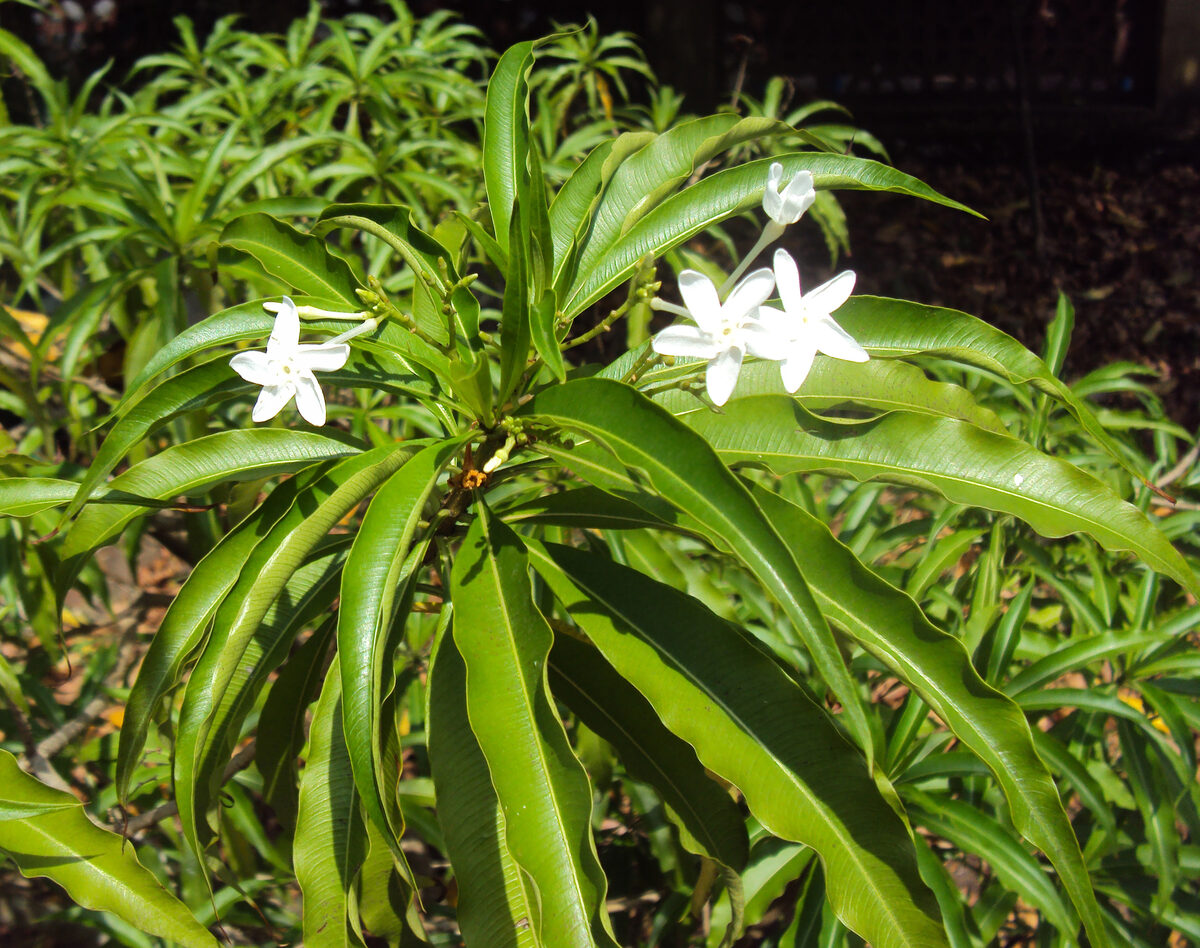
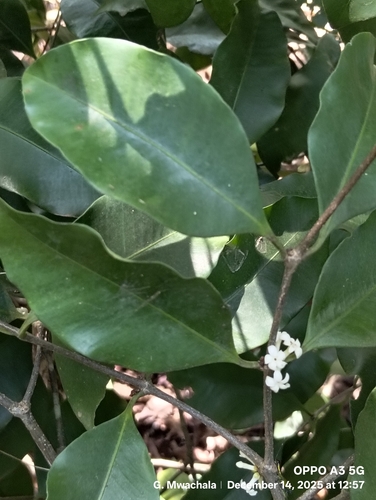
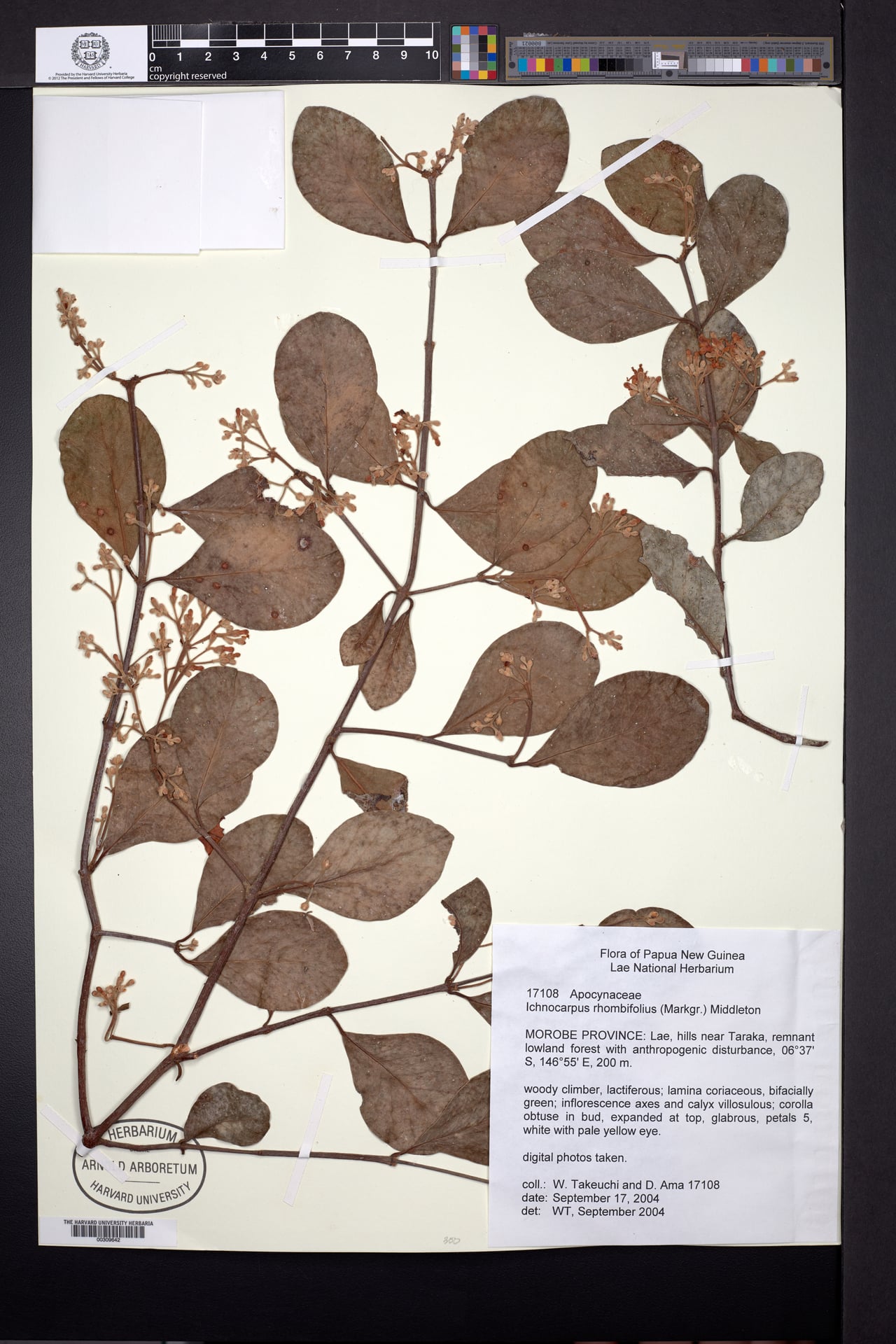
A woody climber. It is a twining plant. It keeps growing from year to year. The leaf stalks are 2 cm long. The leaf blades are broadly oval and pointed. They are 10 cm long by 5.5 cm wide. The flowers are greenish.
Edible Uses
The leaves are used as a vegetable.
Traditional Uses
The leaves are used as a vegetable.
This uses section is brief — help expand it
Distribution
A tropical plant.
Where It Grows
Africa, Angola, Benin, Burkina Faso, Burundi, Central Africa, Central African Republic, CAR, Congo, Eswatini, Guinea, Guinée, Sierra Leone, South Africa, Southern Africa, Sudan, Swaziland, West Africa, Zimbabwe,
Other Uses
An extract from the plant is used to adulterate 'Dragon's Blood' (Dracaena spp.). Dragon's blood is a red resin that has medicinal applications and is also used as a varnish; for staining wood in items such as violins; for embalming the dead.
Notes
There are about 10 Telosma species.
Synonyms
References (9)
- Achigan-Dako, E, et al (Eds), 2009, Catalogue of Traditional Vegetables in Benin. International Foundation for Science.
- Bull. Misc. Inform. Kew 1895:259. 1895 (As Pergularia)
- Jardin, C., 1970, List of Foods Used In Africa, FAO Nutrition Information Document Series No 2.p 106
- Magwede, K., van Wyk, B.-E., & van Wyk, A. E., 2019, An inventory of Vhavenḓa useful plants. South African Journal of Botany 122 (2019) 57–89
- Martin, F.W. & Ruberte, R.M., 1979, Edible Leaves of the Tropics. Antillian College Press, Mayaguez, Puerto Rico. p 178 (As Pergularia)
Show all 9 references Hide references
- Ruiters-Welcome, A. K., 2019, Food plants of southern Africa. Ph.D. thesis. Univ. of Johannesburg p 28
- Swaziland's Flora Database http://www.sntc.org.sz/flora
- W. T. Thiselton-Dyer, Fl. cap. 4(1):776. 1908
- Welcome, A. K. & Van Wyk, B.-E., 2019, An inventory and analysis of the food plants of southern Africa. South African Journal of Botany 122 (2019) 136–179