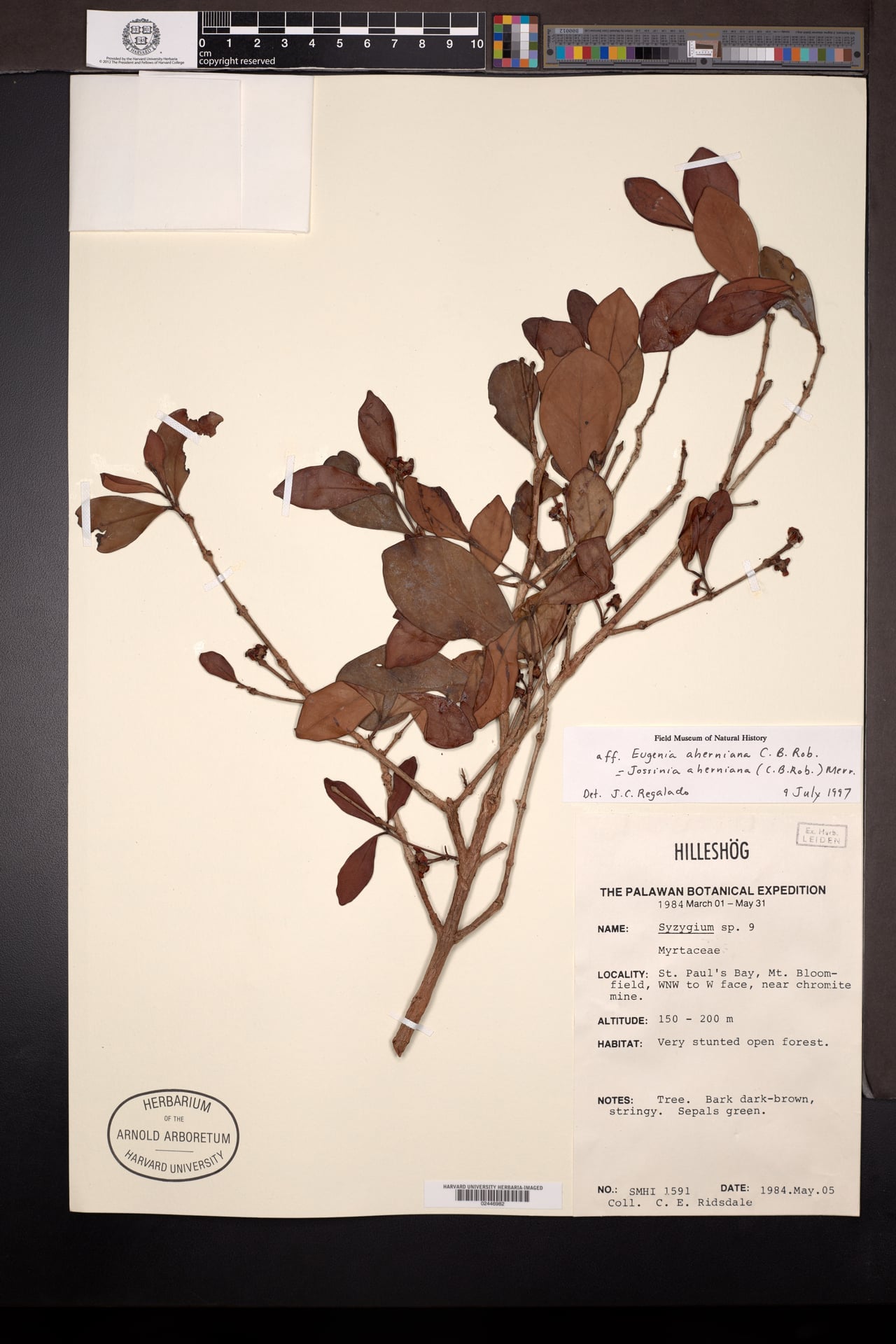
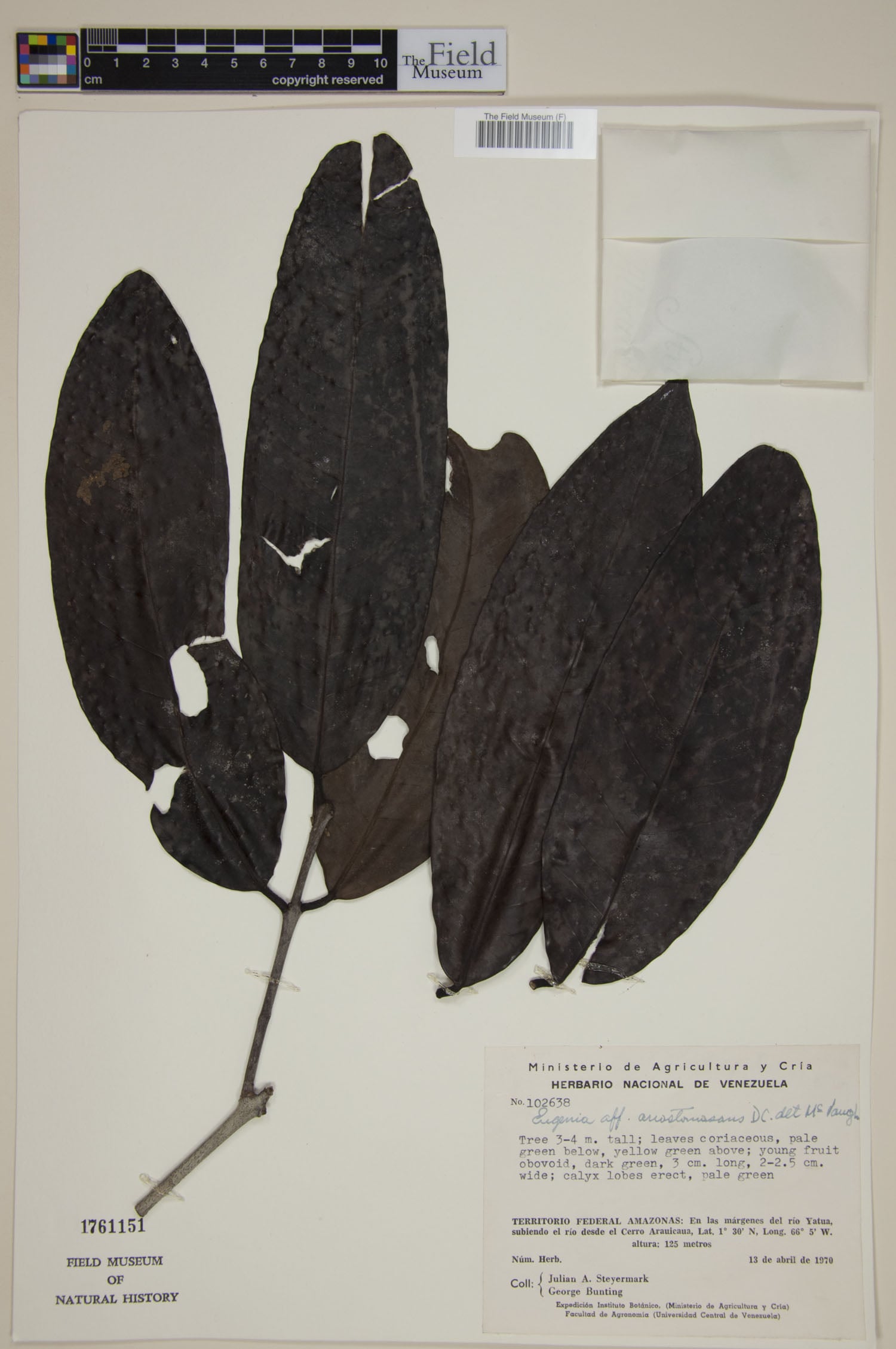
Syzygium samarangense
(Blume) Merr. & L. M. Perry
Java apple, Wax jambu, Samarang rose apple
iNaturalist· cc0
no rights reserved, uploaded by 葉子
iNaturalist· cc-by-nc
(c) 歐陽秀華, some rights reserved (CC BY-NC)
Summary
Source: WikipediaSyzygium samarangense is a species of flowering plant in the family Myrtaceae, native to an area that includes the Greater Sunda Islands, Malay Peninsula, and the Andaman and Nicobar Islands, but introduced in prehistoric times to a wider area and now widely cultivated in the tropics. Common names in English include wax apple, Java apple, Semarang rose-apple, and wax jambu.
Description
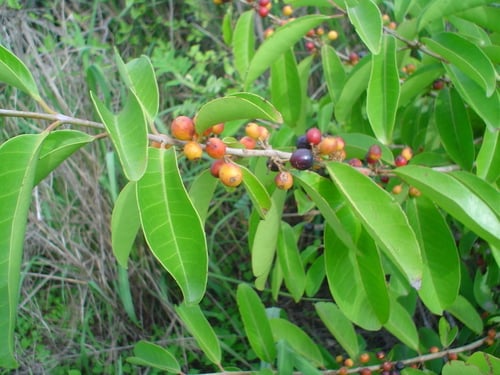
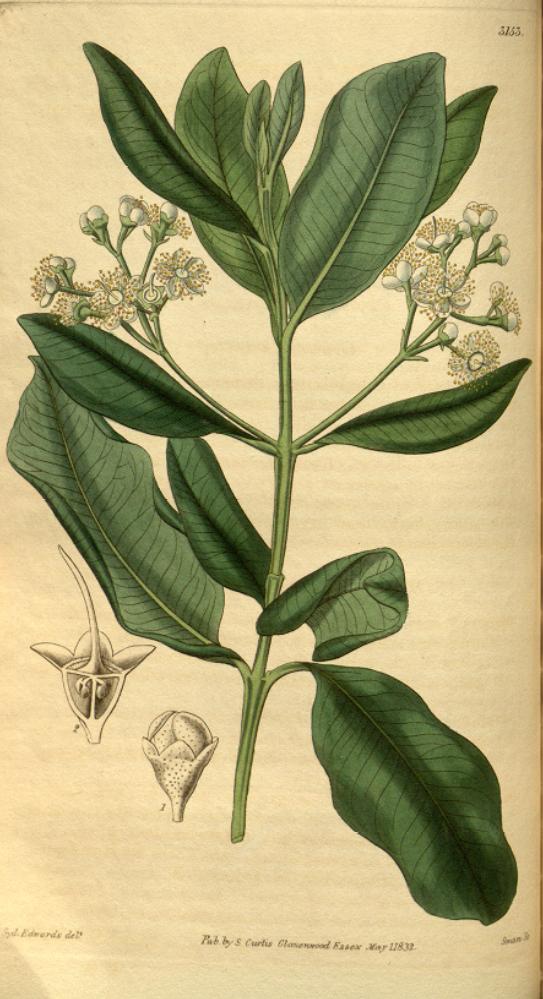
A tree up to 15 m high that branches near the base giving a spreading open tree. The leaves are smaller (25 cm x 10 cm) and more pointed than Malay apple and on short stalks. Flowers are about 3 cm wide and white. They are on leafy twigs. It produces clusters of attractive glossy pink waxy looking fruit. Fruit are 3 cm long and 3-5 cm wide. At the end of the fruit there is a cavity almost enclosed by four lobes. The fruit has a waxy skin and crispy flesh.
Edible Uses
Several cultivars with larger fruit have been selected. In general, the paler or darker the color, the sweeter it is. In Southeast Asia, the black ones are nicknamed "Black Pearl" or "Black Diamond", while the very pale greenish-white ones, called "Pearl", are among the highest-priced ones in fruit markets. The fruit is often served uncut, but with the core removed, to preserve the unique bell-shaped presentation. In the Indian Ocean islands cuisine, the fruit is frequently used in salads, as well as in lightly sautéed dishes. It is mainly eaten as a fruit and also used to make pickles called chambakka achar. In the Philippines, its local name is macopa or makopa. Its precolonial name is dambo. Because of their similarity in appearance, it is often confused with tambis (Syzygium aqueum), although the latter is more commonly cultivated.
Traditional Uses
The fruit are eaten fresh with salt or cooked as a sauce or stewed with apples. The fruit have little taste.
This uses section is brief — help expand it
Medicinal Uses
Various parts of the tree are used in traditional medicine, and some have in fact been shown to possess antibiotic activity. The plant contains tannins and is astringent. In particular the bark, leaves and roots of Malay apple are used against different ailments. The flowers are astringent and are used to treat fevers and halt diarrhoea. The principal active constituent is tannin, though the flowers also contain desmethoxymatteucinol, 5-O-methyl-4'-desmethoxymatteucinol, oleanic acid and B-sitosterol. In tests, the flowers show weak antibiotic action against Staphylococcus aureus, Mycobacterium smegmatis, and Candida albicans.
Distribution
A tropical plant. Trees grow in coastal areas in the tropics. They need a deep fertile soil. It needs adequate rainfall and some humidity. In Samoa it grows from sea level to 930 m altitude. It suits hardiness zones 11-12. In XTBG Yunnan.
Where It Grows
Amazon, American Samoa, Andamans, Aruba, Asia, Australia, Bangladesh, Brazil, Cambodia, China, Fiji, Guam, Guianas, India (Andaman & Nicobar Islands), Indochina, Indonesia, Jamaica, Laos, Malaysia*, Maldives, Micronesia, Myanmar, Niue, Northeastern India, Pacific, Palau, Papua New Guinea, PNG, Philippines, Rotuma, Samoa, SE Asia, Singapore, Solomon Islands, South America, Sri Lanka, Suriname, Taiwan, Tanzania, Thailand, Tonga, Vanuatu, Vietnam, West Indies,
Cultivation
Plants are mainly raised from seeds. Fresh seeds must be used. Often few seeds are produced. They can be propagated by air layering or budding. Girdling of the shoots and using rooting hormones enables cuttings to be used for propagation. A spacing of 8-10 m apart is suitable.
Propagation
Seed - needs to be sown fresh from the fruit because it has a limited viability. Give shade to the seedlings when young. Air layering.
Other Uses
The wood is reddish, coarse and hard. It can grow to dimensions large enough for construction purposes, and is sometimes used for constructing huts. We do not have any more specific information for the wood of this species, but the various species of Syzygium tend to have somewhat similar timber. The general description of syzygium timber is as follows:- The heartwood is a golden brown, greyish brown or brown, with pink or purplish glints; it is not clearly demarcated from the 1 - 4cm wide band of sapwood. The texture is fine; the grain slightly interlocked, sometimes wavy or irregular; there are resin deposits. The wood is heavy; moderately hard; somewhat durable, being moderately resistant to fungi and termites, but susceptible to dry wood borers. It seasons slowly, with a high risk of checking and distortion; once dry it is moderately stable in service. It works well with ordinary tools, nailing and screwing are good so long as the wood is pre-bored; gluing is correct. The wood is used for musical instruments, tool handles, furniture components, ship building, heavy carpentry, flooring, joinery etc. The tree is fast-growing and develops a dense, very dark green crown, making it an excellent windbreak.
Production
It is fast growing. Trees start fruiting when quite small. Fruit production is seasonal. Normally large numbers of fruit are produced. Fruit mature in 30-40 days. In Northeastern India fruit are available May to November.
Other Information
This is not a common fruit tree in Papua New Guinea. Where it occurs fruit quality is poor.
Nutrition
| Part | Moisture | kJ | kcal | Protein | Vit A | Vit C | Iron | Zinc |
|---|---|---|---|---|---|---|---|---|
| Fruit | 90.3 | 94 | 22 | 0.7 | 0 | 8 | 0.8 | — |
Synonyms
Also Known As
Amrool, Curacaouse apple, Gulaabijaamichettu, Gulabijaamikaayalu, Indahu, Jambo-rosa, Jambu gas, Jamrul, Kanlan rehs, Makopa, Mamhofu, Mankil, Nakavika, Nonu vao, Panee jamun, Paninir champa, Pohon jambu air, Semarang rose-apple, Tuii chamboo, Tunipkam, Twi-jambo
References (50)
- Alegado, A. M. & De Guzman, R. B., 2014, Indigenous food crops of the Aetas tribe in the Philippines and their traditional methods of food preparation. in Promotion of Underutilized Indigenous Food Resources for Food Security and Nutrition in Asia and Pacific. FAO. Bangkok p 160
- Ambasta, S.P. (Ed.), 2000, The Useful Plants of India. CSIR India. p 615
- Argent, G et al, nd, Manual of the Larger and More important non Dipterocarp Trees of Central Kalimantan Indonesia. Volume 2 Forest Research Institute, Samarinda, Indonesia. p 473
- Arora, R. K., 2014, Diversity in Underutilized Plant Species - An Asia-Pacific Perspective. Bioversity International. p 89
- Barwick, M., 2004, Tropical and Subtropical Trees. A Worldwide Encyclopedic Guide. Thames and Hudson p 394
Show all 50 references Hide references
- Blench, R., 2004, Fruits and Arboriculture in the Indo-Pacific Region. Indo-Pacific Prehistory Association Bulletin 24. (Taipei Papers Volume 2) p 40
- Bodkin, F., 1991, Encyclopedia Botanica. Cornstalk publishing, p 964
- Borrell, O.W., 1989, An Annotated Checklist of the Flora of Kairiru Island, New Guinea. Marcellin College, Victoria Australia. p 114, 206
- Call, C. A., et al, 2004, Participatory Rural Appraisal in the Upland Ecosystem of Mt Malindang, Misamis Occidental, Philippines. Biodiversity Research Programme for Development in Mindanao. p 53
- Chakraborty, S. & Chaturbedi, H. P., 2014, Some Wild Edible Fruits of Tripura- A Survey. Indian Journal of Applied research. (4) 9
- Coronel, R.E., 1982, Fruit Collections in the Philippines. IBPGR Newsletter p 8
- Cundall, P., (ed.), 2004, Gardening Australia: flora: the gardener's bible. ABC Books. p 1393
- Darley, J.J., 1993, Know and Enjoy Tropical Fruit. P & S Publishers. p 123
- Facciola, S., 1998, Cornucopia 2: a Source Book of Edible Plants. Kampong Publications, p 161
- Food Composition Tables for use in East Asia FAO http://www.fao.org/infoods/directory No. 849
- French, B.R., 1986, Food Plants of Papua New Guinea, A Compendium. Asia Pacific Science Foundation p 242
- French, B.R., 2010, Food Plants of Solomon Islands. A Compendium. Food Plants International Inc. p 391
- Hazarika, B. et al. (2020). An overview of the unexplored underutilized fruit crops of Assam, India. Journal of Applied and Natural Science, 12(3): 442 - 453
- Hibbert, M., 2002, The Aussie Plant Finder 2002, Florilegium. p 296
- Hu, Shiu-ying, 2005, Food Plants of China. The Chinese University Press. p 581
- J. Arnold Arbor. 19:115. 1938
- Jahan, S. et al, 2011, Nutritional Profile of Some Tropical Fruits in Bangladesh: Specially Anti-Oxidant Vitamins and Minerals. Bangladesh Journal of Medical Science Vol. 10 No. 2
- Kermath, B. M., et al, 2014, Food Plants in the Americas: A survey of the domesticated, cultivated and wild plants used for Human food in North, Central and South America and the Caribbean. On line draft. p 848
- Leach, G. J., 1988, Bush Food Plants of the Blackwater and Karawari Rivers Area, East Sepik Province, Papua New Guinea. Science in New Guinea 14(2). p 105
- Lepofsky, D., 1992, Arboriculture in the Mussau Islands, Bismarck Archipelago. Economic Botany, Vol 46, No. 2, pp. 192-211
- Llamas, K.A., 2003, Tropical Flowering Plants. Timber Press. p 290
- Lorenzi, H., Bacher, L., Lacerda, M. & Sartori, S., 2006, Brazilian Fruits & Cultivated Exotics. Sao Paulo, Instituto Plantarum de Estuados da Flora Ltda. p 465
- Martin, F. W., et al, 1987, Perennial Edible Fruits of the Tropics. USDA Handbook 642 p 44
- Morton, Julia F., 1987, Fruits of Warm Climates. Creative Resources Systems, Inc. . p. 381
- Pasha, M. K. & Uddin, S. B., 2019, Minor Edible Fruits of Bangladesh. Bangladesh J. Plant Taxon. 26(2): 299–313
- Paz, F. S., et al, 2021, Edible Fruit Plant Species in the Amazon Forest Rely Mostly on Bees and Beetles as Pollinators. Journal of Economic Entomology, XX(XX), 2021, 1–13
- Peekel, P.G., 1984, (Translation E.E.Henty), Flora of the Bismarck Archipelago for Naturalists, Division of Botany, Lae, PNG. p 411, 410
- Phon, P., 2000, Plants used in Cambodia. © Pauline Dy Phon, Phnom Penh, Cambodia. p 580
- Recher, P, 2001, Fruit Spirit Botanical Gardens Plant Index. www.nrg.com.au/~recher/ seedlist.html p 3
- Roy, S. D., et al, 2009, Mangroves of Andaman and Nicobar Islands. ICAR p 56
- Singh, H.B., Arora R.K.,1978, Wild edible Plants of India. Indian Council of Agricultural Research, New Delhi. p 73
- Smith, A.C., 1985, Flora Vitiensis Nova, Lawaii, Kuai, Hawaii, Volume 3 p 351
- Sujanapal, P., & Sankaran, K. V., 2016, Common Plants of Maldives. FAO & Kerala FRI, p 262
- Sukarya, D. G., (Ed.) 2013, 3,500 Plant Species of the Botanic Gardens of Indonesia. LIPI p 536
- Suwardi, A. B., et al, 2020, Ethnobotany and conservation of indigenous edible fruit plants in South Aceh, Indonesia. Biodiversitas Vol. 21, No. 5, pp 1850-1860
- Tankard, G., 1990, Tropical fruit. An Australian Guide to Growing and using exotic fruit. Viking p 116
- Tuiwawa, S. H., et al, 2013, The genus Syzygium (Myrtaceae) in Vanuatu. Blumea 58, 2013:53-67
- Tuiwawa, S. H., et al, 2013, The genus Syzygium (Myrtaceae) in Vanuatu. Blumea 58, 2013:53-67
- USDA, ARS, National Genetic Resources Program. Germplasm Resources Information Network - (GRIN). [Online Database] National Germplasm Resources Laboratory, Beltsville, Maryland. Available: www.ars-grin.gov/cgi-bin/npgs/html/econ.pl (10 April 2000)
- van Wyk, B., 2005, Food Plants of the World. An illustrated guide. Timber press. p 361
- Walter, A. & Sam C., 2002, Fruits of Oceania. ACIAR Monograph No. 85. Canberra. p 282
- Whistler, W.A., 2004, Rainforest Trees of Samoa. Isle Botanica Honolulu, Hawaii. p 122
- Wiersema, J. H. & Leon, B., 2013, World Economic Plants. A Standard Reference CRC Press. 2nd Ed. p 672
- World Checklist of Useful Plant Species 2020. Royal Botanic Gardens, Kew
- www.worldagroforestrycentre.org/treedb/