Arjona patagonica
Hombr. & Jacq. ex Decne.
Macachi
iNaturalist· cc-by-nc
(c) jcorrie, some rights reserved (CC BY-NC)
iNaturalist· cc-by-nc
(c) Pat Deacon, some rights reserved (CC BY-NC), uploaded by Pat Deacon
iNaturalist· cc-by-nc
(c) Barry J Davis, some rights reserved (CC BY-NC), uploaded by Barry J Davis
Summary
Source: WikipediaArjona patagonica is a species of flowering plant in the family Schoepfiaceae native to southern South America.
Description
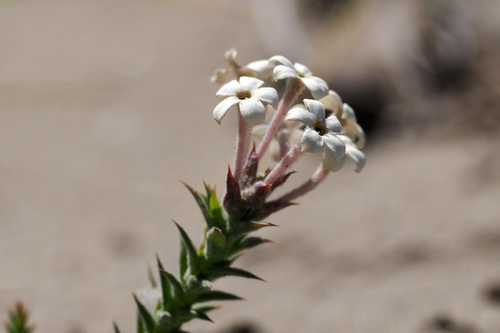
A herb. It grows 6-20 cm tall. It has a tuberous rhizome. The leaves clasp the stem. The flowers are in a cluster at the top of the plant.
This description is brief — help expand it
Edible Uses
Edible Parts: Root Edible Uses: Tuber - raw or cooked. Prized for eating.
Medicinal Uses
None known
Distribution
It is a temperate plant. In Argentina plants grow from sea level to 4,000 m above sea level.
Where It Grows
Argentina, Chile, South America,
Cultivation
We have very little information on this plant and do not know if it will be hardy in Britain, though judging by its native range it should succeed outdoors in many parts of this country. Going by its native habitat it should be very wind resistant and probably requires a light to medium well-drained soil in a sunny position. Is this the same plant that is listed as A. tuberosa. Cav. in and??
Propagation
Seed - we have no details for this species but suggest sowing the seed in spring in a greenhouse. When large enough to handle, prick the seedlings out into individual pots and grow them on in the greenhouse for at least their first winter. Plant out in late spring or early summer, after the last expected frosts.
Other Uses
None known Special Uses
Synonyms
Also Known As
Arjona, Papita dulce, Papita piche
References (3)
- Cordero, S. E., Abello, L. A., & Galvez, F. L., 2017, Plantas silvestres comestibles y medicinales de Chile y otras partes del mundo. CORMA p 147
- Leon-Lobos, P., et al, 2022, Patterns of Traditional and Modern Uses of Wild Edible Native Plants of Chile: Challenges and Future Perspectives. Plants (Basel) v 11 (6) Table S1
- Plants for a Future database, The Field, Penpol, Lostwithiel, Cornwall, PL22 0NG, UK. http://www.scs.leeds.ac.uk/pfaf/