Syzygium moorei
(F. Muell.) L. Johnson
Durobby, Robby, Rose apple
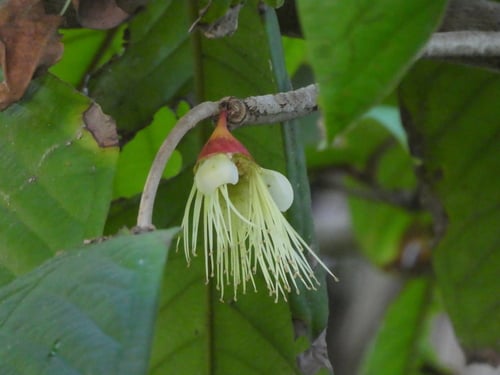
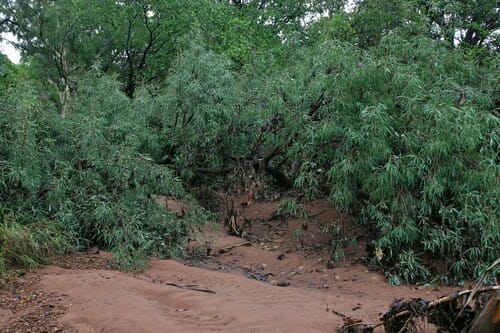
iNaturalist· cc-by-nc-nd
(c) Nigel Ward, some rights reserved (CC BY-NC-ND)
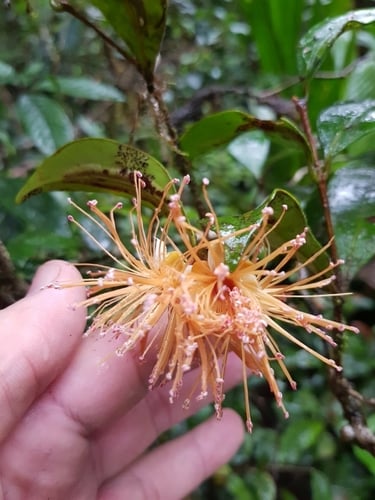
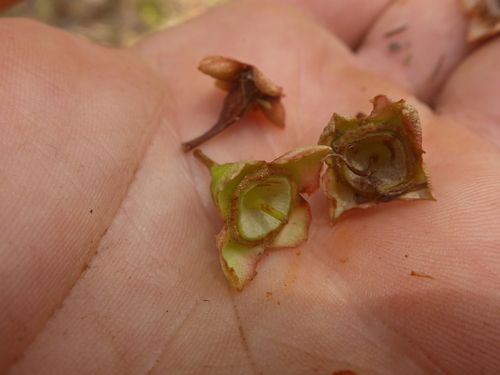
iNaturalist· cc-by-nc
(c) Sandy, some rights reserved (CC BY-NC)
Summary
Source: WikipediaSyzygium moorei is a rare sub tropical rainforest tree, growing on volcanic soils in the Mount Warning area of north east New South Wales and south east Queensland, Australia. Common names include coolamon, watermelon tree, durobby and robby; it is also called "rose apple" but this can refer to many species of Syzygium.
Description
An evergreen tree. It grows 8-25 m tall and spreads to 4-9 m across. The stem is erect with spreading branches. The crown has a dense mass of leaves. The bark is smooth. The leaves are long and oval and leathery. They are dark green and shiny but paler underneath. They are 8-23 cm long. The leaves are produced opposite each other along the stem. The flowers are cream, pink or red coloured. They occur in dense clusters beneath the leaves on old branches. The fruit are white but tinged with green. They are succulent. The fruit are 5-6.5 cm across and round but flattened. The fruit are edible.
Edible Uses
The succulent fruit are eaten raw or made into jelly.
Traditional Uses
The fruit are eaten raw. They can be made into jelly.
This uses section is brief — help expand it
Known Hazards
The plant is rare and endangered. It can be damaged by drought.
Distribution
It occurs naturally in New South Wales in Australia. It is a warm temperate rainforest species. It can grow in the tropics and subtropics. It can tolerate frost but is damaged by drought. It suits medium to heavy soils. It needs a protected, partly shaded position. It can tolerate full sun. They need a well drained soil and respond to fertiliser. It is a rare plant and endangered. In Adelaide Botanical Gardens hot house. Adelaide Botanical Gardens.
Where It Grows
Australia*,
Cultivation
The plant can be grown from fresh seed. They can also be grown from cuttings. Trees do best if sheltered during their first few years.
Production
Young plants are fairly slow growing. Flowering is in November to January and fruit are ripe June to August.
Synonyms
Also Known As
Coolamon, Lilly Pilly, Powderpuff Lilly Pilly, Watermelon tree
References (14)
- Bodkin, F., 1991, Encyclopedia Botanica. Cornstalk publishing, p 964
- Cribb, A.B. & J.W., 1976, Wild Food in Australia, Fontana. p 33
- Facciola, S., 1998, Cornucopia 2: a Source Book of Edible Plants. Kampong Publications, p 160
- Hibbert, M., 2002, The Aussie Plant Finder 2002, Florilegium. p 296
- Jones D, L, 1986, Ornamental Rainforest Plants in Australia, Reed Books, p 80, 340
Show all 14 references Hide references
- Lazarides, M. & Hince, B., 1993, Handbook of Economic Plants of Australia, CSIRO. p 233
- Low, T., 1991, Wild Food Plants of Australia. Australian Nature FieldGuide, Angus & Robertson. p 78
- Molyneux, B. and Forrester, S., 1997, The Austraflora A-Z of Australian Plants. Reed. p 152
- Nicholson, N & H., 1996, Australian Rainforest Plants, Terania Rainforest Publishing. NSW. p 63
- Ratcliffe D & P., 1987, Australian Native Plants for Indoors. Little Hills press. p 134
- Smith, K., 1998. Growing Uncommon Fruits and Vegetables. New Holland. p 98
- Stanley, T. D. & Ross, E. M., 1986, Flora of south-eastern Queensland Volume 2. Queensland Government p 210
- Williams, J.B., Harden, G.J., and McDonald, W.J.F., 1984, Trees and shrubs in rainforests of New South Wales and Southern Queensland. Univ. of New England, Armidale. p 109
- Yallakool Reserve Plant List July 1, 2009 Off internet