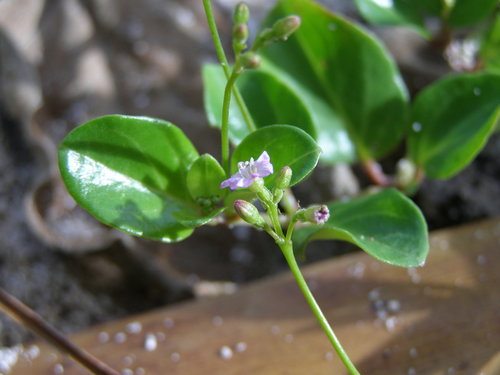
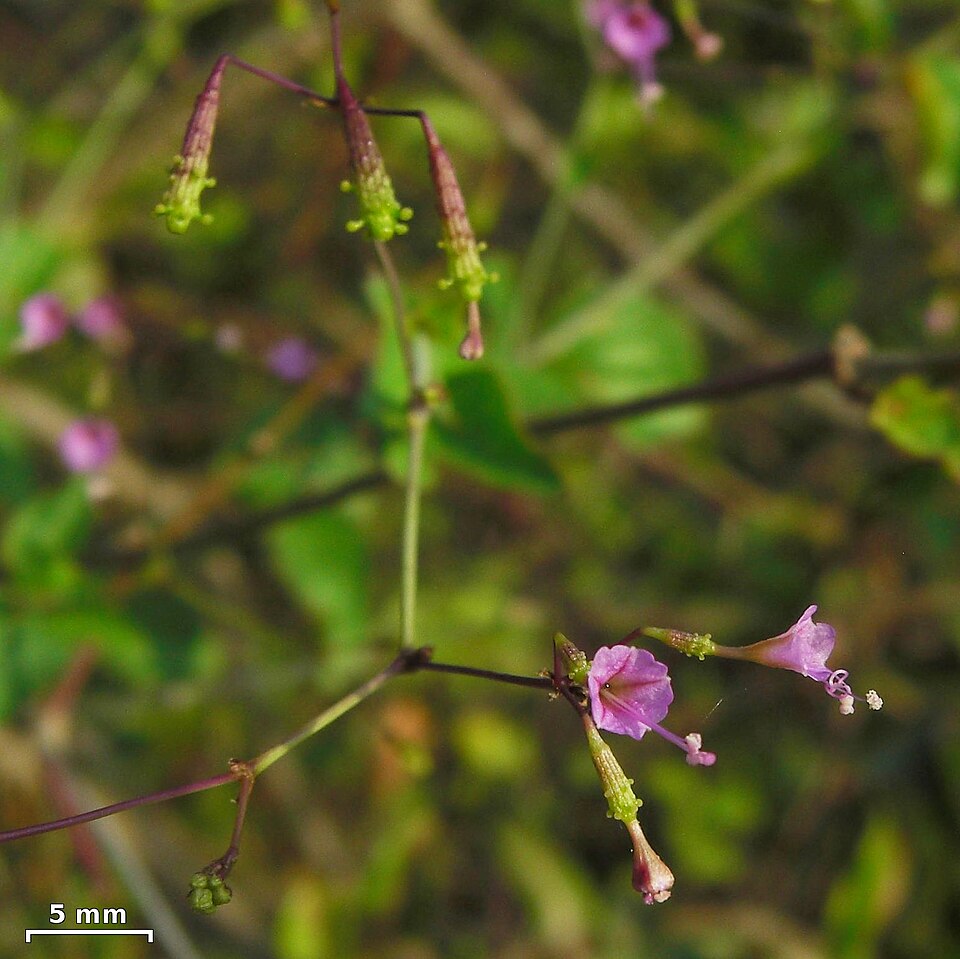
Abronia latifolia
Esch
Coastal Sand Verbena, Yellow Sand-verbena
iNaturalist· cc-by-nc
(c) mariepanossian, some rights reserved (CC BY-NC)
iNaturalist· cc-by-sa
(c) Eric in SF, some rights reserved (CC BY-SA)
iNaturalist· cc-by-nc
(c) petrelharp, some rights reserved (CC BY-NC)
Summary
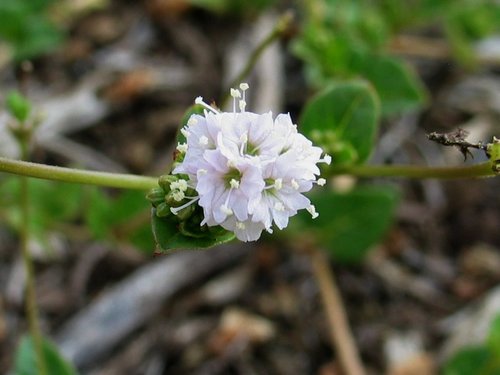
Source: WikipediaThe perennial flower Abronia latifolia or Abronia arenaria is a species of sand-verbena known commonly as the coastal sand-verbena, or yellow sand-verbena. It is native to the west coast of North America, from southern California to southern British Columbia. In Canada, it is at risk of becoming extirpated, threatened, or endangered. The plant bears attractive neatly rounded heads of small, bright golden flowers. The individual flowers have no petals; rather, they are composed of yellow bracts forming a trumpet-shaped calyx about the stamens. It bears a small, winged fruit. The plant grows in succulent mats on sand or other coastal substrate. The roots are stout, fusiform and often several feet long. These roots are edible, traditionally eaten by the Chinookan peoples. This plant is seen exhibiting psammophory, a method by which plants save themselves from herbivores by attracting sand to their body making them difficult to be eaten. It needs salt water, not fresh water, and will not tolerate extreme drought.
Description
A shrub or small tree. It grows 5 m tall. There are prickles along the stem. The leaves are twice divided and there are 8-18 pairs of pinnae. There are up to 50 pairs of pinnules on each pinnae. The flowers are yellow. They are in large clusters at the ends of branches. The pods are flattened.
Edible Uses
The root is large, sweet, and can grow long and stout — more than 60cm in length. It has been used as an emergency food when all else fails, and was typically harvested in autumn.
Traditional Uses
The long stout root is eaten.
This uses section is brief — help expand it
Medicinal Uses
None known.
Distribution
It is a temperate plant. It grows on sand dunes and near beaches. It needs well drained soil and full sunlight. It needs a warm sheltered position.
Where It Grows
Australia, Canada, North America, USA,
Cultivation
Plants are grown from seed. Seed should be pre-soaked for 24 hours in warm water before sowing. Seedlings need good ventilation to avoid damping off. Cuttings can be used.
Propagation
Sow seed in autumn or early spring very shallowly in pots of sandy soil in a greenhouse. Germination can be very slow unless the outer skin is peeled off and the seed pre-soaked for 24 hours in warm water. Seed usually germinates in 1–2 months at 15°C. When large enough to handle, prick seedlings out into individual pots and grow on in the greenhouse through their first winter. Seedlings are prone to damping off and should be kept well-ventilated. Plant out in late spring after the last expected frosts. Cuttings can also be taken in spring and rooted in sand.
Other Uses
None known.
Other Information
An emergency food only.
Notes
There are 33 Abronia species.
Synonyms
Also Known As
Sand verbena
References (10)
- Beckstrom-Sternberg, Stephen M., and James A. Duke. "The Foodplant Database." http://probe.nalusda.gov:8300/cgi-bin/browse/foodplantdb.(ACEDB version 4.0 - data version July 1994)
- Biocyclopedia Edible Plant Species (As Abronia arenaria)
- Bircher, A. G. & Bircher, W. H., 2000, Encyclopedia of Fruit Trees and Edible Flowering Plants in Egypt and the Subtropics. AUC Press. p 3
- Cundall, P., (ed.), 2004, Gardening Australia: flora: the gardener's bible. ABC Books. p 70 (As Abronia arenaria)
- Facciola, S., 1998, Cornucopia 2: a Source Book of Edible Plants. Kampong Publications, p 161
Show all 10 references Hide references
- Hedrick, U.P., 1919, (Ed.), Sturtevant's edible plants of the world. p (As Abronia arenaria)
- Lim, T. K., 2015, Edible Medicinal and Non Medicinal Plants. Volume 9, Modified Stems, Roots, Bulbs. Springer p 2
- Plants for a Future database, The Field, Penpol, Lostwithiel, Cornwall, PL22 0NG, UK. http://www.scs.leeds.ac.uk/pfaf/
- Tozer, F., 2007, The Uses of Wild Plants. Green Man Publishing. p 13
- Usher, G., 1974, A Dictionary of Plants Used by Man. Constable. p 10