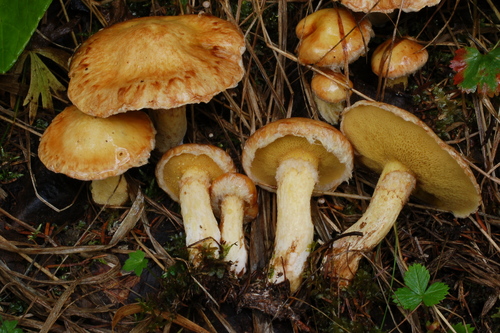
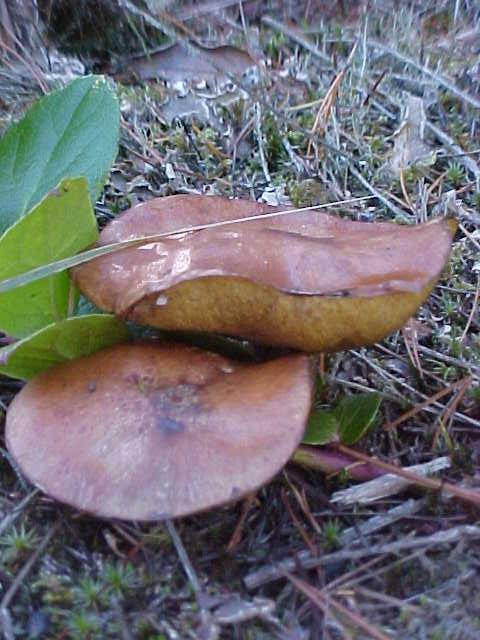
Suillus grevillei
(Klotxsch : Fr.) Sing.
Yellow-cap bolete, The elegant bolete, Pine-tree bolete, Larch bolete
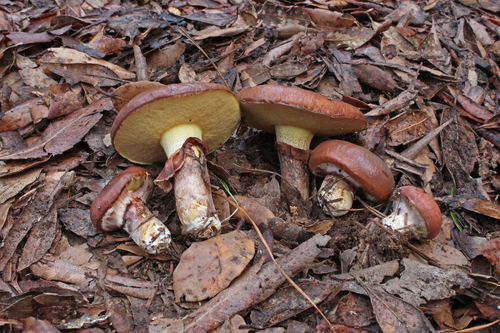
iNaturalist· cc-by-nc
(c) Светлана Мещерягина, some rights reserved (CC BY-NC), uploaded by Светлана Мещерягина
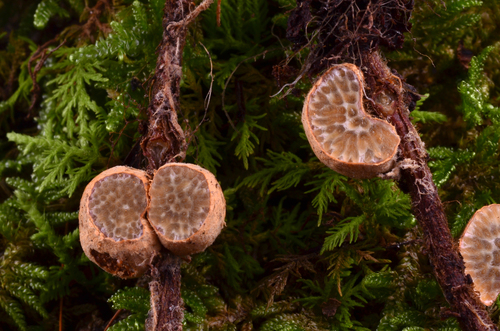
iNaturalist· cc-by-nc
(c) grenow, some rights reserved (CC BY-NC)
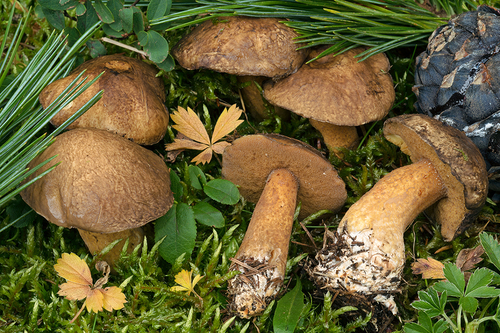
iNaturalist· cc-by-nc
(c) Stuart Tingley, some rights reserved (CC BY-NC)
Summary
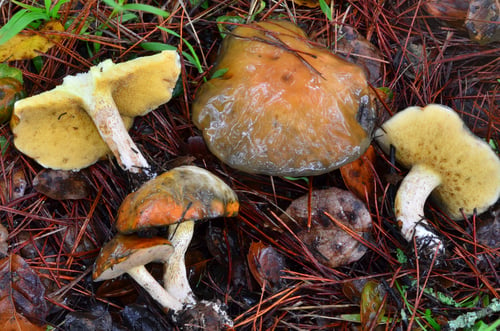
Source: WikipediaSuillus grevillei, commonly known as tamarack jack, Greville's bolete, or larch bolete, is a mycorrhizal mushroom with a tight, brilliantly coloured cap, shiny and wet looking with its mucous slime layer. The hymenium easily separates from the flesh of the cap, with a central stalk that is quite slender. The species has a ring or a tight-fitting annular zone.
Description
A mushroom fungus with a bright red-brown cap and bright yellow coloring. It grows in temperate regions near larch and tamarack trees.
This description is brief — help expand it
Edible Uses
The fruiting bodies are eaten.
Traditional Uses
The fruiting bodies are eaten. CAUTION The stalk should be thoroughly cleaned before cooking.
This uses section is brief — help expand it
Known Hazards
The stalk should be thoroughly cleaned before cooking.
Distribution
It is a temperate plant. It grows near Tamarack.
Where It Grows
Asia, Britain, China, Czech Republic, Denmark, Europe, Hungary, Japan, Kyrgyzstan, North America, Norway, Poland, Russia, Scandinavia, Sweden, Turkey, Türkiye, USA,
Notes
Also put in the family Boletaceae.
Synonyms
Also Known As
Houhuan runiuganjun, Larch suillus
References (13)
- Boa, E. R., 2004, Wild edible fungi and their importance to people. FAO Non Wood Forest Products Booklet 17
- Facciola, S., 1998, Cornucopia 2: a Source Book of Edible Plants. Kampong Publications, p 250
- Hall, I. R., et al, 2003, Edible and Poisonous Mushrooms of the World. Timber Press. p 230
- Kalac, P. and Svoboda, L., 1999, A review of trace element concentrations in edible mushrooms. Food Chemistry 69: 273-281
- Kasper-Pakosz, R., et al, 2016, Wild and native plants and mushrooms sold in the open-air markets of south- eastern Poland. Journal of Ethnobiology and Ethnomedicine 12:45
Show all 13 references Hide references
- Kaufmann, B. et al, 1999, The Great Encyclopedia of Mushrooms. Konemann. p 21
- Kaye, G.C., 1986, Wild and Exotic Mushroom Cultivation in North America
- Mabey, R., 1973, Food for Free. A Guide to the edible wild plants of Britain, Collins. p 51 (As Boletus elegans)
- Ostry, M. E., et al, 2010, Field Guide to Common Macrofungi in Eastern Forests and Their Ecosystem Functions. USDA Forest Service General Technical Report NRS-79 p 73
- Pace, G., 1998, Mushrooms of the world. Firefly books. p 191 (As Boletus elegans)
- Vetner, J., 2004, Arsenic content of some edible mushroom species. Eur. Food Res. Technol. 219: 71-74
- Vetner, J., 2005, Lithium content of some common edible wild-growing mushrooms. Food Chemistry 90:31-37
- www.plantnames.unimelb.edu.au