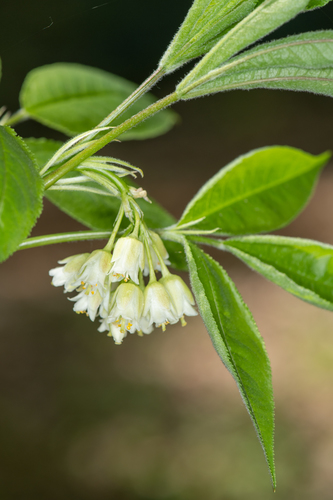
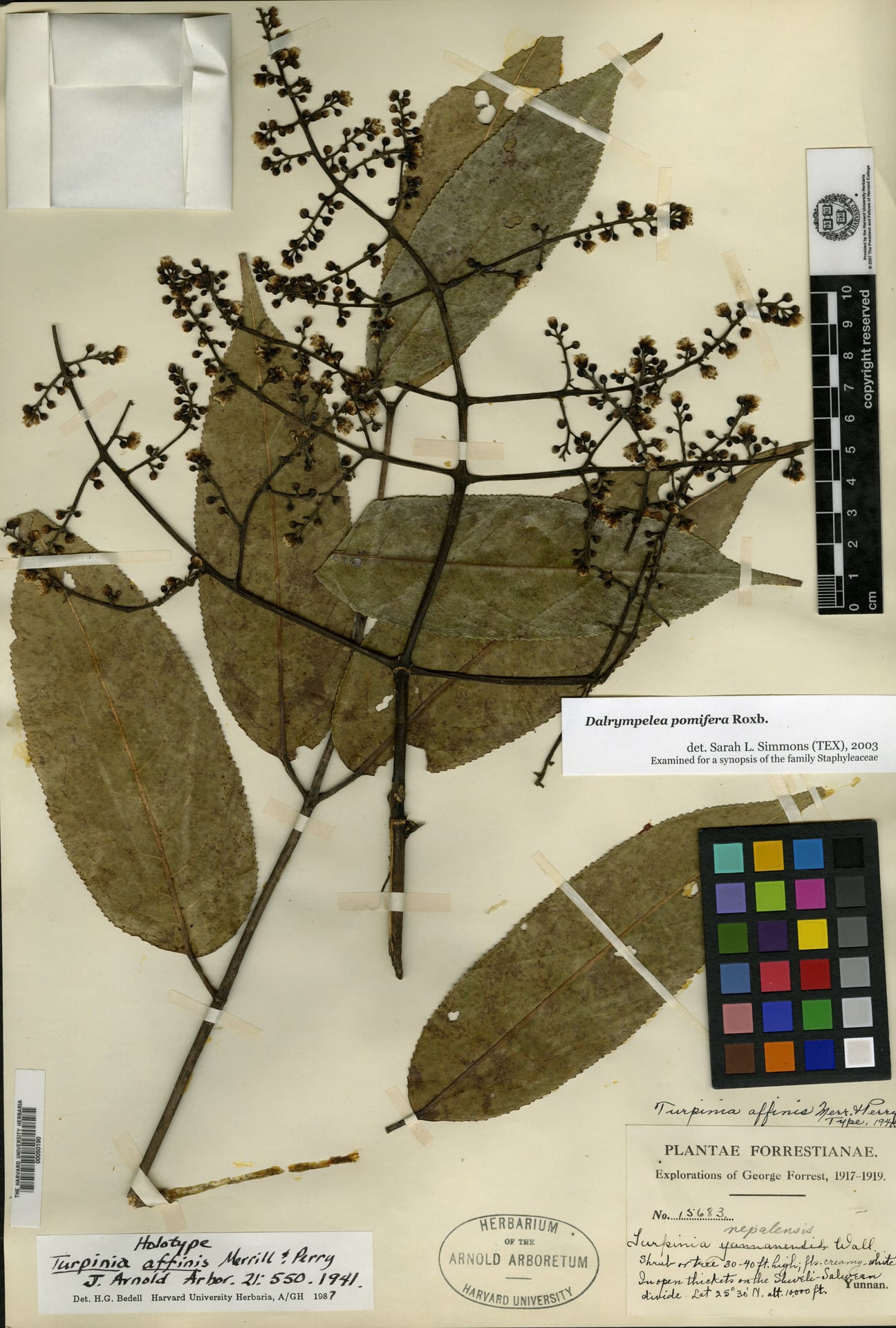
Staphylea bumalda
DC.
Bladder Nut, Japanese bladdernut
iNaturalist· cc0
no rights reserved, uploaded by Takashi KOIKE
iNaturalist· cc-by-nc
(c) Alexander Ganse, some rights reserved (CC BY-NC)
iNaturalist· cc-by-nc
(c) jennilombard, some rights reserved (CC BY-NC)
Summary
A deciduous tree growing to 1.8 m, hardy to UK zone 4. Flowers appear May to June with seeds ripening September to November. Hermaphrodite flowers are insect-pollinated. Adapts to light sandy, medium loamy, and heavy clay soils with mildly acidic to mildly alkaline pH. Tolerates semi-shade and prefers moist soil.
Description
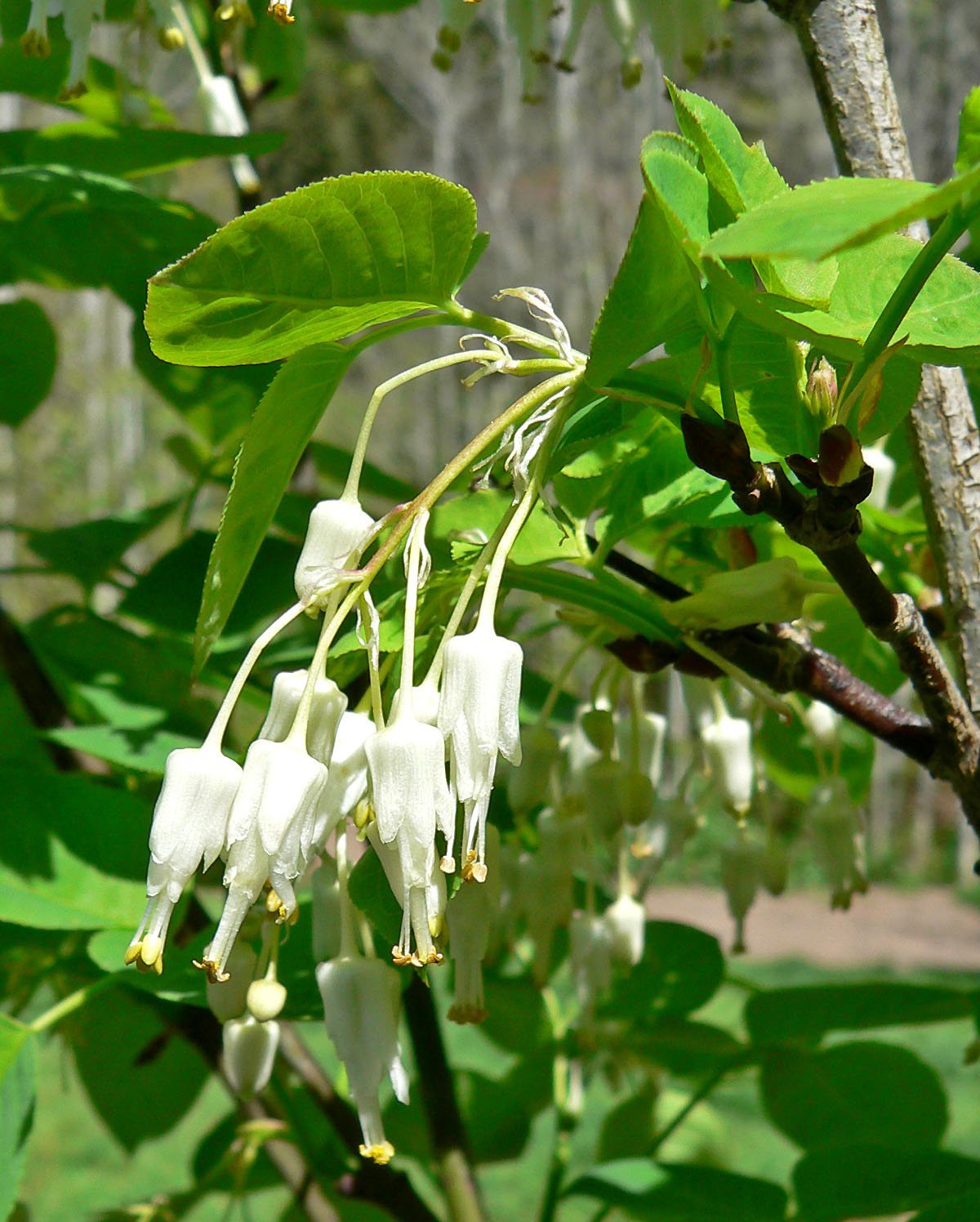
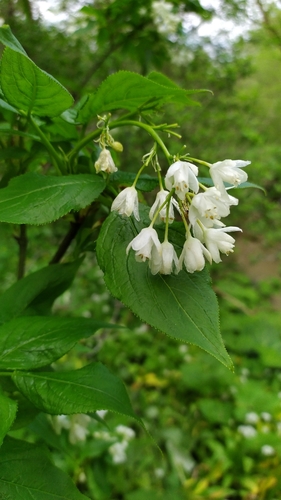
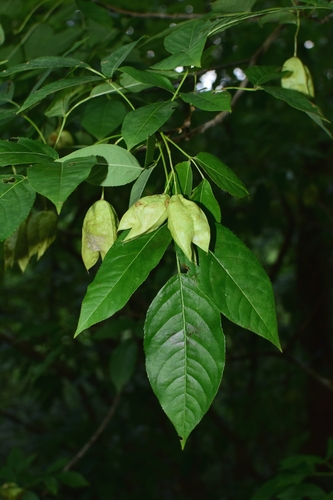
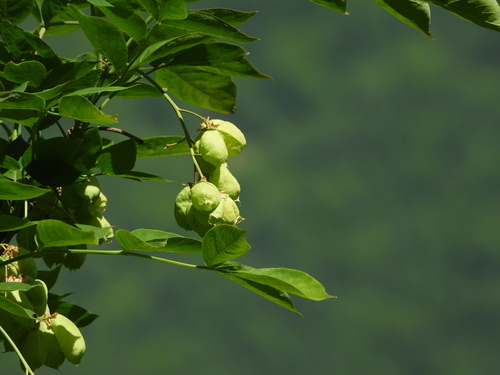
A shrub or small tree. It grows 2-10 m high and spreads 1.8 m wide. It loses its leaves during the year. The leaves have 3 leaflets. These are lance shaped. There are sharp teeth along the edge. There is down underneath the leaf on the veins. The flowers are white and in panicles. The fruit are pods 25 mm long. They have 2 lobes.
Edible Uses
Young leaves are eaten cooked.
Traditional Uses
The leaves are boiled then eaten with oil and salt. The oil extracted from the seeds in used for cooking.
This uses section is brief — help expand it
Medicinal Uses
None known
Distribution
It is a temperate plant. It grows in open forests and along roadsides. It suits hardiness zones 4-9. In Sichuan.
Where It Grows
Asia, Australia, China, Japan, Korea,
Cultivation
Tolerant of a wide range of soils so long as they are not too dry, it prefers a rich loamy soil in full sun or semi-shade. The Japanese form of this species is rather tender in Britain, but in general plants are hardy to about -25°c. The plants flower best in years that follow hot summers. Plants in this genus are notably resistant to honey fungus.
Propagation
Seed can be very slow to germinate, sometimes taking 18 months or more. Sow as soon as ripe in a cold frame for the best chance of spring germination. Stored seed should be sown as early in the year as possible with cold stratification, and may not germinate until the following spring. Prick out seedlings into individual pots when large enough to handle and grow on in light shade in the greenhouse through their first winter, then plant out early the following summer. Cuttings of half-ripe wood, 5–8cm with a heel, taken July/August in a frame give a fair to good success rate. Layering in July/August takes 15 months and gives a good percentage.
Other Uses
None known
Synonyms
Also Known As
Shuhuacai
References (8)
- Chen, B. & Qiu, Z., Consumer's Attitudes towards Edible Wild Plants, Ishikawa Prefecture, Japan. p 26 www.hindawi.com/journals/ijfr/aip/872413.pdf
- Cundall, P., (ed.), 2004, Gardening Australia: flora: the gardener's bible. ABC Books. p 1369
- Hu, Shiu-ying, 2005, Food Plants of China. The Chinese University Press. p 521
- Hwang, HS, et al, 2014, Distribution characteristics of plant in the Ungseokbong Mountain, Gyeongsangnam-do, Korea. Journal of Asia-Pacific Biodiversity. 7(2014) e164-e178
- Kang, Y., et al, 2012, Wild food plants and wild edible fungi in two valleys on the Qinling Mountains (Shaanxi, central China) Journal of Ethnobiology and Ethnomedicine; 9:26
Show all 8 references Hide references
- Plants for a Future database, The Field, Penpol, Lostwithiel, Cornwall, PL22 0NG, UK. http://www.scs.leeds.ac.uk/pfaf/
- Prodr. 2:2. 1825
- READ,