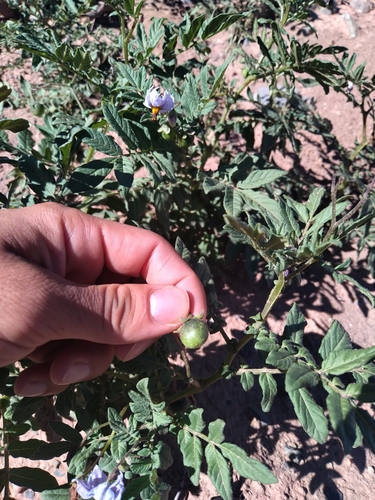
Solanum triflorum
Nutt.
Three-flowered Nightshade, Cutleaf nightshade
iNaturalist· cc-by-nc-sa
(c) Bas Kers (NL), some rights reserved (CC BY-NC-SA)
iNaturalist· cc-by-nc-sa
(c) Sarah Vinge-Mazer, some rights reserved (CC BY-NC-SA), uploaded by Sarah Vinge-Mazer
iNaturalist· cc-by
(c) Dominic Gentilcore, some rights reserved (CC BY), uploaded by Dominic Gentilcore
Summary
Source: WikipediaSolanum triflorum is a species of nightshade, in the family Solanaceae, also known as cutleaf nightshade and small nightshade. Like many nightshades, S. triflorum is native to South America, specifically to Argentina; it has made its way onto other continents, including Europe and Australia, as an introduced species, where it is deemed a weed, at times. It is also typically considered native to much of the Eastern and Western parts of the United states and parts of Canada, although there is some debate on the matter.
Description
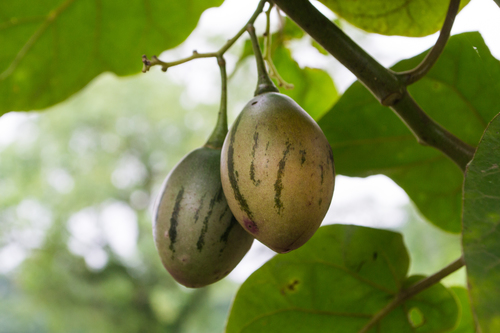
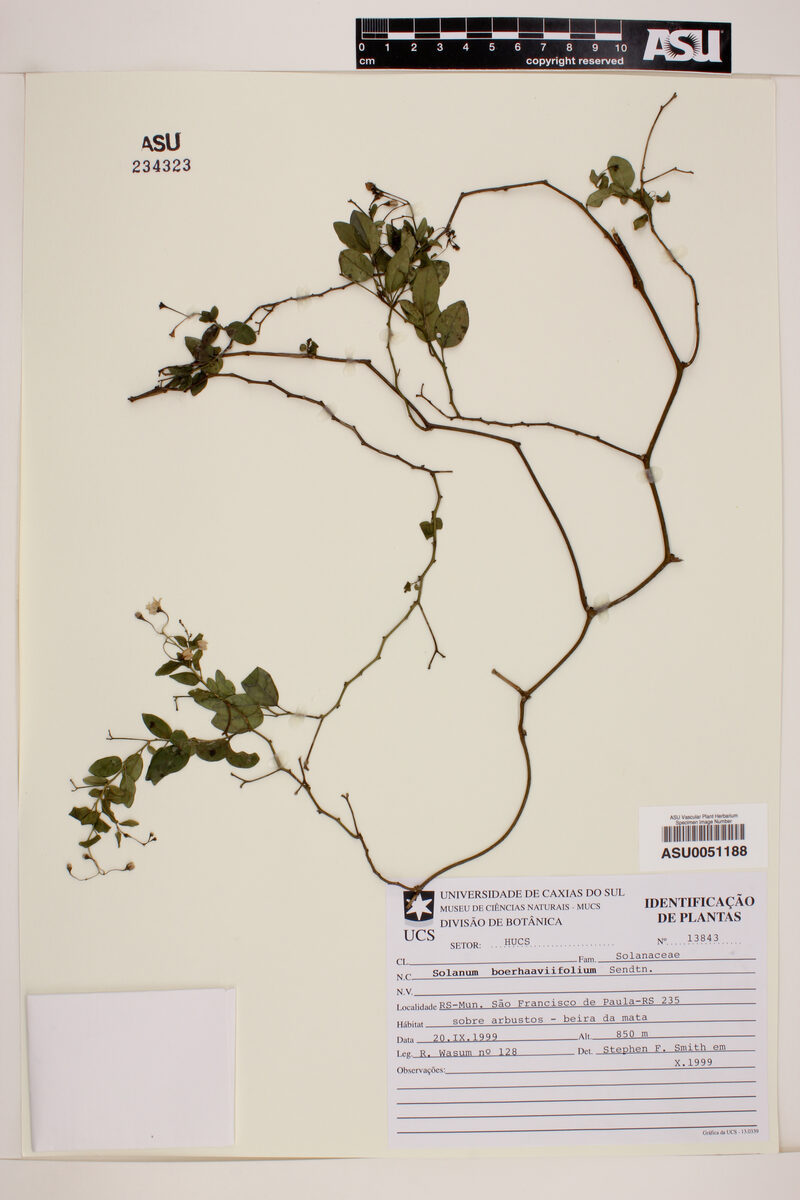
An annual plant. It is low and spreading. It forms mats. The leaves are alternate and simple. They are deeply lobed. They are 2.5-8 cm long. The flowers is white and 5-10 mm across. They are borne in clusters of 3. The fruit is a small, round, green berry.
Edible Uses
The fruit can be eaten raw or cooked and has been used during times of food shortage. It can be eaten as a fruit or vegetable, or dried, ground into a powder, and combined with cereals to make bread. Ripe fruit can also be boiled, mashed, and mixed with ground chilli and salt to serve as a condiment with mush or bread.
Traditional Uses
CAUTION: The fruit are classed as poisonous. The fruit are occasionally eaten. They are also boiled and dried and mixed with chili and salt and used as a flavouring.
Medicinal Uses
A decoction of the berries has been used to treat stomach aches and diarrhoea in children.
Known Hazards
Solanum triflorum has been shown to be toxic to most animals, and the alkaloids present in the genus Solanum are suspected to be the root cause of toxic effects in rodents that consume them.
Distribution
It grows in temperate places. In Argentina it grows from sea level to 2,500 m above sea level. Tasmania Herbarium.
Where It Grows
Argentina, Australia, Canada, North America, South America*, Tasmania, USA,
Cultivation
Succeeds in most soils in a sunny position. This species is said to be a good companion for watermelons, it has been planted with them in order to make the watermelons more prolific and ripen earlier. An infusion of the plant has been sprayed on the watermelons in order to make them more prolific and ripen earlier.
Propagation
Sow seed in spring in a greenhouse. Prick seedlings out into individual pots when large enough to handle, and plant out after the last expected frosts.
Other Uses
No known other uses.
Other Information
It is a famine food.
Notes
There are about 1400 Solanum species.
References (12)
- Beckstrom-Sternberg, Stephen M., and James A. Duke. "The Foodplant Database." http://probe.nalusda.gov:8300/cgi-bin/browse/foodplantdb.(ACEDB version 4.0 - data version July 1994)
- Cormack, R. G. H., 1967, Wild Flowers of Alberta. Commercial Printers Edmonton, Canada. p 295
- Etkin, N.L. (Ed.), 1994, Eating on the Wild Side, Univ. of Arizona. p 71
- Gen. N. Amer. pl. 1:128. 1818
- Hussey, B.M.J., Keighery, G.J., Cousens, R.D., Dodd, J., Lloyd, S.G., 1997, Western Weeds. A guide to the weeds of Western Australia. Plant Protection Society of Western Australia. p 222
Show all 12 references Hide references
- Kermath, B. M., et al, 2014, Food Plants in the Americas: A survey of the domesticated, cultivated and wild plants used for Human food in North, Central and South America and the Caribbean. On line draft. p 825
- Lazarides, M. & Hince, B., 1993, Handbook of Economic Plants of Australia, CSIRO. p 224
- Moerman, D. F., 2010, Native American Ethnobotany. Timber Press. p 535
- Paczkowska, G . & Chapman, A.R., 2000, The Western Australian Flora. A Descriptive Calatogue. Western Australian Herbarium. p 538
- Plants for a Future database, The Field, Penpol, Lostwithiel, Cornwall, PL22 0NG, UK. http://www.scs.leeds.ac.uk/pfaf/
- Smith, P.M., 1979, Solanums, in Simmonds, N.W., (ed), Crop Plant Evolution. Longmans. London. p 322
- Tasmanian Herbarium Vascular Plants list p 56