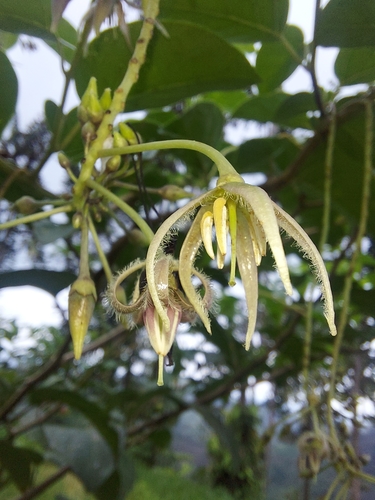
Solanum curtilobum
Juz. & Bukasov
Rucki, Bitter potato, Choque pitu
wikimedia· cc-by-sa
Wikimedia Commons - Eric in SF
Summary
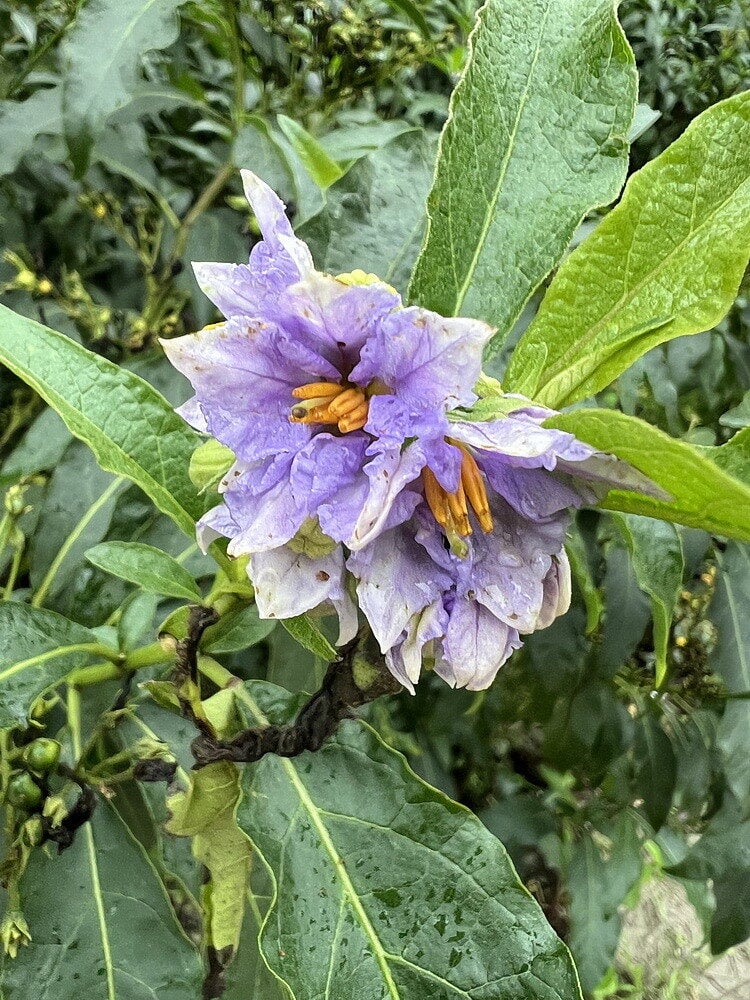
Source: WikipediaA frost-tender perennial with hermaphroditic flowers. Adaptable to light sandy, medium loamy, and heavy clay soils across a range of pH levels from mildly acidic to mildly alkaline. Tolerates semi-shade or full sun and prefers consistently moist soil.
Description
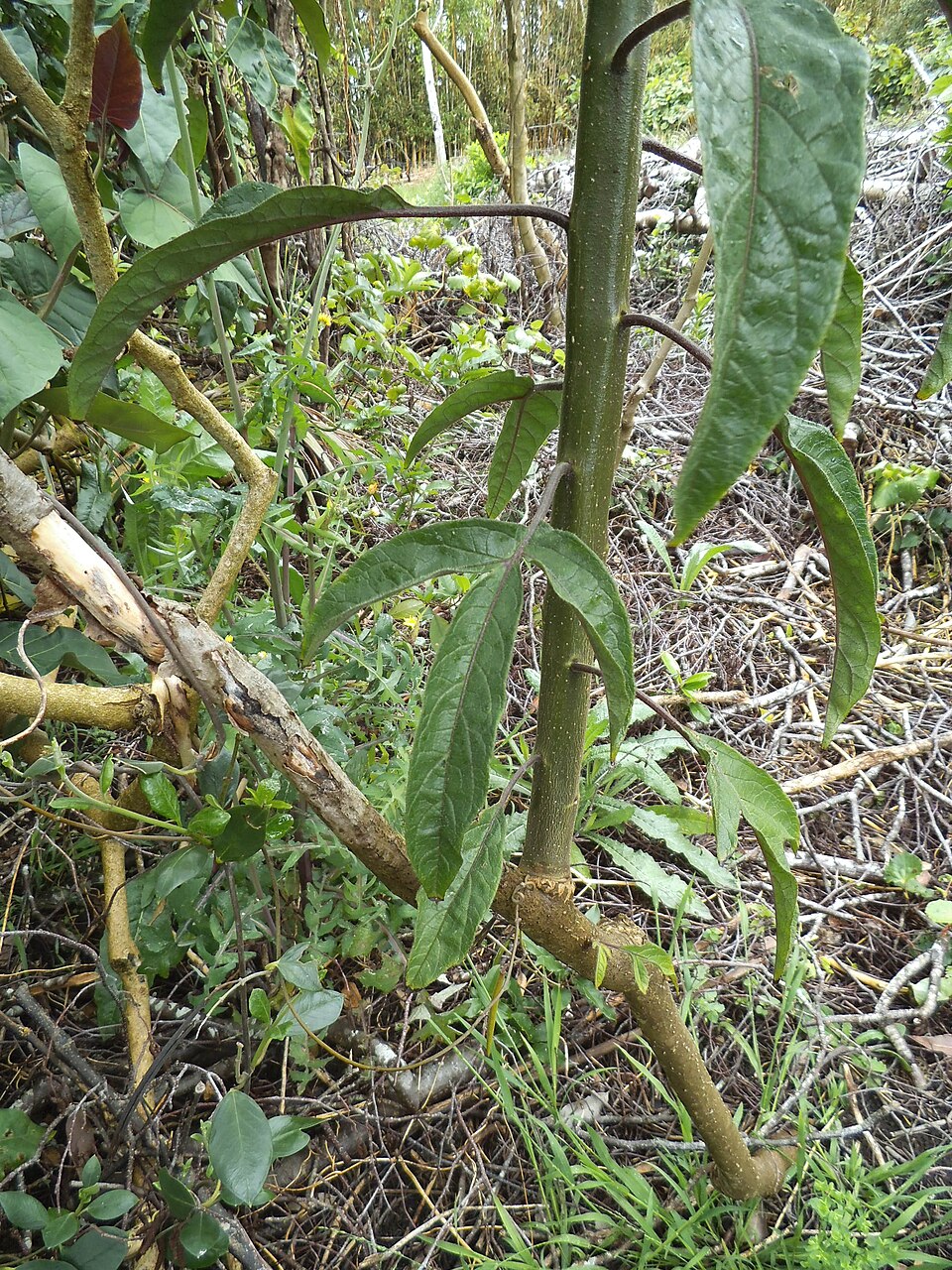
A natural hybrid. It is a herb. It grows 50-90 cm tall. It has a tuberous rootstock.
This description is brief — help expand it
Edible Uses
The root is edible when cooked and provides a good source of starch, though it has a bitter taste. This bitterness can be eliminated by freeze-drying the tubers to produce a traditional food known as 'chuño'.
Traditional Uses
The tubers are frozen, thawed and dried. This removes the glycoalkaloides which make them bitter. The processed product is called chuno. White chuno is made by freezing, peeling, soaking and sun drying. For black chuno the potatoes are not soaked. They are often used in soups and stews and combined with barley and herbs.
Medicinal Uses
None known
Known Hazards
Most parts of the plants, especially the green parts and unripe fruit, are poisonous to humans (although not necessarily to other animals), with some species even being deadly.
Distribution
A tropical plant. It grows on the altiplano in the Andes. It grows at about 3,800 m above sea level.
Where It Grows
Andes, Argentina, Bolivia, Peru, South America,
Cultivation
Succeeds in most soils. Dislikes wet or heavy clay soils. Prefers a slightly acid soil, the tubers are subject to scab on limy soils or those deficient in humus. Yields best on a fertile soil rich in organic matter. This plant is one of the S. American species of potatoes. This is one of the most frost hardy of potato species and grows in areas that can experience frosts on 300 days of the year. It can probably be grown in much the same way as potatoes are grown by planting out the tubers in spring and harvesting in the autumn. It is sometimes cultivated for its edible tubers in the Andes, mainly as insurance against cold weather. Yields are quite low.Plants might have strict daylength requirements and may yield poorly in temperate zones because they need short-days in order to induce tuber-formation. A pentaploid species, it produces fertile seed.
Propagation
Sow seed in early spring in a warm greenhouse. Prick seedlings into a fairly rich compost as soon as they are large enough to handle and grow on quickly. Plant out after the last expected frosts. Alternatively, propagate by division: harvest tubers in autumn once frost has cut back the top-growth, store in a cool frost-free place over winter, and replant in April.
Other Uses
None known Special Uses
Other Information
It is cultivated in some places.
Notes
There are about 1400 Solanum species. It is a pentaploid.
Also Known As
Ckaisalla
References (9)
- Facciola, S., 1998, Cornucopia 2: a Source Book of Edible Plants. Kampong Publications, p 236
- Kiple, K.F. & Ornelas, K.C., (eds), 2000, The Cambridge World History of Food. CUP p 1733
- Lim, T. K., 2015, Edible Medicinal and Non Medicinal Plants. Volume 9, Modified Stems, Roots, Bulbs. Springer p 78
- Plants for a Future database, The Field, Penpol, Lostwithiel, Cornwall, PL22 0NG, UK. http://www.scs.leeds.ac.uk/pfaf/
- Samuels, J., 2015, Biodiversity of Food Species of the Solanaceae Family: A Preliminary Taxonomic Inventory of Subfamily Solanoideae. Resources 2015, 4. 277-322
Show all 9 references Hide references
- Ulian, T., et al, 2020, Unlocking plant resources to support food security and promote sustainable agriculture. Plants, People, Planet. 2020;2:421–445.
- Velasquez-Milla, D., et al, 2011, Ecological and socio-cultural factors influencing in situ conservation of crop diversity by traditional Andean households in Peru. Journal of Ethnobiology and Ethnomedicine 7:40
- Wiersema, J. H. & Leon, B., 2013, World Economic Plants. A Standard Reference CRC Press. 2nd Ed. p 643
- World Checklist of Useful Plant Species 2020. Royal Botanic Gardens, Kew