Arbutus x andrachnoides
Link
Hybrid strawberry tree
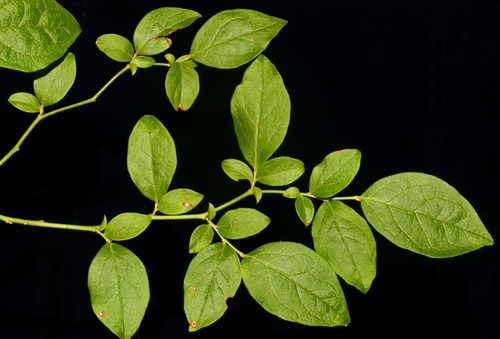
iNaturalist· cc-by-nc
(c) Christian Gilli, some rights reserved (CC BY-NC)
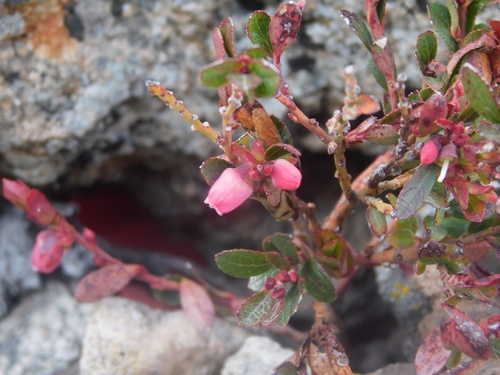
iNaturalist· cc-by-nc
(c) Sandro Bogdanović, some rights reserved (CC BY-NC)
iNaturalist· cc-by-nc
(c) Sandro Bogdanović, some rights reserved (CC BY-NC)
Summary
Source: WikipediaEvergreen tree reaching 10m tall and 8m wide at medium growth rate. Hardy to UK zone 8. Year-round foliage with flowers from October to November. Self-fertile, bee-pollinated hermaphrodite. Tolerates light sandy, medium loamy, and heavy clay soils with good drainage; adapts to mildly acid, neutral, and mildly alkaline conditions. Grows in semi-shade or full sun and prefers consistently moist soil.
Description
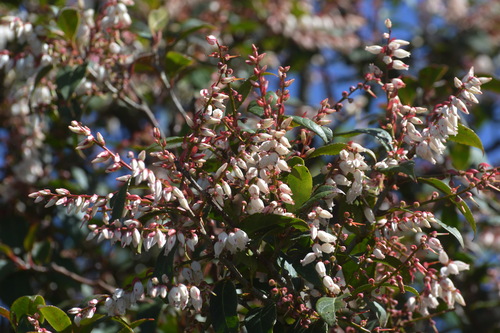
A small tree. It has a spreading habit. It grows 10 m high. The bark peels off to reveal crimson bark underneath. Leaves are slightly downy underneath. The flowers are white. They occur in panicles at the ends of branches.
Edible Uses
Edible Parts: Fruit Edible Uses: Fruit - raw. A pleasant texture with a sweet but delicate flavour, the fruit is considered to be insipid by many people. Very similar in size and taste to the strawberry tree, A. unedo, though it is not usually borne very freely.
Medicinal Uses
None known
Distribution
It is a temperate plant. It will grow in more alkaline soils. It is frost hardy down to -10°C. It needs a warm summer to fruit well. It can grow in full sun or part shade. It suits hardiness zones 8-10. Arboretum Tasmania.
Where It Grows
Asia, Australia, Europe, Mediterranean, Tasmania,
Cultivation
Prefers a lime-free nutrient-rich well-drained moisture-retentive soil in a sunny position with shelter from cold drying winds, especially when young. Unlike most members of this genus, this species thrives on a limy soil. Plants are hardy to about -15°c. A naturally occurring hybrid between A. unedo and A. andrachne. There are some named forms, selected for their ornamental value. Trees rarely produce fruit in Britain. Plants resent root disturbance and are best placed in their final positions whilst young. Give them some protection in their first winter. Plants sometimes flower in the spring, but more usually in the late autumn and early winter.
Propagation
Seed - best surface sown in a cold frame as soon as it is ripe. Stored seed should be soaked for 5 - 6 days in warm water and then surface sown in a shady position in a greenhouse. Do not allow the compost to become dry. 6 weeks cold stratification helps. The seed usually germinates well in 2 - 3 months at 20°c. Seedlings are prone to damp off, they are best transplanted to individual pots as soon as they are large enough to handle and should be kept well ventilated. Grow them on in a greenhouse for their first winter and then plant out in late spring after the last expected frosts. This species is a hybrid and is unlikely to breed true from seed. Basal cuttings in late winter. Cuttings of mature wood of the current season's growth, November/December in a frame. Poor percentage. Layering of young wood - can take 2 years.
Other Uses
None known Special Uses
Notes
There are 14 Arbutus species.
Synonyms
References (6)
- Cundall, P., (ed.), 2004, Gardening Australia: flora: the gardener's bible. ABC Books. p 173
- Enum. hort. berol. alt. 1:395. 1821
- Etherington, K., & Imwold, D., (Eds), 2001, Botanica's Trees & Shrubs. The illustrated A-Z of over 8500 trees and shrubs. Random House, Australia. p 100
- Lyle, S., 2006, Discovering fruit and nuts. Land Links. p 75
- Plants for a Future database, The Field, Penpol, Lostwithiel, Cornwall, PL22 0NG, UK. http://www.scs.leeds.ac.uk/pfaf/
Show all 6 references Hide references
- Ryan, S., 2008, Dicksonia. Rare Plants Manual. Hyland House. p 7