Samolus valerandi
L.
Brookweed, Water Pimpernel
iNaturalist· cc-by
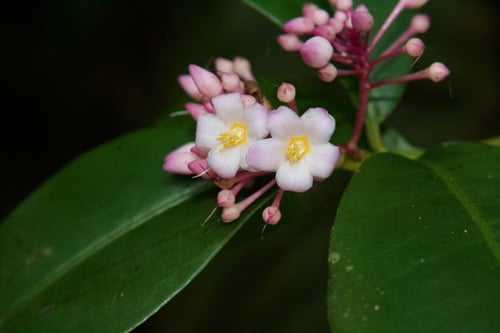
(c) Drepanostoma, some rights reserved (CC BY), uploaded by Drepanostoma
iNaturalist· cc-by-nc
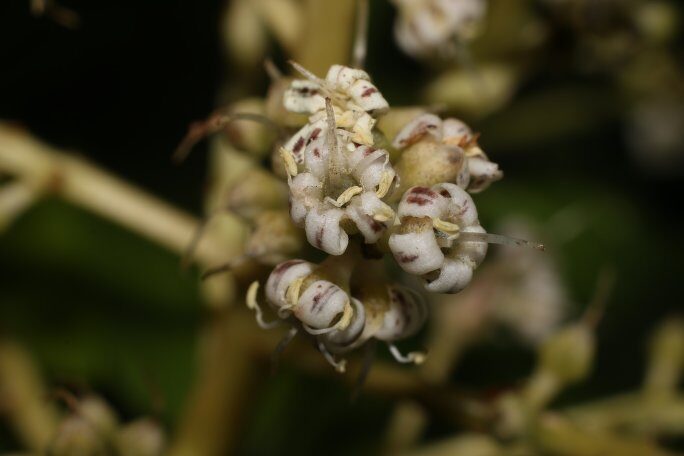
(c) Clifton Albrecht, some rights reserved (CC BY-NC), uploaded by Clifton Albrecht
iNaturalist· cc-by
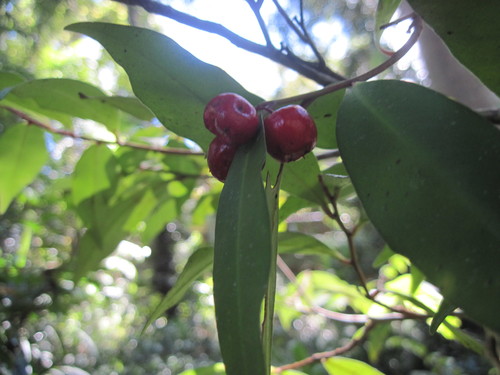
(c) Martin Scheuch, some rights reserved (CC BY), uploaded by Martin Scheuch
Summary
Source: WikipediaSamolus valerandi is a species of semi-aquatic flowering plant in the primrose family, Primulaceae. Common names include seaside brookweed, brookweed, thin-leaf brookweed, water cabbage and water rose.
Description
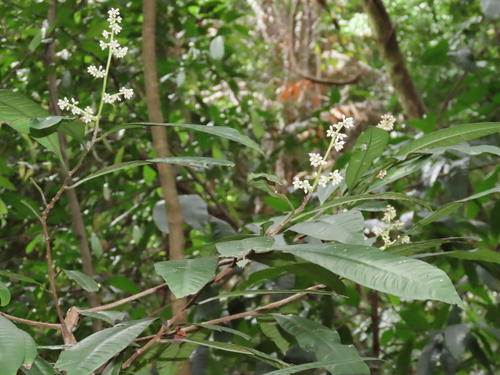
A low creeping herb which continues to grow from year to year. It grows 10-40 cm high. The stems may or may not be branched. The leaves are oval or spoon shaped. They are pale green in a ring near the base. The leaves up the stem are alternate. The flowers are white and cup shaped. They are 2-3 mm across. They are on loose racemes. The petals are joined for half their length.
Edible Uses
Young leaves can be eaten raw or cooked, though they have a rather bitter flavour.
Traditional Uses
The young leaves are eaten cooked or raw.
This uses section is brief — help expand it
Medicinal Uses
The leaves are antiscorbutic.
Distribution
It grows in tropical and warm temperate places. It grows in wet often salty or calcareous locations often near streams or drains. It grows in hot arid places. In Pakistan it grows between 300-2,000 m altitude. It can tolerate some shade. It can grow in arid places. It can tolerate some salt. In Argentina it grows from sea level to 3,000 m above sea level.
Where It Grows
Africa, Argentina, Australia, Botswana, Brazil, Britain, Central Asia, Chile, China, East Africa, Egypt, Eswatini, Europe, France, Greece, India, Israel, Italy, Madagascar, Mediterranean, Middle East, Mozambique, Namibia, Niger, Nigeria, North Africa, North America, Pakistan, Paraguay, Portugal, South Africa, Southern Africa, South America, Spain, Swaziland, Tajikistan, Turkey, Türkiye, Ukraine, Uruguay, West Africa, Zambia, Zimbabwe,
Cultivation
Plants can be grown from seeds. Seeds need light to germinate.
Propagation
Sow seed on the surface of a cold frame in spring, standing the pot in about 3cm of water. Prick out seedlings when large enough to handle and gradually increase the water depth as the plants grow until it is level with the tops of the pots. Plant out in summer if growth has been sufficient, otherwise plant out in late spring of the following year. Division can be carried out in spring.
Other Uses
None known
Other Information
A minor vegetable of local importance in times of food scarcity.
Notes
There are about 9-15 Samolus species. They are also put in the family Primulaceae. They may be put in the family Theophrastaceae.
Synonyms
Also Known As
Baicuru-acu, Dolceta, Enciamet, Pajarilla de agua
References (12)
- Blamey, M and Grey-Wilson, C., 2005, Wild flowers of the Mediterranean. A & C Black London. p 168
- Burkill, H. M., 1985, The useful plants of west tropical Africa, Vol. 4. Kew.
- Flora of Pakistan. www.eFloras.org
- Grubben, G. J. H. and Denton, O. A. (eds), 2004, Plant Resources of Tropical Africa 2. Vegetables. PROTA, Wageningen, Netherlands. p 453
- Heywood, V.H., Brummitt, R.K., Culham, A., and Seberg, O. 2007, Flowering Plant Families of the World. Royal Botanical Gardens, Kew. p 291
Show all 12 references Hide references
- Kermath, B. M., et al, 2014, Food Plants in the Americas: A survey of the domesticated, cultivated and wild plants used for Human food in North, Central and South America and the Caribbean. On line draft. p 783
- Paczkowska, G . & Chapman, A.R., 2000, The Western Australian Flora. A Descriptive Calatogue. Western Australian Herbarium. p 463
- Plants for a Future database, The Field, Penpol, Lostwithiel, Cornwall, PL22 0NG, UK. http://www.scs.leeds.ac.uk/pfaf/
- Royal Botanic Gardens, Kew (1999). Survey of Economic Plants for Arid and Semi-Arid Lands (SEPASAL) database. Published on the Internet; http://www.rbgkew.org.uk/ceb/sepasal/internet [Accessed 6th June 2011]
- Swaziland's Flora Database http://www.sntc.org.sz/flora
- Tardio, J., et al, Ethnobotanical review of wild edible plants in Spain. Botanical J. Linnean Soc. 152 (2006), 27-71
- World Checklist of Useful Plant Species 2020. Royal Botanic Gardens, Kew