Rothmannia manganjae
(Hiern) Keay
Scented bells
iNaturalist· cc-by-nc-sa
(с) Marco Schmidt, некоторые права защищены (CC BY-NC-SA), загрузил Marco Schmidt
iNaturalist· cc-by-nc
(c) Siegwalt U Küsel, some rights reserved (CC BY-NC)
iNaturalist· cc-by-nc
(c) Siegwalt U Küsel, some rights reserved (CC BY-NC)
Description
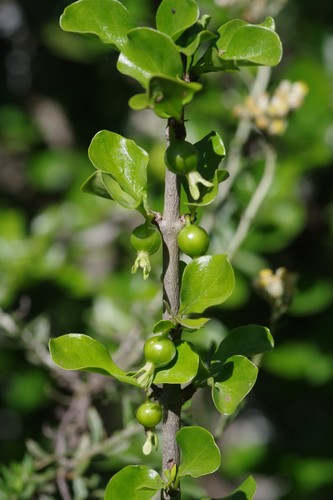
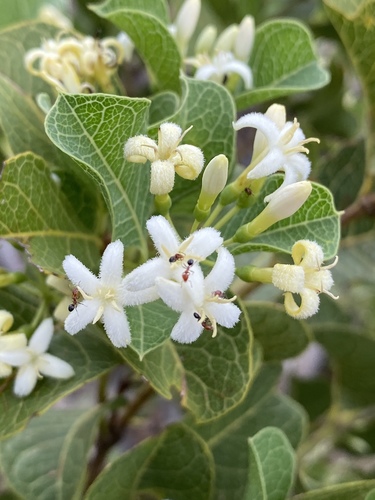
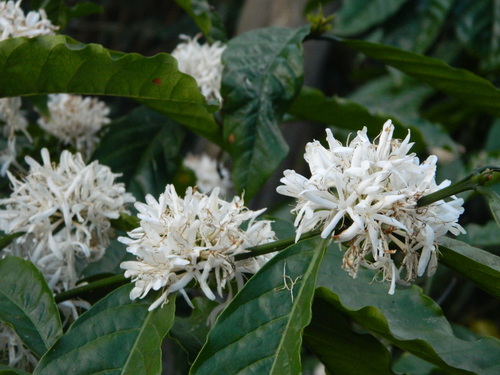
A shrub or small tree. It grows 4-6 m high. It can be 18 m tall. The bark is grey to brown and smooth. The leaves are sword shaped. They are 11 cm long by 5 cm wide. They are glossy green. The leaves taper to both ends. The edges are wavy. The leaf stalk is 6 mm long. The flowers are creamy-white with dark red or purple marks on the throat. The flowers are bell shaped and 10 cm long by 8 cm wide. They have a sweet scent. They occur singly in the axils of leaves. The fruit is round and about 5 cm across. They are green when mature but become blackish when dry.
Edible Uses
The fruit is eaten raw.
Traditional Uses
The fruit is eaten raw.
This uses section is brief — help expand it
Distribution
A tropical plant. It grows in woodland and at the edges of evergreen forest. It grows in Miombo woodland in Africa. In Brisbane Botanical Gardens.
Where It Grows
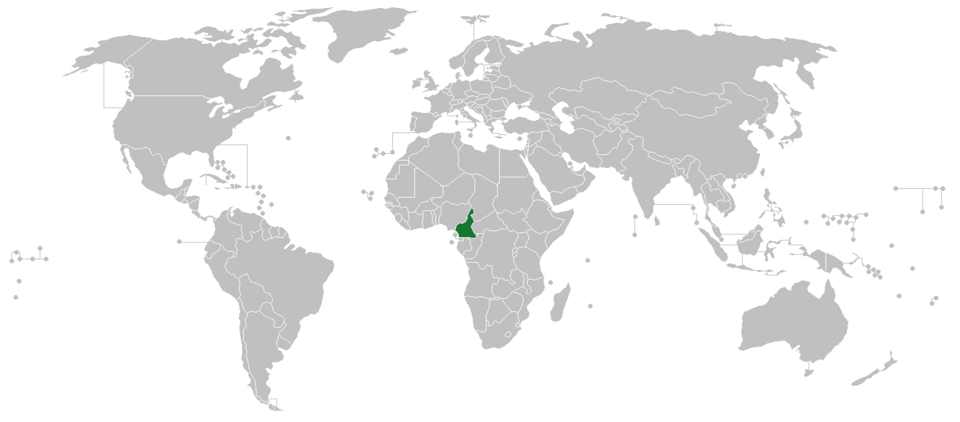
Africa, Australia, East Africa, Kenya, Malawi, Mozambique, Southern Africa, Tanzania, Zambia, Zimbabwe,
Cultivation
Plants can be grown from seed.
Synonyms
Also Known As
Mdiokola, Mdogodya, Mdyanjima, Mfukula, Mkoma, Mtowitowi, Mtseche, Mudododo, Mzondo
References (7)
- Fowler, D. G., 2007, Zambian Plants: Their Vernacular Names and Uses. Kew. p 84
- Grivetti, L. E., 1980, Agricultural development: present and potential role of edible wild plants. Part 2: Sub-Saharan Africa, Report to the Department of State Agency for International Development. p 66 (As Gardenia)
- Jardin, C., 1970, List of Foods Used In Africa, FAO Nutrition Information Document Series No 2.p 158
- Palgrave, K.C., 1996, Trees of Southern Africa. Struik Publishers. p 860
- Peters, C. R., O'Brien, E. M., and Drummond, R.B., 1992, Edible Wild plants of Sub-saharan Africa. Kew. p 175
Show all 7 references Hide references
- White, F., Dowsett-Lemaire, F. and Chapman, J. D., 2001, Evergreen Forest Flora of Malawi. Kew. p 493
- Williamson, J., 2005, Useful Plants of Malawi. 3rd. Edition. Mdadzi Book Trust. p 217