Grossularia oxyacanthoides
(L.) Mill.
American mountain gooseberry, Canadian Gooseberry, Smooth Gooseberry, Northern gooseberry
gbif· cc0
East Tennessee State University, John C. Warden Herbarium (ETSU-)
Description
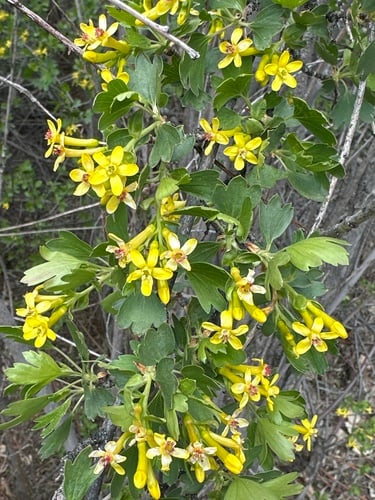
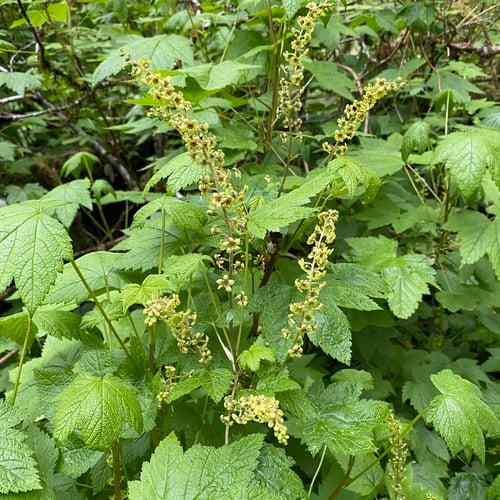
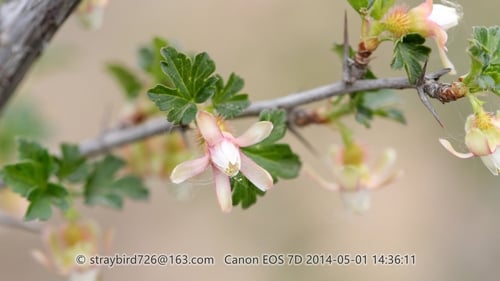
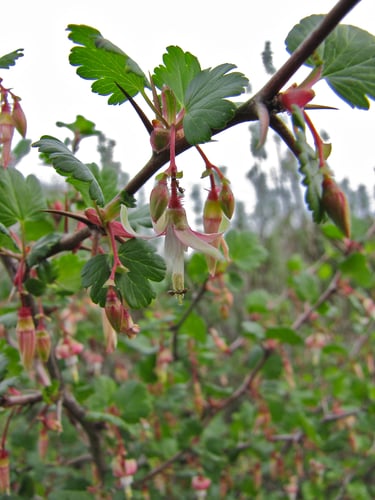
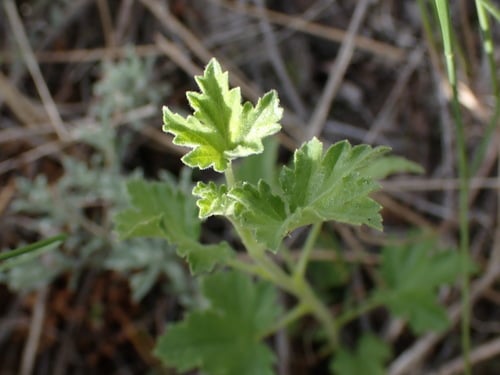
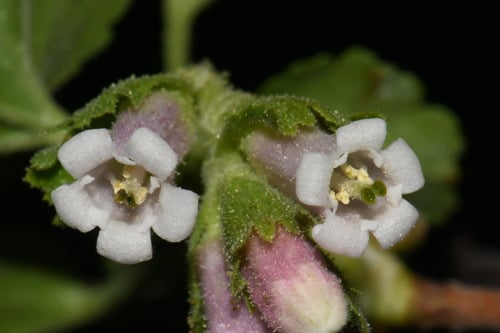
A shrub. It grows 45-80 cm high and spreads 70 cm wide. It loses its leaves during the year. The stems are slender and have bristles and thorns. The spines are 1.5 cm long. The leaves are heart shaped and are glossy and dark green. They have 5 lobes. The flowers are greenish-white or light mauve and occur singly or in pairs. The fruit are purple-red berries and are edible.
Edible Uses
A number of species produce edible berries, some of which are categorized as currants and gooseberries. Blackfoot people used blackcurrant root (Ribes hudsonianum) for the treatment of kidney diseases and menstrual and menopausal problems. The Cree used the fruit of Ribes glandulosum as a fertility enhancer to assist women in becoming pregnant. European immigrants who settled in North America in the 18th century typically made wine from both red and white currants.
Traditional Uses
The fruit are eaten fresh. They are also added to soups. They are dried and stored for later use. They are used to make preserves.
This uses section is brief — help expand it
Distribution
A temperate plant. In Canada it grows in wet forests and also on exposed rocky sites. It suits hardiness zones 2-8.
Where It Grows
Australia, Canada, North America, USA,
Notes
There are about 150 Ribes species.
Synonyms
Also Known As
Hawthorn-leaved gooseberry
References (7)
- Cormack, R. G. H., 1967, Wild Flowers of Alberta. Commercial Printers Edmonton, Canada. p 139 (As Ribes oxyacanthoides)
- Cundall, P., (ed.), 2004, Gardening Australia: flora: the gardener's bible. ABC Books. p 1207 (As Ribes oxyacanthoides) Hedrick, U.P., 1919, (Ed.), Sturtevant's edible plants of the world. p 564 (As Ribes oxyacanthoides)
- MacKinnon, A., et al, 2009, Edible & Medicinal Plants of Canada. Lone Pine. p 106 (As Ribes oxyacanthoides)
- Medsger, O. P., 1939, Edible Wild Plants. Macmillan Company. p 19
- Moerman, D. F., 2010, Native American Ethnobotany. Timber Press. p 479 (As Ribes oxyacanthoides)
Show all 7 references Hide references
- Plants for a Future database, The Field, Penpol, Lostwithiel, Cornwall, PL22 0NG, UK. http://www.scs.leeds.ac.uk/pfaf/ (As Ribes oxyacanthoides) Sp. pl. 1:201. 1753 (As Ribes oxyacanthoides)
- Turner, N., 1997, Food Plants of Interior First Peoples. Royal BC Museum Handbook p 127 (As Ribes oxyacanthoides)