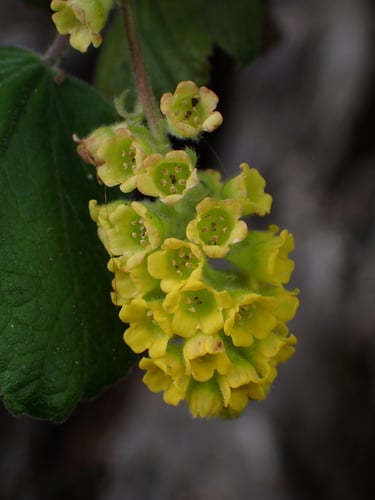
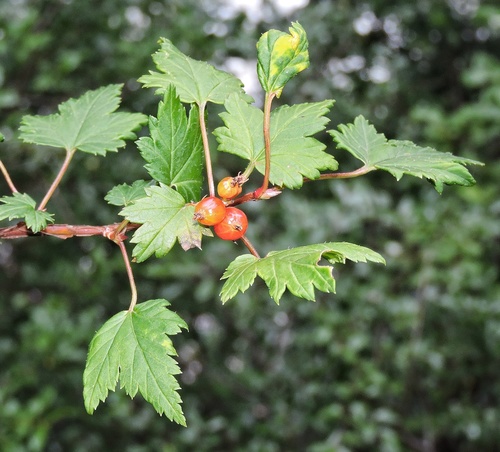
Ribes magellanicum
Poir.
Magellanic currant
iNaturalist· cc-by-nc
(c) Pablo Fraire, some rights reserved (CC BY-NC), uploaded by Pablo Fraire
iNaturalist· cc-by-nc
(c) Sebastián Lescano, some rights reserved (CC BY-NC)
iNaturalist· cc-by
(c) Cesar Ormazabal, some rights reserved (CC BY)
Summary
Source: WikipediaRibes magellanicum is a South American species of shrubs in the currant family, native to Patagonia (southern Chile and Argentina). The fruits can be consumed fresh, in preserves and in syrups, have been described to have a pleasant flavor and sweet taste, and to harbour a phenolic compound profile and antioxidant activity with potential for nutraceutical development. Two subspecies are accepted: Ribes magellanicum subsp. magellanicum Ribes magellanicum subsp. parviflorum Sparre
Description
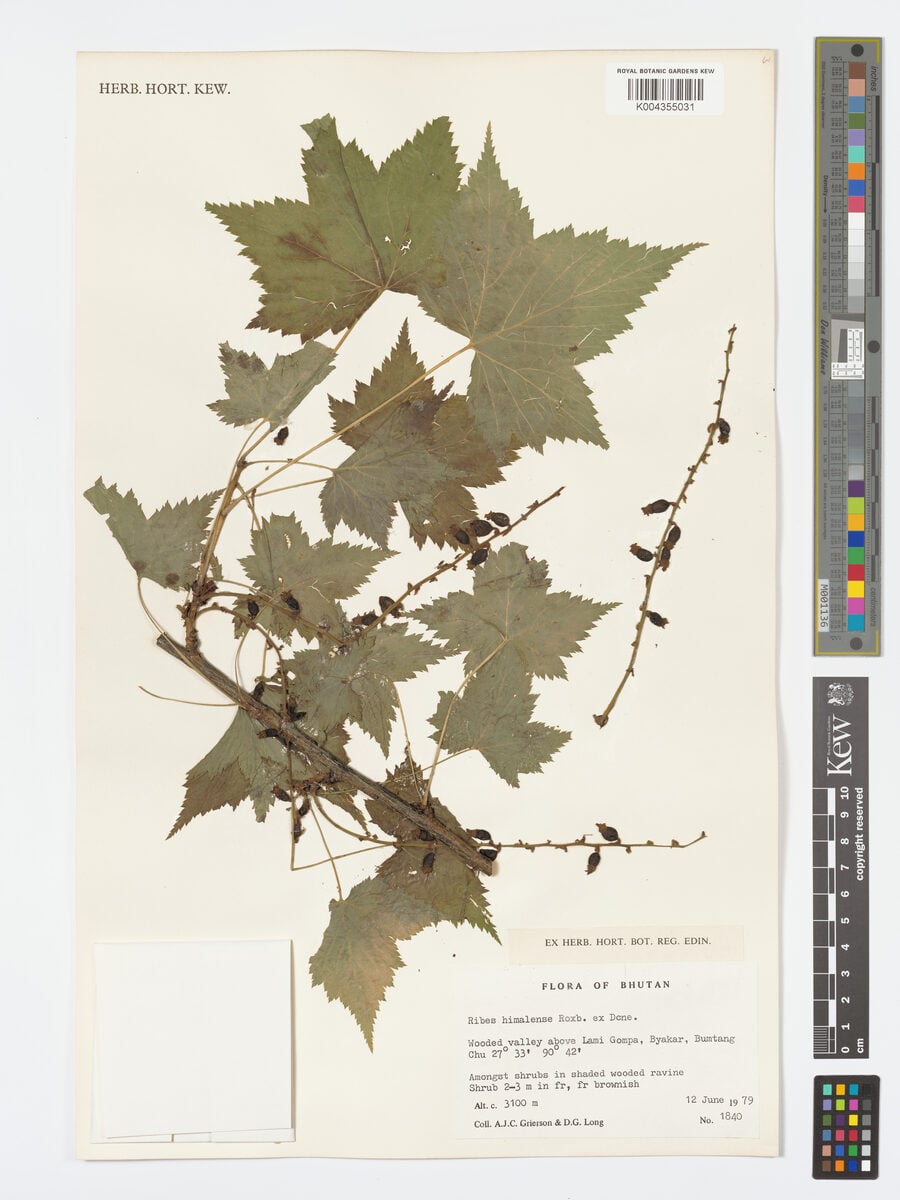
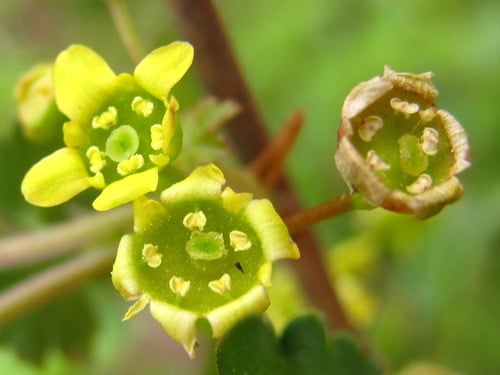
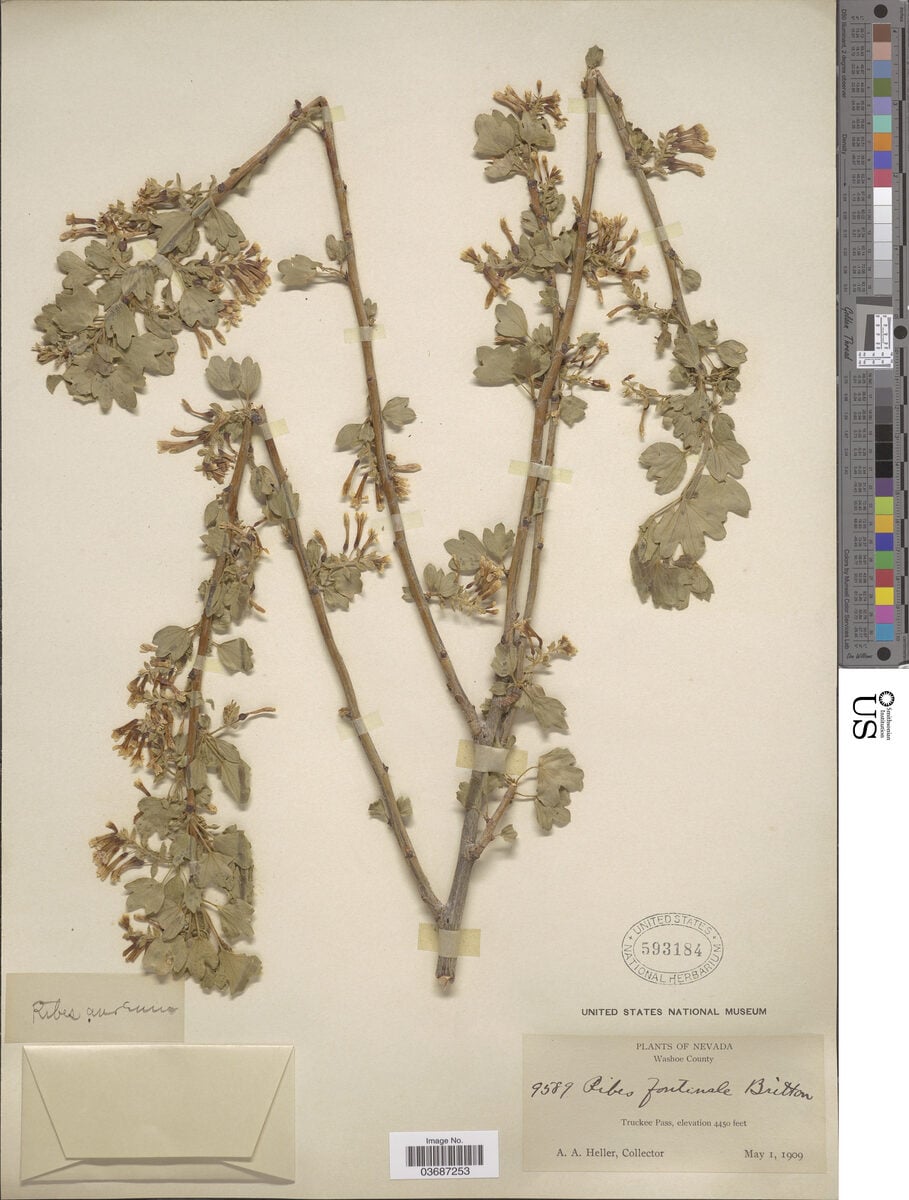
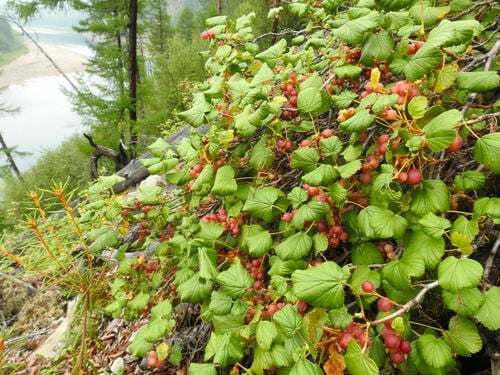
A tall shrub. It grows 1.8-2.4 m high and spreads 1.8 m wide. It loses its leaves during the year. The leaves have 3-5 lobes. The flowers are creamy yellow and hang on clusters. The fruit are red-black.
Edible Uses
The fruit can be eaten raw or cooked and has a very agreeable flavour.
Traditional Uses
The fruit are eaten raw or cooked. They are used in jams. They are also used for drinks.
This uses section is brief — help expand it
Medicinal Uses
Used as a stomachic.
Distribution
It is a subtropical plant. In Chile it grows at low altitudes. It suits hardiness zones 8-10. It can tolerate some frost and snow. It grows in humid areas with constant rain. It can grow in some shade. In Argentina it grows from sea level to 2,000 m above sea level.
Where It Grows
Argentina, Australia, Chile*, Falklands, South America,
Cultivation
We have very little information on this species and do not know if it will be hardy in Britain, though judging by its native range it should succeed outdoors in many parts of the country. It is likely to be wind or even maritime wind resistant. The following notes are based on the general needs of the genus. Easily grown in a moisture retentive but well-drained loamy soil of at least moderate quality. Plants are quite tolerant of shade though do not fruit so well in such a position. Plants can harbour a stage of 'white pine blister rust', so they should not be grown in the vicinity of pine trees. Plants in this genus are notably susceptible to honey fungus.
Propagation
Seed is best sown as soon as it is ripe in autumn in a cold frame. Stored seed requires 3 months of cold stratification at 0–5°C and should be sown as early in the year as possible. Under normal storage conditions, seed can remain viable for 17 years or more. Prick out seedlings into individual pots when large enough to handle, grow on in a cold frame for their first winter, then plant out in late spring the following year. Take cuttings of half-ripe wood, 10–15cm with a heel, in July/August in a frame. Cuttings of mature wood of the current year's growth, preferably with a heel of the previous year's growth, can be taken November to February in a cold frame or sheltered bed outdoors.
Other Uses
None known.
Notes
There are about 150 Ribes species. It is rich in antioxidants.
Nutrition
| Part | Moisture | kJ | kcal | Protein | Vit A | Vit C | Iron | Zinc |
|---|---|---|---|---|---|---|---|---|
| Fruit | — | — | — | — | 111.6 | — | — | — |
Also Known As
Mulul, Parrilla, Uvilla, Zarzaparrilla
References (14)
- Altschul, S.V.R., 1973, Drugs and Foods from Little-known Plants. Notes in Harvard University Herbaria. Harvard Univ. Press. Massachusetts. no. 1373
- Chamorro, M. F., & Ladio, A., 2020, Native and exotic plants with edible fleshy fruits utilized in Patagonia and their role as sources of local functional foods. BMC Complementary Medicine and Therapies. 20:155
- Cordero, S. E., Abello, L. A., & Galvez, F. L., 2017, Plantas silvestres comestibles y medicinales de Chile y otras partes del mundo. CORMA p 109
- Cundall, P., (ed.), 2004, Gardening Australia: flora: the gardener's bible. ABC Books. p 1206
- Encycl. suppl. 2:856. 1812
Show all 14 references Hide references
- Hedrick, U.P., 1919, (Ed.), Sturtevant's edible plants of the world. p 563
- Ladio, A., Lozada, M. & M. Weigandt, 2007, Comparison of traditional wild plant knowledge between aboriginal communities inhabiting arid and forest environments in Patagonia, Argentina. Journal of Arid Environments 69 (2007) 695–715
- Leon-Lobos, P., et al, 2022, Patterns of Traditional and Modern Uses of Wild Edible Native Plants of Chile: Challenges and Future Perspectives. Plants (Basel) v 11 (6) Table S1
- Plants for a Future database, The Field, Penpol, Lostwithiel, Cornwall, PL22 0NG, UK. http://www.scs.leeds.ac.uk/pfaf/
- Rapoport, E. H. & Ladio, A. H., 1999, Plantas comestibles. Bosque Volume 20 No. 2. ISSN 0314-8799
- Rapoport, E. H., et al, 1995, Edible Weeds: A Scarcely Used Resource. Bulletin of the Ecological Society of America. Vol. 76 No. 3 pp 163-166
- Upson, R., & Lewis R., 2014, Updated Vascular Plant Checklist and Atlas for the Falkland Islands. Falklands Conservation and Kew.
- Velasquez, P. & Montenegro, G., 2017, Chilean Endemic/Native Plant Resources as Functional and Superfoods. Chp. 6 in Superfood and Functional Food - An Overview of Their Processing and Utilization
- www.chileflora.com