Ribes longiracemosum
Franchet
Chinese black gooseberry
wikimedia· cc-by-sa
Wikimedia Commons - peganum from Small Dole, England
wikimedia· cc-by-sa
Wikimedia Commons - peganum from Small Dole, England
Summary
A deciduous shrub reaching 3.5 m tall with hermaphroditic flowers blooming April to May and seeds ripening July to August. Hardy to UK zone 6. Tolerates semi-shade or full sun. Grows in light sandy, medium loamy, and heavy clay soils with good drainage and mildly acidic to mildly alkaline pH. Prefers moist conditions. Insect-pollinated.
Description
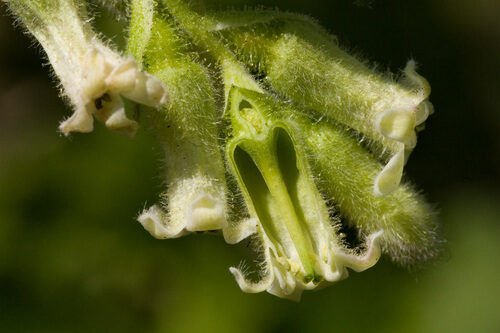
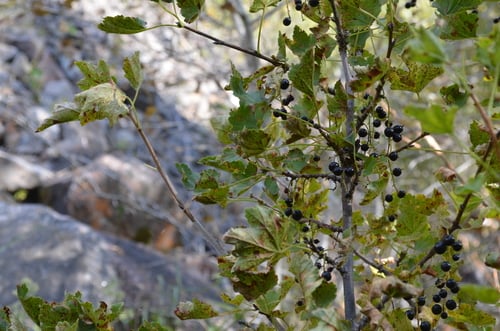
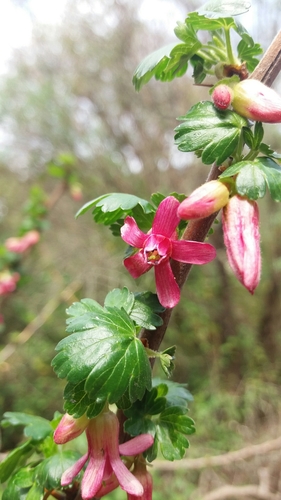
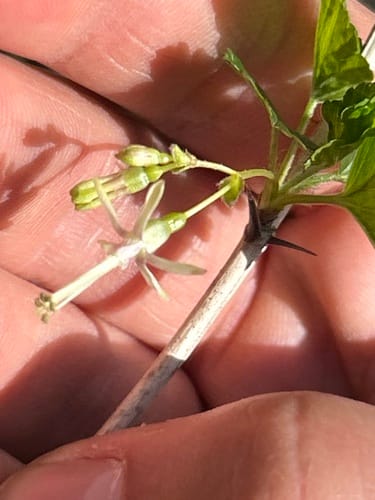
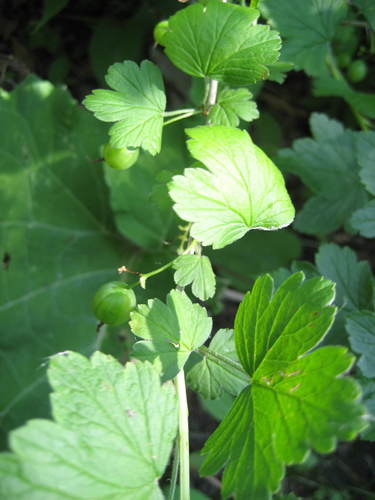
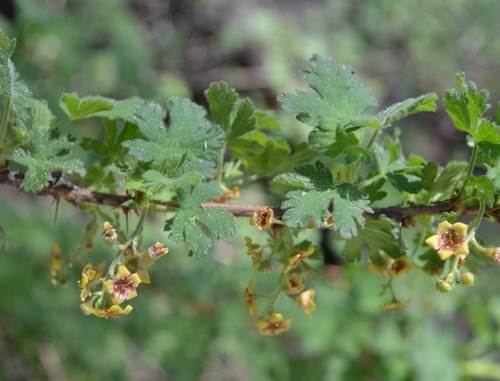
A shrub. It loses its leaves during the year. It grows 3 m high. The young branches are smooth. The leaves are heart shaped with 3 lobes. They are 7-14 cm long and wide. There are irregular teeth. There are hairs along the veins. The leaf stalks are 10 cm long. The flowers are greenish and red. They hang in groups 30 cm long. The fruit are black berries.
Edible Uses
The black fruit, around 9mm in diameter, can be eaten raw or cooked and has a good flavour. However, the fruit is very thinly distributed along the main stalk.
Traditional Uses
The ripe fruit are eaten fresh. They are also used for wine.
This uses section is brief — help expand it
Medicinal Uses
None known.
Distribution
It is a temperate plant. It is native to central China. It grows in thickets or forests between 2,000-2,200 m altitude. In Sichuan and Yunnan.
Where It Grows
Asia, China,
Cultivation
Easily grown in a moisture retentive but well-drained loamy soil of at least moderate quality. Plants are quite tolerant of shade though do not fruit so well in such a position. Hardy to about -20°c. This species is cultivated for its edible fruit in China. Plants can harbour a stage of 'white pine blister rust', so they should not be grown in the vicinity of pine trees. Plants in this genus are notably susceptible to honey fungus.
Propagation
Seed is best sown as soon as it is ripe in autumn in a cold frame. Stored seed requires 3 months of cold stratification at 0–5°C and should be sown as early in the year as possible. Under normal storage conditions, seed can remain viable for 17 years or more. Prick out seedlings into individual pots when large enough to handle, grow on in a cold frame for their first winter, then plant out in late spring the following year. Take cuttings of half-ripe wood, 10–15cm with a heel, in July/August in a frame. Cuttings of mature wood of the current year's growth, preferably with a heel of the previous year's growth, can be taken November to February in a cold frame or sheltered bed outdoors.
Other Uses
None known.
Other Information
It is cultivated.
Notes
There are about 150 Ribes species.
References (8)
- Arora, R. K., 2014, Diversity in Underutilized Plant Species - An Asia-Pacific Perspective. Bioversity International. p 84
- Cheng, Z., et al, 2022, Ethnobotanical study on wild edible plants used by Dulong people in northwestern Yunnan, China. Journal of Ethnobiology and Ethnomedicine (2022) 18:3
- Flora of China @ efloras.org Volume 8
- Hu, Shiu-ying, 2005, Food Plants of China. The Chinese University Press. p 427
- Nouv. Arch. Mus. Hist. Nat. ser. 2, 8:238. 1885
Show all 8 references Hide references
- Plants for a Future database, The Field, Penpol, Lostwithiel, Cornwall, PL22 0NG, UK. http://www.scs.leeds.ac.uk/pfaf/
- van Wyk, B., 2005, Food Plants of the World. An illustrated guide. Timber press. p 322
- Zeven, A. C. & de West, J. M. J., 1982, Dictionary of cultivated plants and their regions of diversity. Wageningen. p 39